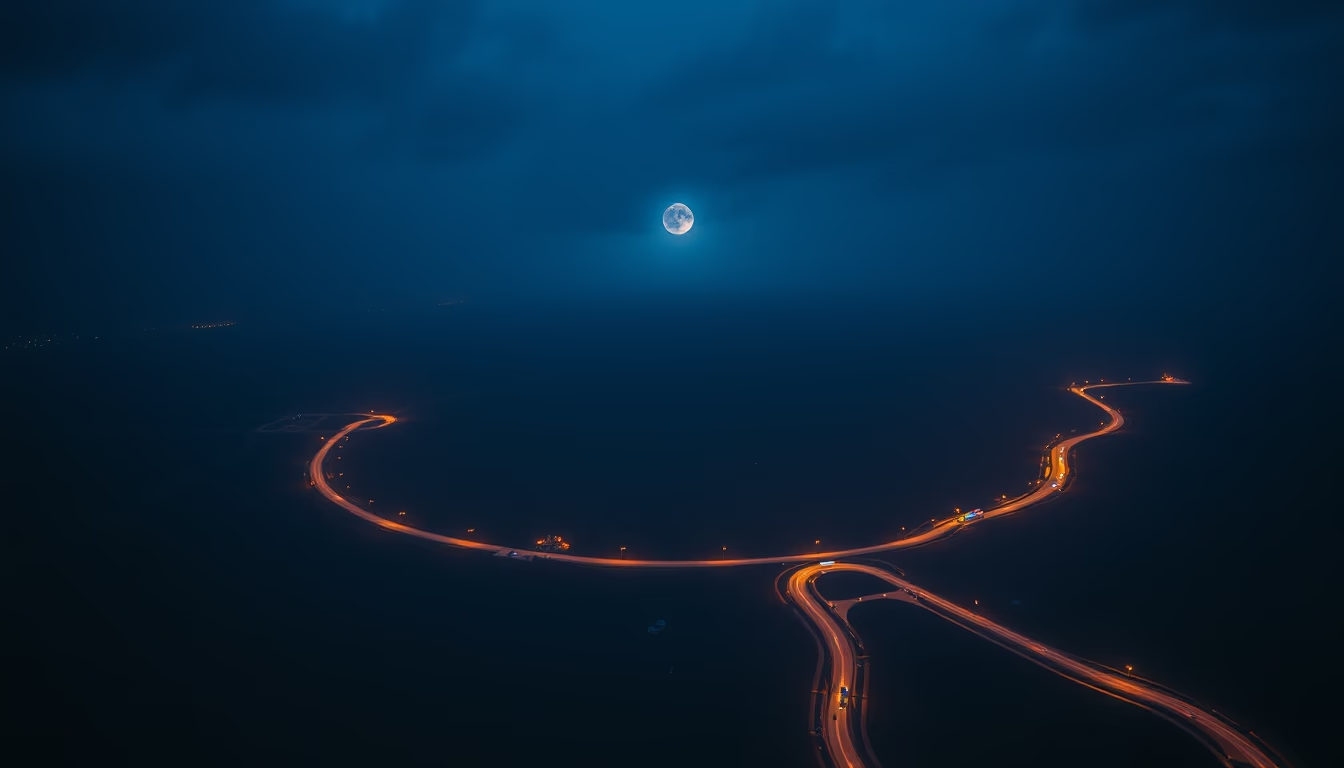
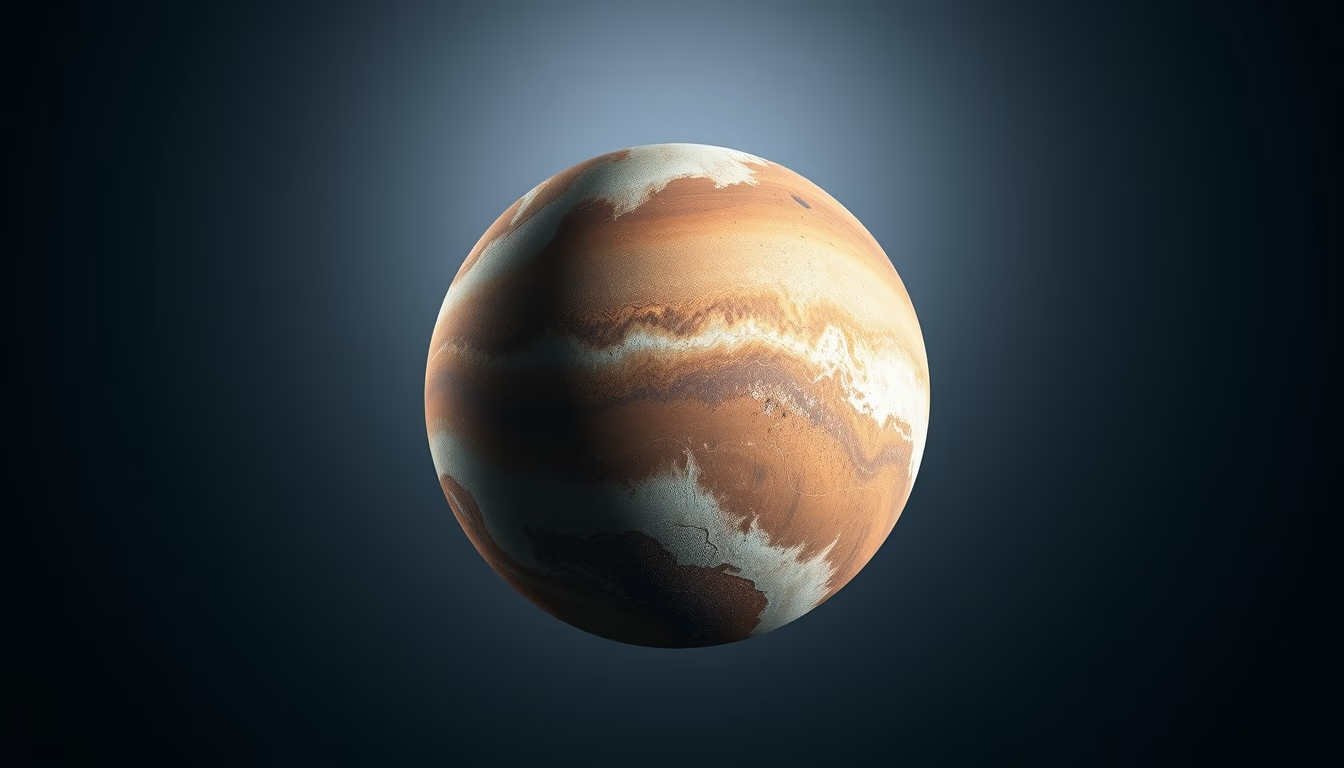
Tidal locked planet
1344×768 · AVIF · CC BY 4.0

Tidally locked planets always show the same face to their star, leading to extreme temperature contrasts and unique landscapes across the cosmos.
About this subject
Tidal locking is a gravitational phenomenon where a planet's orbital period matches its rotation period, resulting in one hemisphere permanently facing its star (dayside) and the other in perpetual darkness (nightside). This is common among exoplanets orbiting close to red dwarf stars, such as those in the TRAPPIST-1 system and Proxima Centauri b. Dayside temperatures can exceed 200°C, while nightside temperatures may drop below -200°C, creating a twilight zone at the terminator where life could potentially exist under milder conditions.
Most potentially habitable planets around M-type stars are believed to be tidally locked. This raises questions about climate stability and liquid water presence. Atmospheric models suggest that a thick atmosphere could redistribute heat, mitigating extremes. For instance, LHS 3844 b appears to have a rocky, airless surface, while Venus in our solar system is nearly but not fully tidally locked.
Interestingly, Earth’s Moon is tidally locked, always showing the same face. This also occurs on moons of Jupiter and Saturn, such as Europa and Enceladus, where tidal heating may sustain subsurface oceans. Studying tidally locked exoplanets helps understand climate diversity and the potential for life under extreme conditions, expanding astrobiology's horizons.
Frequently Asked Questions
What causes tidal locking?
Tidal locking happens when a star’s gravity deforms the planet, dissipating rotational energy over billions of years until the rotation matches the orbital period.
Are there tidally locked planets in the Solar System?
Not for planets, but Earth’s Moon is tidally locked. Mercury has a 3:2 resonance, not full locking.
Can life exist on a tidally locked planet?
Yes, in the terminator zone (day-night boundary) or with a thick atmosphere that redistributes heat. Exoplanets like Proxima b are candidates.
Direct URL
https://pub-c7d6a6ea828543ac903a74a341ccb2e1.r2.dev/imagens/tidal-locked-planet-high-fashion-editorial-fresh5.avifHow to credit
Include a visible link back to UtilizAí. Copy one of the snippets below:
<a href="https://xn--utiliza-eza.com/en/midia/imagens/tidal-locked-planet-high-fashion-editorial-fresh5">Tidal locked planet</a> by <a href="https://xn--utiliza-eza.com">UtilizAí</a>, licensed under <a href="https://creativecommons.org/licenses/by/4.0/">CC BY 4.0</a>.
[Tidal locked planet](https://xn--utiliza-eza.com/en/midia/imagens/tidal-locked-planet-high-fashion-editorial-fresh5) by [UtilizAí](https://xn--utiliza-eza.com), CC BY 4.0
License: CC-BY-4.0