Thinker rodin paris
1344×768 · AVIF · CC BY 4.0
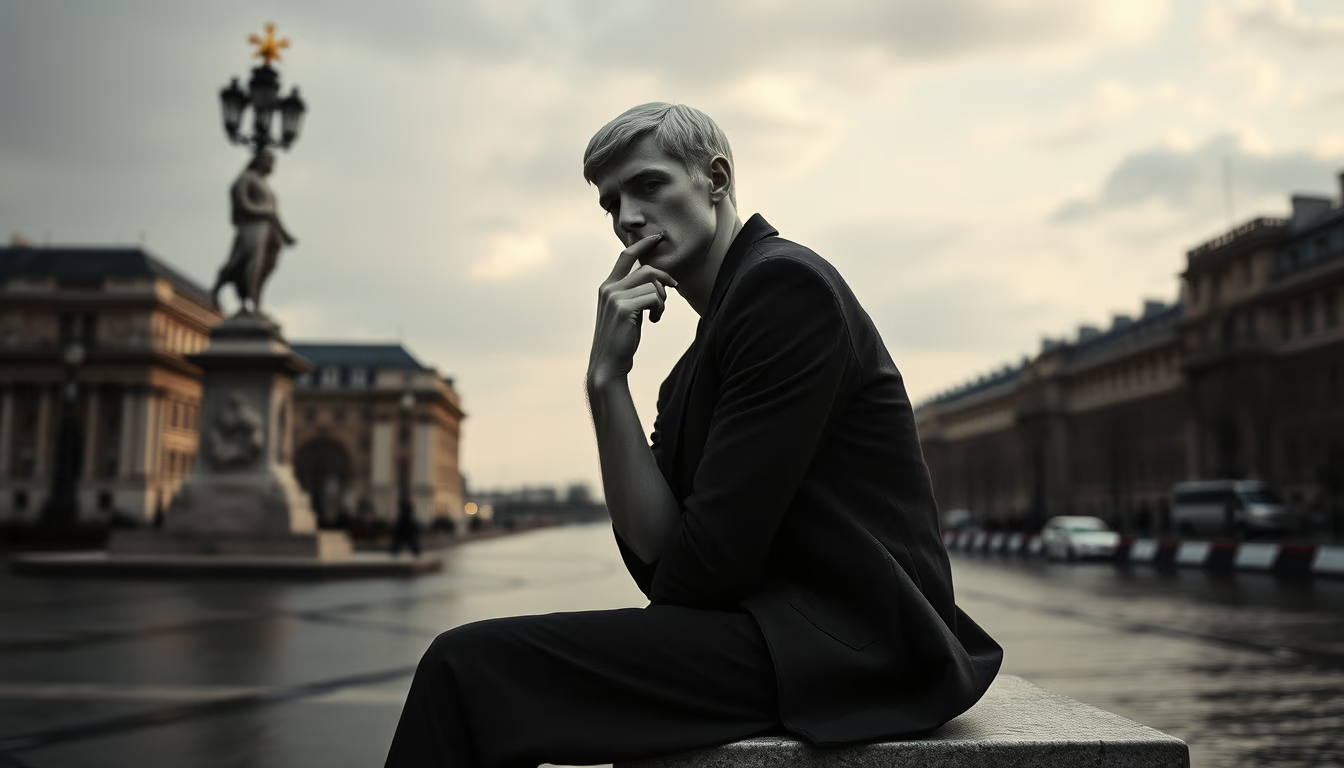
Rodin's The Thinker, one of the world's most iconic sculptures, embodies philosophical introspection and artistic genius from the late 19th century.
About this subject
The Thinker, originally titled "The Poet", is a masterpiece by French sculptor Auguste Rodin, created between 1880 and 1882 as part of his monumental work "The Gates of Hell". The sculpture depicts a nude man seated on a rock, chin resting on his hand, in deep contemplation. This pose symbolizes philosophical thought and creativity, inspired by Dante Alighieri's work, which Rodin portrayed at the entrance of hell. The piece gained worldwide fame after being exhibited in 1904 at the Salon in Paris, and today over 28 bronze and plaster replicas are spread across museums globally, such as the Musée Rodin in Paris and the Metropolitan Museum of Art in New York.
Rodin's technique innovated by capturing muscular tension and an expression of anguish, using expressive modeling that challenged the academicism of the time. The Thinker is often interpreted as a representation of the human condition, the dilemma between reason and emotion. Interestingly, the work was initially conceived as a central figure atop the "Gates of Hell", representing Dante himself observing the damned. However, Rodin decided to isolate and enlarge it to become an autonomous piece. The first bronze casting occurred in 1904, and the enlarged scale (about 1.86 meters tall) enhances the psychological impact.
In the Brazilian cultural context, The Thinker is widely recognized due to reproductions in public spaces and references in media, such as book covers and pop culture. The sculpture also inspired debates on art and philosophy, often cited in discussions about the role of the intellectual in society. Its image is so iconic that it has become a symbol of reflection and critique, transcending artistic borders. In Paris, the original bronze is displayed at the Musée Rodin, in the garden of the Hôtel Biron, surrounded by other works by the artist, offering direct contact with the sculptor's genius.
Beyond its aesthetic value, The Thinker carries a technical legacy: Rodin used plaster molds and multiple castings, resulting in slight variations among replicas. The dark patinated bronze model, with a textured finish, highlights the muscular details and the facial expression laden with unease. The work continues to be studied and admired for its psychological realism, serving as one of the greatest examples of modern sculpture.
Frequently Asked Questions
What is the meaning of Rodin's The Thinker?
The Thinker symbolizes philosophical introspection and the human conflict between reason and emotion. Originally inspired by Dante, it represents the poet meditating on hell.
How many replicas of The Thinker exist worldwide?
There are over 28 bronze and plaster replicas located in museums and public spaces across various countries, including France, the United States, and Brazil.
Where is the original version of The Thinker located?
The original bronze version is displayed at the Musée Rodin in Paris, in the gardens of the Hôtel Biron.
Direct URL
https://pub-c7d6a6ea828543ac903a74a341ccb2e1.r2.dev/imagens/thinker-rodin-paris-high-fashion-editorial-fresh1.avifHow to credit
Include a visible link back to UtilizAí. Copy one of the snippets below:
<a href="https://xn--utiliza-eza.com/en/midia/imagens/thinker-rodin-paris-high-fashion-editorial-fresh1">Thinker rodin paris</a> by <a href="https://xn--utiliza-eza.com">UtilizAí</a>, licensed under <a href="https://creativecommons.org/licenses/by/4.0/">CC BY 4.0</a>.
[Thinker rodin paris](https://xn--utiliza-eza.com/en/midia/imagens/thinker-rodin-paris-high-fashion-editorial-fresh1) by [UtilizAí](https://xn--utiliza-eza.com), CC BY 4.0
License: CC-BY-4.0