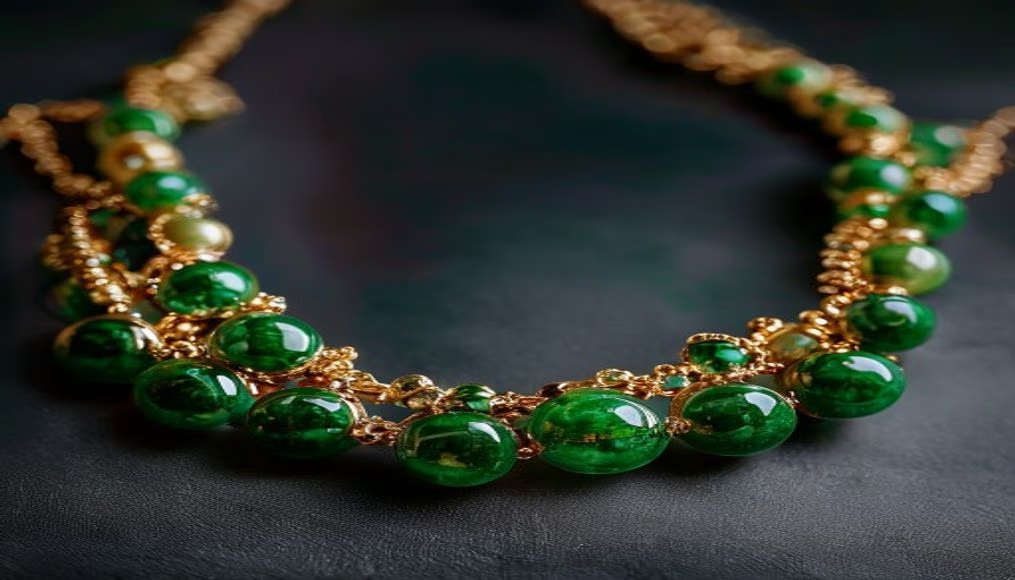
Tahitian pearl earrings dangle
1344×768 · AVIF · CC BY 4.0

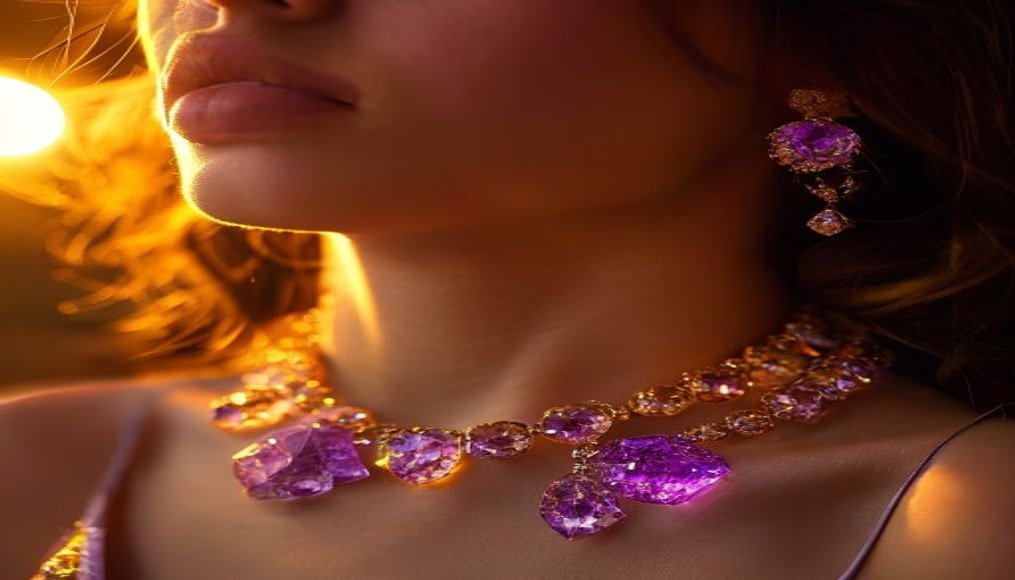
Tahitian pearl dangle earrings, prized for their dark hues and iridescence, cultivated in the South Pacific and a symbol of luxury.
About this subject
Tahitian pearls, often called black pearls, are cultivated by the black-lipped oyster (Pinctada margaritifera). Despite the name, they are not exclusively black; their color range includes silver gray, green, blue, purple, and rarely pure black. The characteristic iridescence, known as orient, results from layers of nacre deposited around a surgically implanted nucleus. Farming takes place mainly in the lagoons of French Polynesia, where clear waters and stable temperatures favor high-quality pearl development. Each pearl takes 18 to 24 months to form, and only one in a thousand oysters yields a gem with marketable luster and shape.
Dangle earrings highlight the movement and lightness of the pearls, allowing light to hit the surface from different angles and enhance the color play. These earrings are typically set in noble metals such as yellow, white gold, or rhodium, with secure clasps for comfort. The pearl shape, round, baroque, or semi-baroque, greatly influences style: perfectly round pearls are rare and expensive, while baroque ones offer artistic, unique appeal.
The history of Tahitian pearls in the modern luxury market began in the 1970s when the French Polynesian government invested in cultivation technology to diversify the economy. Today, Tahiti produces over 90% of the world's Tahitian pearls, with international auctions attracting collectors. As organic gems, they require special care: avoid contact with perfumes, cosmetics, and chemicals, and clean with a slightly damp soft cloth. Durability is moderate, but their hardness on the Mohs scale (2.5 to 4.5) makes them susceptible to scratches.
Frequently Asked Questions
How to identify a real Tahitian pearl?
Real Tahitian pearls have natural iridescence, slightly uneven surface, and colors ranging from gray to green-blue. A simple test is to gently rub the pearl against your teeth: if it feels gritty, it's natural; if smooth, it's imitation. They are also heavier than plastic or glass fakes.
How to care for Tahitian pearl earrings?
Avoid contact with perfumes, lotions, sweat, or chemicals. Store them separately from other jewelry to prevent scratches. Clean with a soft, slightly damp cloth after wearing. Do not use ultrasonic or steam cleaners, as they can damage the nacre.
Where do Tahitian pearls come from?
They are cultivated in French Polynesia, primarily in the islands of Tahiti, Tuamotu, and Gambier. The black-lipped oyster Pinctada margaritifera is native to these tropical waters. Commercial production began in the 1970s, and today Tahiti dominates the global market.
Direct URL
https://pub-c7d6a6ea828543ac903a74a341ccb2e1.r2.dev/imagens/tahitian-pearl-earrings-dangle-studio-lighting-golden-hour-glow-luxo1.avifHow to credit
Include a visible link back to UtilizAí. Copy one of the snippets below:
<a href="https://xn--utiliza-eza.com/en/midia/imagens/tahitian-pearl-earrings-dangle-studio-lighting-golden-hour-glow-luxo1">Tahitian pearl earrings dangle</a> by <a href="https://xn--utiliza-eza.com">UtilizAí</a>, licensed under <a href="https://creativecommons.org/licenses/by/4.0/">CC BY 4.0</a>.
[Tahitian pearl earrings dangle](https://xn--utiliza-eza.com/en/midia/imagens/tahitian-pearl-earrings-dangle-studio-lighting-golden-hour-glow-luxo1) by [UtilizAí](https://xn--utiliza-eza.com), CC BY 4.0
License: CC-BY-4.0