Surgical robot da vinci
1344×768 · AVIF · CC BY 4.0
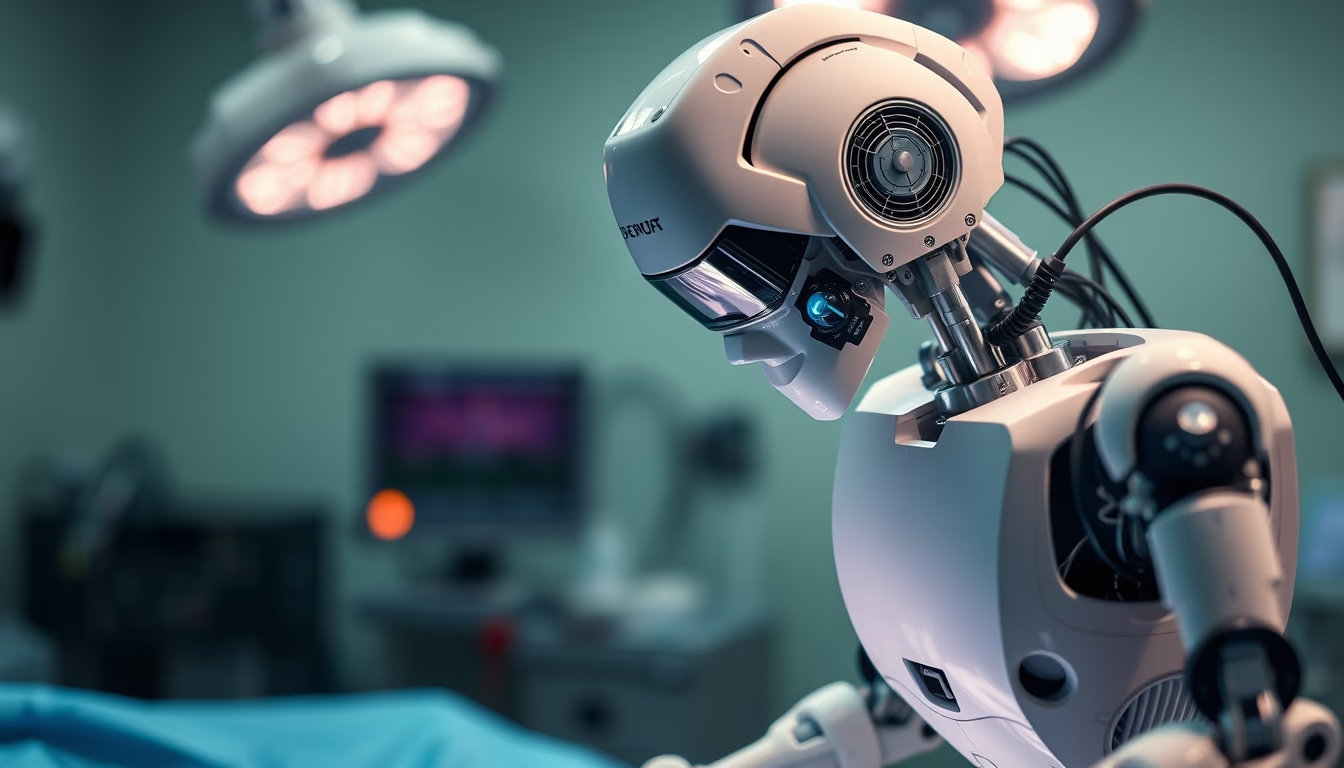
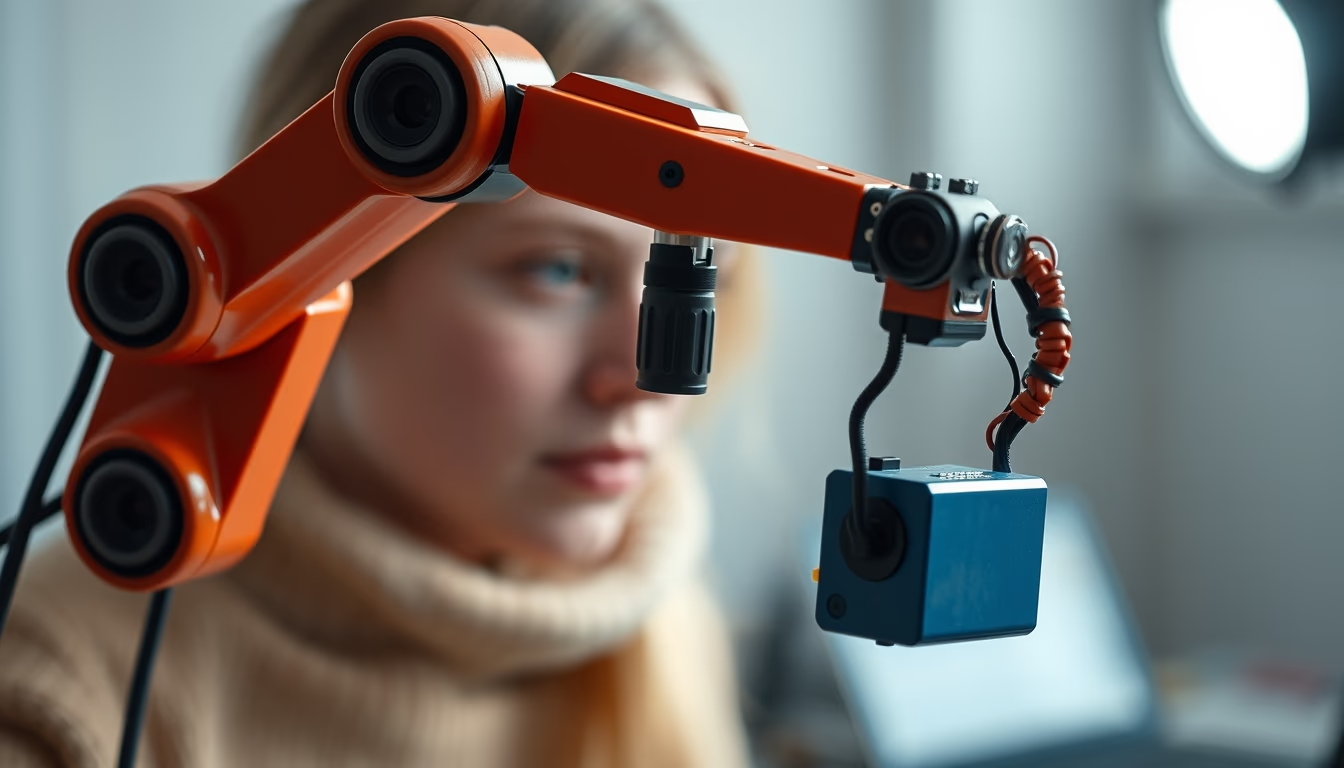
The Da Vinci surgical robot enables minimally invasive procedures with millimeter precision, revolutionizing surgery since the early 2000s.
About this subject
The Da Vinci Surgical System, developed by Intuitive Surgical, is a robotic platform that assists surgeons in complex operations through minimal incisions. Composed of three main components, surgeon console, patient cart, and vision tower, the system translates the surgeon's hand movements into precise actions of robotic instruments, with three-dimensional high-definition magnification. The first Da Vinci surgery was performed in Europe in 1997, and the system received FDA approval in 2000 for general procedures. To date, over 8 million surgeries have been performed globally using this technology, covering urology, gynecology, cardiac, and thoracic surgery.
One major advantage of Da Vinci is the elimination of natural hand tremors and the ability to scale movements: instrument rotation can be reduced to fractions of a millimeter. Additionally, the system offers seven degrees of freedom, surpassing human wrist articulation. In Brazil, the first robot was installed at Hospital Sírio-Libanês in São Paulo, in 2008, and there are now dozens of units across public and private hospitals. However, the technology has limitations: high cost (each unit can reach US$2 million) and a steep learning curve for surgeons still restrict its widespread adoption.
Interestingly, the name “Da Vinci” honors Leonardo da Vinci, who designed one of the first humanoid robots in history, a mechanical knight. While often called “robotic surgery,” the system does not operate autonomously: the surgeon controls every movement. Comparative studies show that for radical prostatectomies, Da Vinci can reduce blood loss and hospital stay compared to traditional laparoscopic surgery. However, its effectiveness in other procedures is still debated, and Intuitive Surgical continues to release updates like Da Vinci Xi and SP (Single Port), expanding surgical possibilities.
Frequently Asked Questions
Can the Da Vinci robot operate on its own?
No. The system is fully controlled by the surgeon, who manipulates the console controls. The robot merely replicates the surgeon's hand movements, providing precision and stability.
What are the main benefits of robotic surgery with Da Vinci?
Reduced blood loss, faster recovery, smaller incisions, and lower infection risk. In procedures like prostatectomy, there is also less postoperative pain and shorter hospital stays.
Are there differences between Da Vinci and other surgical robotic systems?
Yes. Da Vinci is the most widespread, but competitors like Senhance (TransEnterix) and Revo-i (Meere Company) offer alternatives with different designs and price ranges. Da Vinci stands out for its technical support and variety of instruments.
Direct URL
https://pub-c7d6a6ea828543ac903a74a341ccb2e1.r2.dev/imagens/surgical-robot-da-vinci-tilt-shift-miniature-p9.avifHow to credit
Include a visible link back to UtilizAí. Copy one of the snippets below:
<a href="https://xn--utiliza-eza.com/en/midia/imagens/surgical-robot-da-vinci-tilt-shift-miniature-p9">Surgical robot da vinci</a> by <a href="https://xn--utiliza-eza.com">UtilizAí</a>, licensed under <a href="https://creativecommons.org/licenses/by/4.0/">CC BY 4.0</a>.
[Surgical robot da vinci](https://xn--utiliza-eza.com/en/midia/imagens/surgical-robot-da-vinci-tilt-shift-miniature-p9) by [UtilizAí](https://xn--utiliza-eza.com), CC BY 4.0
License: CC-BY-4.0