Robô cirúrgico da vinci
1344×768 · AVIF · CC BY 4.0
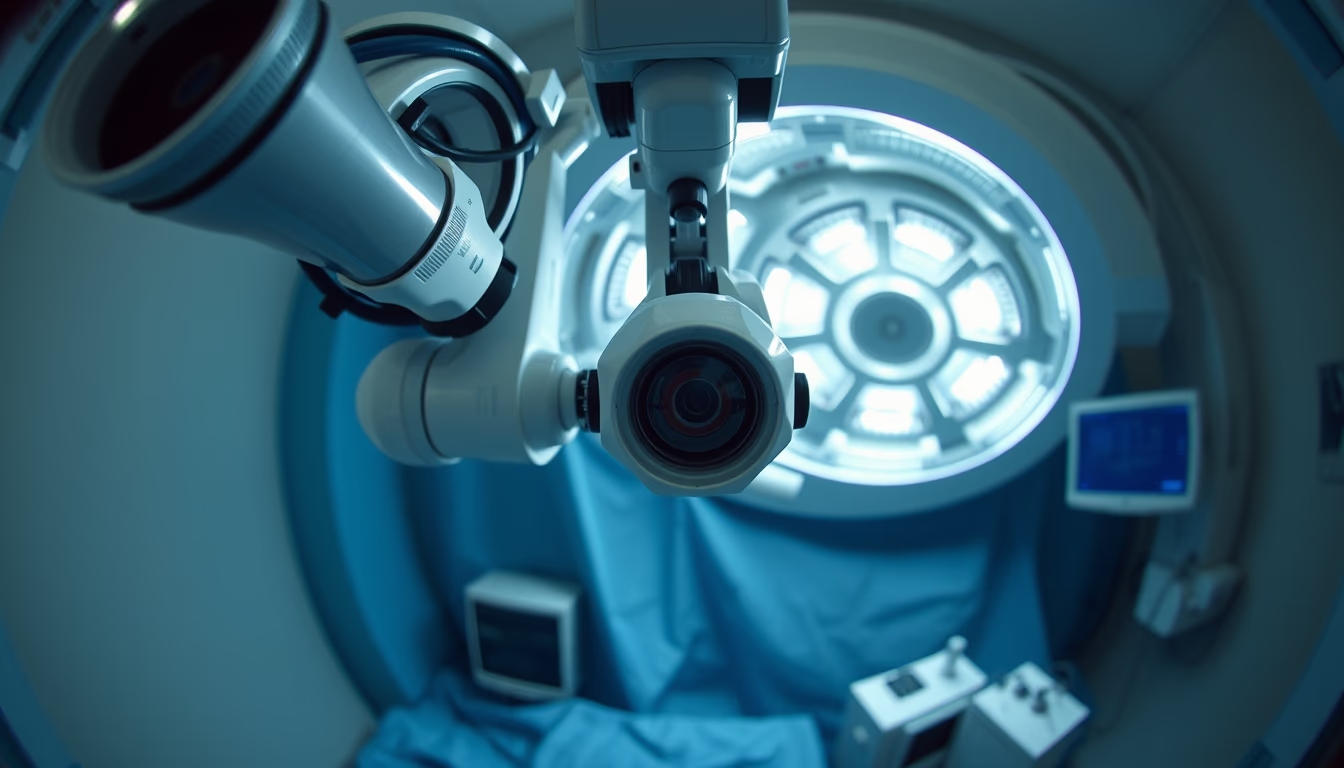
O robô cirúrgico Da Vinci revoluciona procedimentos minimamente invasivos com precisão e controle avançados.
Sobre o tema
O sistema cirúrgico Da Vinci, desenvolvido pela Intuitive Surgical, é um dos robôs mais utilizados em cirurgias minimamente invasivas ao redor do mundo. Lançado no final dos anos 1990, ele permite que cirurgiões realizem procedimentos complexos com incisões muito pequenas, utilizando braços robóticos articulados e uma câmera 3D de alta definição. O sistema reproduz os movimentos da mão do cirurgião em tempo real, com filtragem de tremores e ampliação de escala, proporcionando uma precisão submilimétrica.
O Da Vinci é aplicado em diversas especialidades, como urologia, ginecologia, cirurgia cardíaca e cirurgia geral. Sua câmera endoscópica oferece uma visão ampliada e tridimensional do campo operatório, enquanto os instrumentos articulados têm sete graus de liberdade, imitando a mobilidade do punho humano. Estudos mostram que, em comparação com a cirurgia aberta, o uso do robô reduz o tempo de internação, a perda sanguínea e as taxas de complicações.
A tecnologia evoluiu para versões como o Da Vinci Xi e o SP (Single Port), este último capaz de operar através de uma única incisão. Ainda que o custo elevado e a curvas de aprendizado sejam desafios, o sistema já foi utilizado em milhões de procedimentos globalmente. No Brasil, hospitais de referência como o Sírio-Libanês e o Albert Einstein contam com essa plataforma, impulsionando a cirúrgica robótica no país.
Uma curiosidade: o nome Da Vinci foi inspirado no polímata Leonardo da Vinci, que em 1495 desenhou um esboço de um homem mecânico considerado o primeiro robô humanoide da história. Esse elo histórico reforça a ponte entre a inovação renascentista e a robótica moderna.
Perguntas frequentes
Como funciona o robô Da Vinci?
O cirurgião senta-se em um console e controla os braços robóticos que seguram os instrumentos cirúrgicos. Uma câmera 3D fornece visão ampliada, e os movimentos da mão são traduzidos em movimentos precisos e sem tremor. O sistema também permite escalonar movimentos, reduzindo a amplitude para maior precisão.
Quais são as vantagens da cirurgia robótica com Da Vinci?
As principais vantagens incluem incisões menores, menor perda de sangue, menos dor pós-operatória, recuperação mais rápida e menor tempo de internação. Além disso, oferece visualização tridimensional e maior destreza em espaços confinados.
O robô Da Vinci é usado no Brasil?
Sim, diversos hospitais brasileiros de ponta, como o Hospital Sírio-Libanês, o Hospital Albert Einstein e o Hospital das Clínicas de São Paulo, utilizam o sistema Da Vinci para procedimentos em urologia, ginecologia e cirurgia geral.
URL direta
https://pub-c7d6a6ea828543ac903a74a341ccb2e1.r2.dev/imagens/surgical-robot-da-vinci-fish-eye-wide-angle-p8.avifComo creditar
Inclua um link visível de volta pro UtilizAí. Copie um dos snippets abaixo:
<a href="https://xn--utiliza-eza.com/midia/imagens/surgical-robot-da-vinci-fish-eye-wide-angle-p8">Robô cirúrgico da vinci</a> by <a href="https://xn--utiliza-eza.com">UtilizAí</a>, licensed under <a href="https://creativecommons.org/licenses/by/4.0/">CC BY 4.0</a>.
[Robô cirúrgico da vinci](https://xn--utiliza-eza.com/midia/imagens/surgical-robot-da-vinci-fish-eye-wide-angle-p8) by [UtilizAí](https://xn--utiliza-eza.com), CC BY 4.0
Licença: CC-BY-4.0