Surgical instruments laid out sterile
1344×768 · AVIF · CC BY 4.0
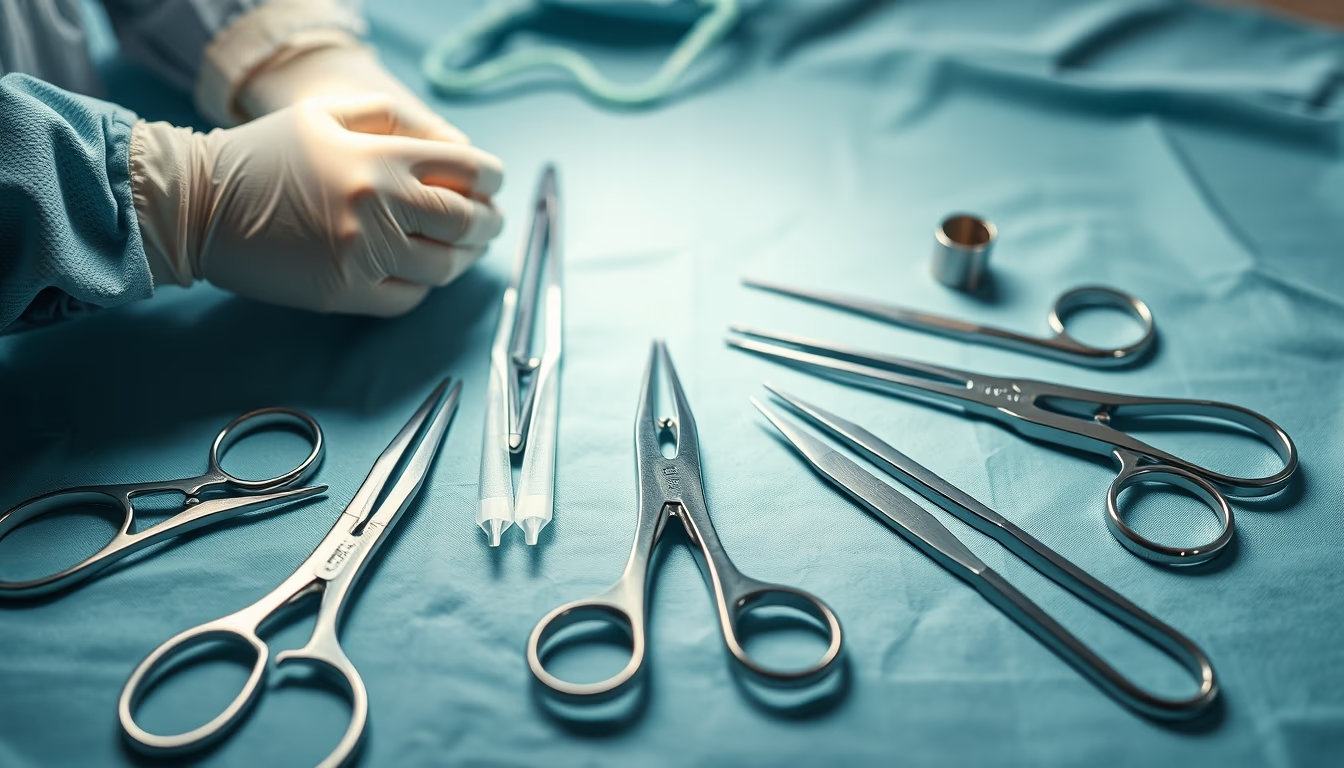
Instrumentos cirúrgicos dispostos em campo estéril, essenciais para procedimentos médicos seguros e assépticos.
Sobre o tema
Instrumentos cirúrgicos estéreis são a base de qualquer procedimento invasivo, garantindo que o risco de infecção seja minimizado. A esterilização é um processo crítico que elimina todos os microrganismos, incluindo esporos, por meio de métodos como autoclavação (vapor sob pressão), óxido de etileno ou radiação gama. No Brasil, a Agência Nacional de Vigilância Sanitária (ANVISA) regula rigorosamente os protocolos de esterilização em hospitais e clínicas, seguindo padrões internacionais como os da Organização Mundial da Saúde (OMS).
Os instrumentos mais comuns incluem bisturis, pinças, tesouras, afastadores e porta-agulhas, cada um com design específico para cortar, dissecar, segurar ou suturar tecidos. A disposição em bandejas estéreis segue uma ordem lógica de uso durante a cirurgia, otimizando o tempo e a segurança. A manutenção desses instrumentos é igualmente importante: após o uso, passam por limpeza, desinfecção e inspeção antes de serem reesterilizados.
A história da esterilização cirúrgica remonta ao século XIX com os trabalhos de Joseph Lister, que introduziu o ácido carbólico para reduzir infecções. Hoje, a tecnologia avançou para incluir indicadores químicos e biológicos que confirmam a eficácia do processo. No contexto brasileiro, a cultura de segurança do paciente tem impulsionado a adoção de sistemas de rastreabilidade, como códigos de barras nas embalagens, para monitorar cada ciclo de esterilização.
Curiosamente, a cor dos campos estéreis (geralmente azul ou verde) não é aleatória: essas cores reduzem o ofuscamento sob luzes cirúrgicas intensas e contrastam com o vermelho do sangue, facilitando a visualização. A disposição organizada dos instrumentos é tão crucial que equipes cirúrgicas treinam repetidamente para manter a esterilidade durante todo o procedimento, evitando contaminação que poderia levar a complicações pós-operatórias.
Perguntas frequentes
Por que os instrumentos cirúrgicos precisam ser estéreis?
A esterilização elimina todos os microrganismos, prevenindo infecções no sítio cirúrgico, que podem causar complicações graves e prolongar a recuperação do paciente.
Como é feita a esterilização de instrumentos cirúrgicos?
Os métodos mais comuns incluem autoclavação (vapor a alta pressão), óxido de etileno para materiais sensíveis ao calor e radiação gama para itens descartáveis. Cada método é validado por indicadores químicos e biológicos.
Qual a diferença entre limpeza, desinfecção e esterilização?
Limpeza remove sujidades visíveis; desinfecção elimina a maioria dos patógenos, mas não esporos; esterilização destrói todos os microrganismos, incluindo esporos. Cirurgias invasivas exigem esterilização.
URL direta
https://pub-c7d6a6ea828543ac903a74a341ccb2e1.r2.dev/imagens/surgical-instruments-laid-out-sterile-studio-editorial-portrait-v3.avifComo creditar
Inclua um link visível de volta pro UtilizAí. Copie um dos snippets abaixo:
<a href="https://xn--utiliza-eza.com/midia/imagens/surgical-instruments-laid-out-sterile-studio-editorial-portrait-v3">Surgical instruments laid out sterile</a> by <a href="https://xn--utiliza-eza.com">UtilizAí</a>, licensed under <a href="https://creativecommons.org/licenses/by/4.0/">CC BY 4.0</a>.
[Surgical instruments laid out sterile](https://xn--utiliza-eza.com/midia/imagens/surgical-instruments-laid-out-sterile-studio-editorial-portrait-v3) by [UtilizAí](https://xn--utiliza-eza.com), CC BY 4.0
Licença: CC-BY-4.0