Sunflower field golden
1344×768 · AVIF · CC BY 4.0
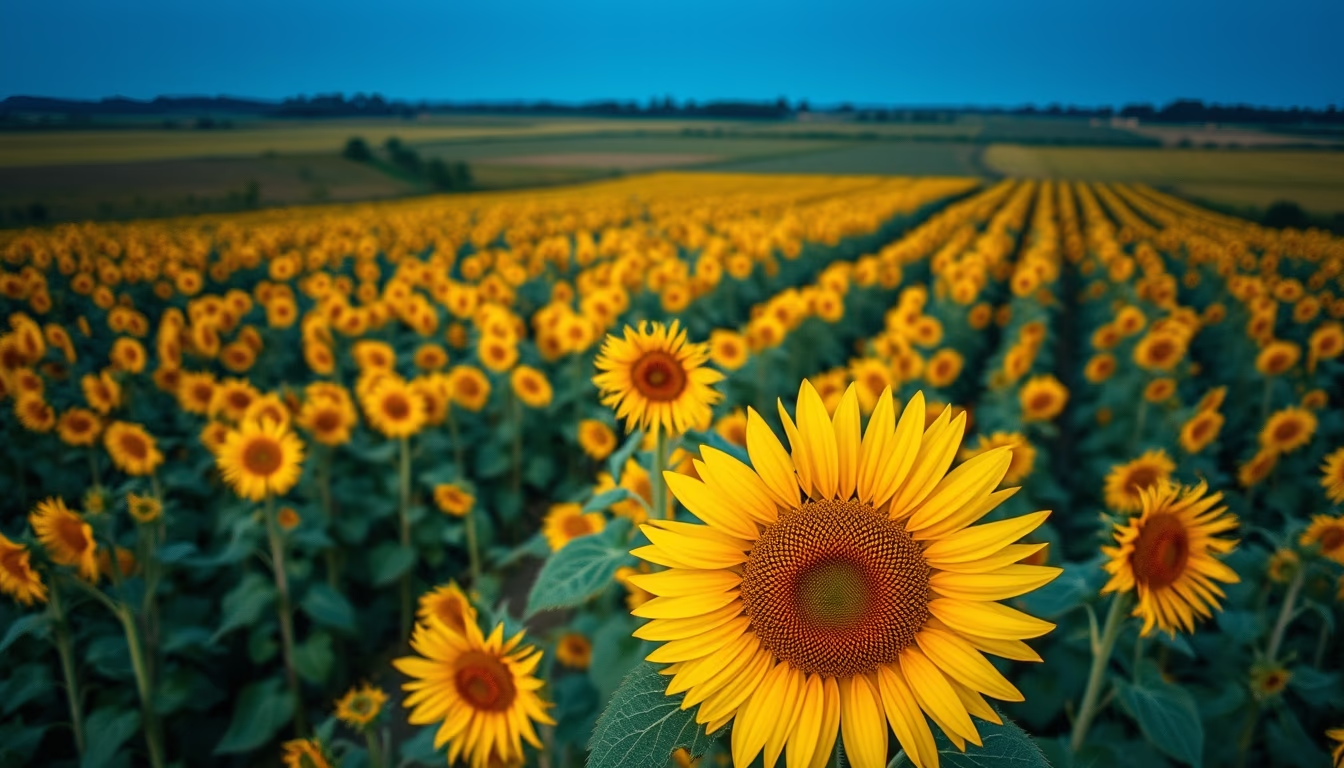
Campo de girassóis em plena floração visto de cima, com fileiras douradas contrastando com o verde das folhas.
Sobre o tema
Os girassóis (Helianthus annuus) são plantas nativas das Américas, cultivadas há milhares de anos por povos indígenas para alimentação, óleo e corantes. Hoje, os maiores produtores mundiais incluem Ucrânia, Rússia e Argentina. O campo visto na imagem representa uma fase crucial do ciclo agrícola: a floração plena, que ocorre cerca de 50 a 70 dias após o plantio, dependendo da variedade e das condições climáticas. Nesse estágio, as plantas atingem de 1,5 a 3 metros de altura e as inflorescências (capítulos) podem chegar a 30 cm de diâmetro.
A disposição em fileiras paralelas é típica de cultivos comerciais, otimizando a exposição solar e o manejo mecanizado. O ângulo aéreo revela um padrão geométrico impressionante, onde cada girassol segue o movimento do sol ao longo do dia (heliotropismo), mas apenas durante as fases iniciais de desenvolvimento. Durante a floração, a maioria das variedades fixa-se voltada para o leste, maximizando a polinização por abelhas e outros insetos.
Além do valor estético, os girassóis têm importância econômica significativa. Suas sementes são fonte de óleo rico em ácidos graxos insaturados, usados na culinária e na produção de biodiesel. O farelo resultante da extração do óleo é utilizado como ração animal. No Brasil, o cultivo concentra-se no Centro-Oeste e no Sul, com safras que variam conforme a demanda do mercado interno e externo. A época de floração também atrai turistas em regiões como o Distrito Federal e o Rio Grande do Sul, onde fazendas abrem para visitação.
Curiosidade: um único girassol pode conter até 2.000 sementes, e sua altura recorde registrada é de mais de 9 metros, cultivado na Alemanha em 2014. O campo dourado simboliza não apenas beleza natural, mas também a engenharia agrícola que alimenta populações e impulsiona economias.
Perguntas frequentes
Por que os girassóis seguem o sol?
Os girassóis jovens apresentam heliotropismo, movendo-se para acompanhar o sol de leste a oeste. Isso maximiza a fotossíntese e o crescimento. Na floração, a maioria das variedades para de se mover e fica fixa voltada para o leste, o que ajuda na polinização.
Qual a melhor época para ver girassóis no Brasil?
No Brasil, a floração dos girassóis ocorre entre janeiro e março, dependendo da região e da época de plantio. No Distrito Federal, por exemplo, os campos florescem em fevereiro. É importante verificar com as fazendas locais as datas exatas, pois variam anualmente.
Os girassóis são usados apenas para óleo?
Não. As sementes de girassol são consumidas como petisco, na forma de paçoca ou torradas. O óleo é usado na culinária e na indústria cosmética. As flores também são usadas em arranjos ornamentais e a planta pode ser utilizada na fitorremediação de solos contaminados.
URL direta
https://pub-c7d6a6ea828543ac903a74a341ccb2e1.r2.dev/imagens/sunflower-field-golden-aerial-drone-shot.avifComo creditar
Inclua um link visível de volta pro UtilizAí. Copie um dos snippets abaixo:
<a href="https://xn--utiliza-eza.com/midia/imagens/sunflower-field-golden-aerial-drone-shot">Sunflower field golden</a> by <a href="https://xn--utiliza-eza.com">UtilizAí</a>, licensed under <a href="https://creativecommons.org/licenses/by/4.0/">CC BY 4.0</a>.
[Sunflower field golden](https://xn--utiliza-eza.com/midia/imagens/sunflower-field-golden-aerial-drone-shot) by [UtilizAí](https://xn--utiliza-eza.com), CC BY 4.0
Licença: CC-BY-4.0