Stalingrad ruins
1344×768 · AVIF · CC BY 4.0
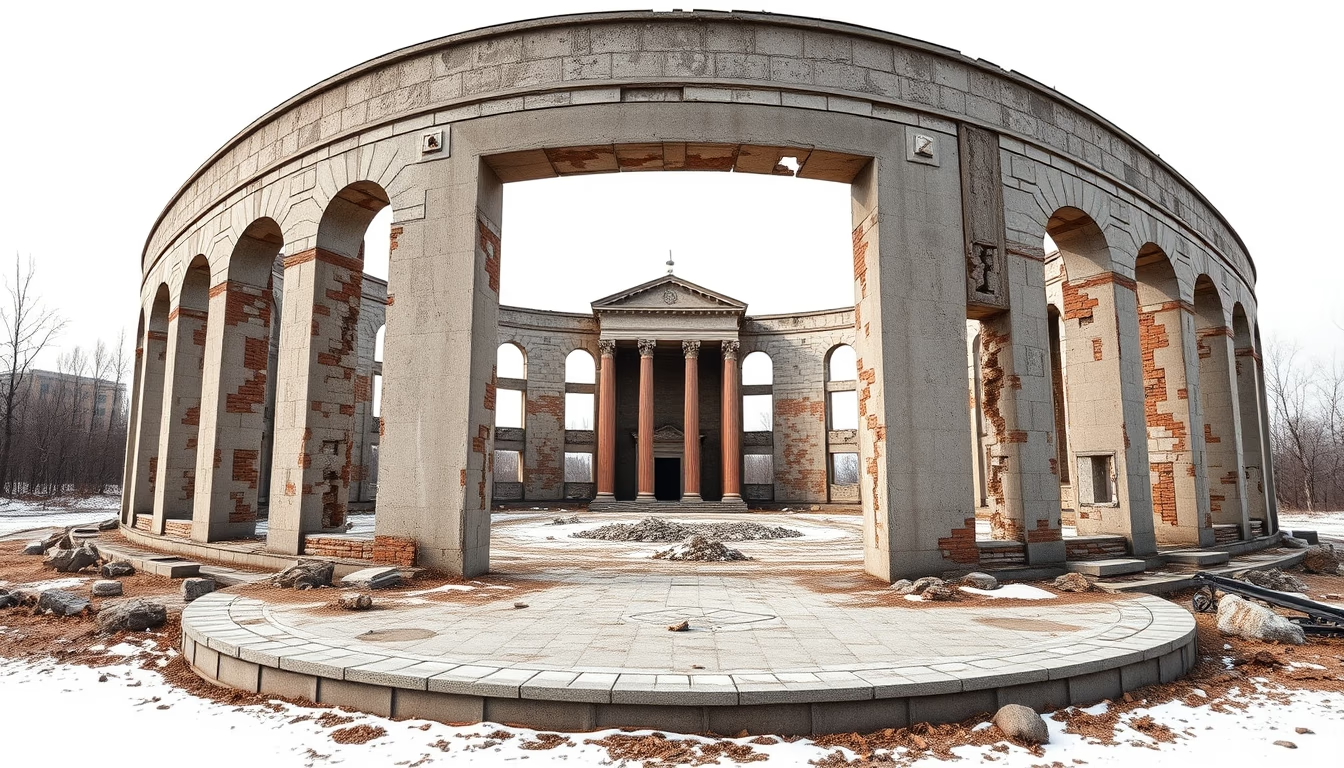
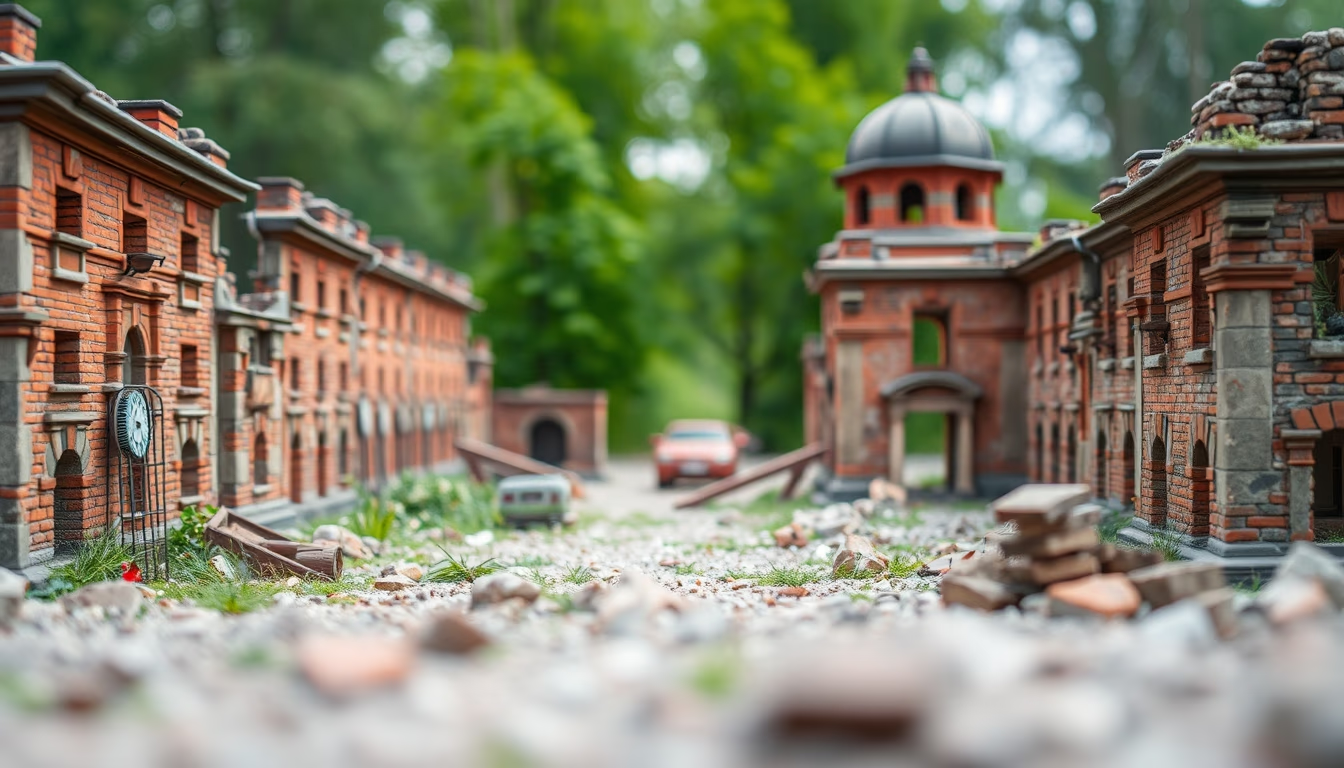
The ruins of Stalingrad, site of the bloodiest battle of World War II, symbolize Soviet resistance and the turning point of the war in Europe.
About this subject
The Battle of Stalingrad (August 1942 to February 1943) was the decisive clash between Nazi Germany and the Soviet Union. The Soviets defended the city on the Volga River, resulting in about 2 million combined casualties. After months of intense urban combat, the German 6th Army surrendered, marking Hitler's first major defeat and the start of the Soviet advance toward Berlin.
The city was almost completely destroyed, with 90% of buildings damaged. Contemporary photos show rubble, ruined factories, and the iconic grain elevator used as a fortress. After the war, Stalingrad was rebuilt and renamed Volgograd in 1961 during de-Stalinization. Today, the Battle of Stalingrad Panorama Museum preserves the memory of the conflict, including original fragments of the ruins.
The cultural impact is immense: the battle inspired films, books, and the famous Mamayev Kurgan memorial with the statue "The Motherland Calls!" The ruins are a symbol of resistance and human cost, reminding us that urban warfare can annihilate entire cities. Visiting the historic sites allows understanding of the scale of destruction and the resilience of survivors.
Interestingly, the term "Stalingrad ruins" is also used in product photography and fashion, evoking a dramatic, historical tone. But the true legacy lies in facts: the battle lasted 199 days, and the city was one of the deadliest places on the planet during that period.
Frequently Asked Questions
Why was Stalingrad renamed Volgograd?
Stalingrad was renamed Volgograd in 1961 as part of de-Stalinization by Nikita Khrushchev, aiming to dismantle Stalin's personality cult. The new name derives from the Volga River.
How many people died in the Battle of Stalingrad?
Approximately 1.2 million Soviet casualties and 800,000 Axis casualties (dead, wounded, missing). Civilians also suffered: about 40,000 died during the fighting.
What remains of the original ruins of Stalingrad?
Few original structures survive, such as parts of the grain elevator and some walls of the Red October factory. The Panorama Museum preserves fragments and historical photos. The city was almost entirely rebuilt.
Direct URL
https://pub-c7d6a6ea828543ac903a74a341ccb2e1.r2.dev/imagens/stalingrad-ruins-commercial-product-photography-fresh7.avifHow to credit
Include a visible link back to UtilizAí. Copy one of the snippets below:
<a href="https://xn--utiliza-eza.com/en/midia/imagens/stalingrad-ruins-commercial-product-photography-fresh7">Stalingrad ruins</a> by <a href="https://xn--utiliza-eza.com">UtilizAí</a>, licensed under <a href="https://creativecommons.org/licenses/by/4.0/">CC BY 4.0</a>.
[Stalingrad ruins](https://xn--utiliza-eza.com/en/midia/imagens/stalingrad-ruins-commercial-product-photography-fresh7) by [UtilizAí](https://xn--utiliza-eza.com), CC BY 4.0
License: CC-BY-4.0