Square machinist
1344×768 · AVIF · CC BY 4.0

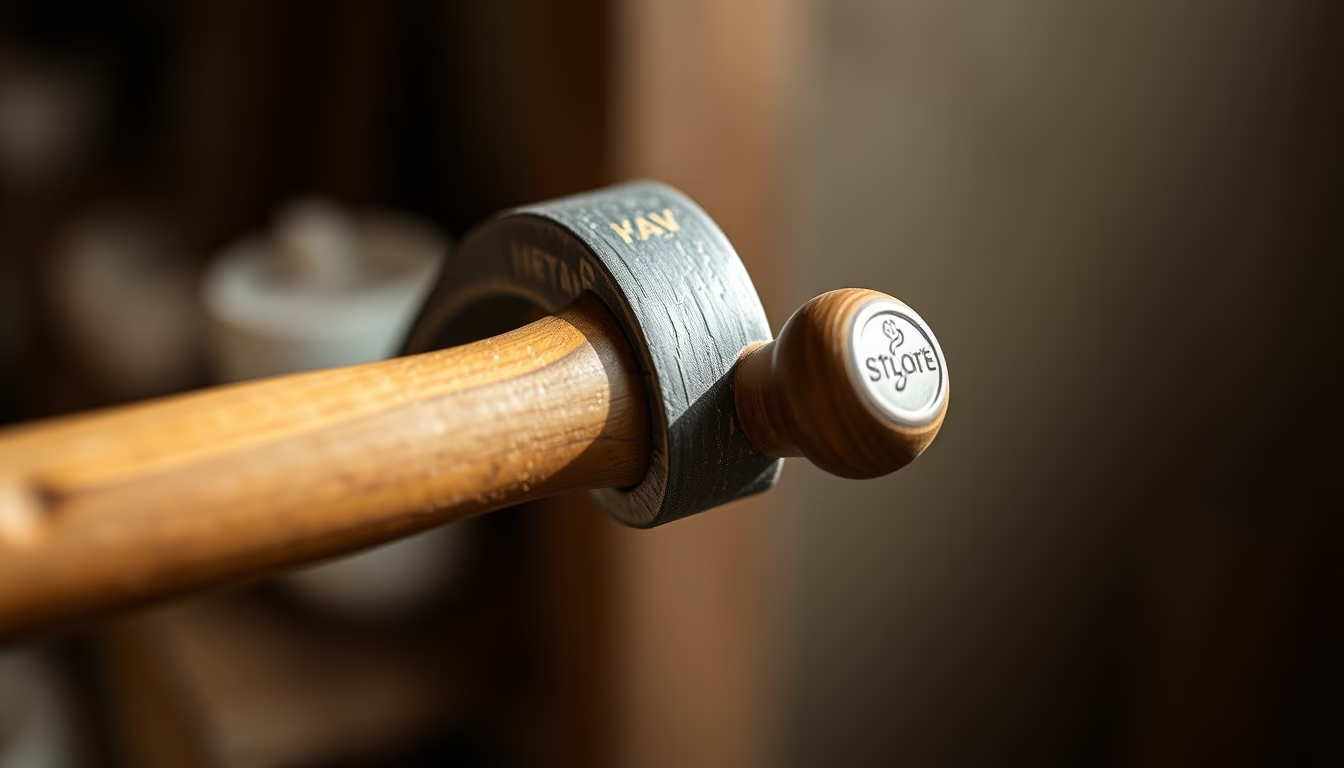
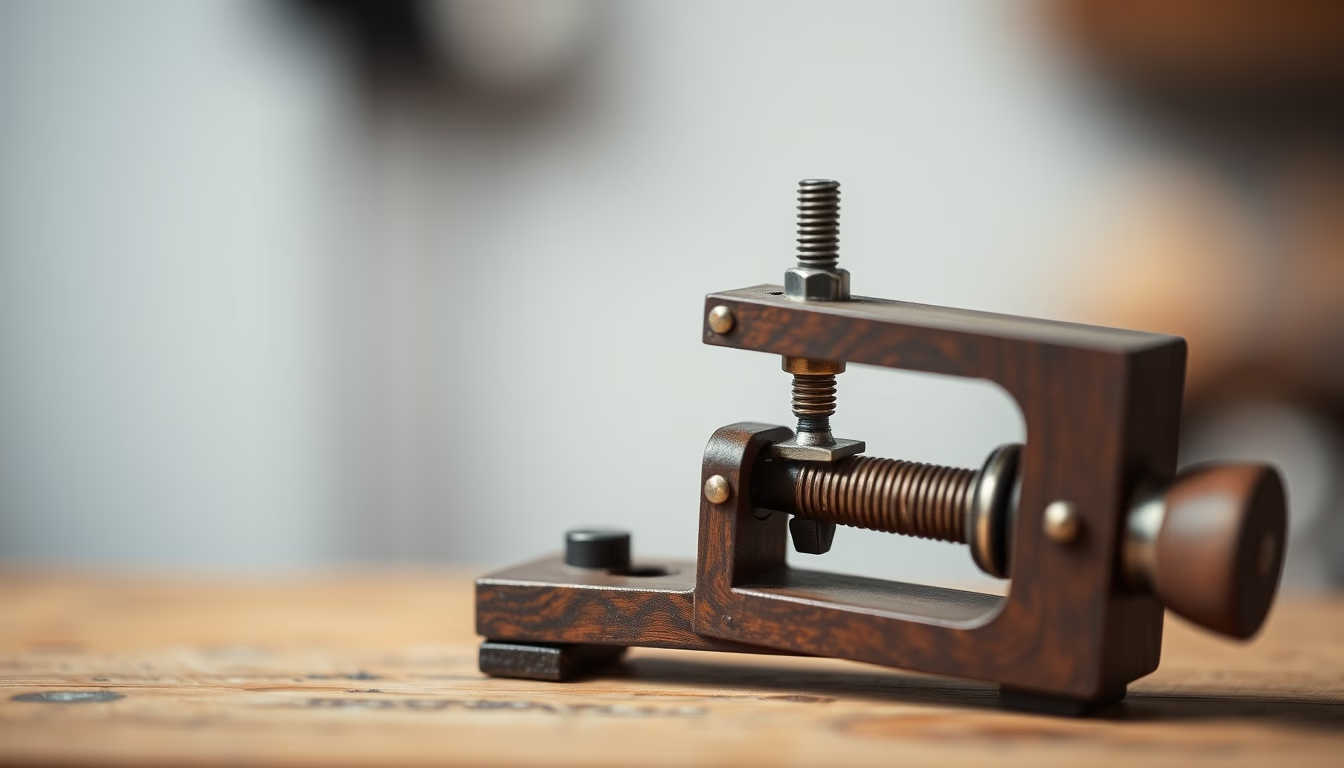
The machinist square is a precision tool essential in metalworking and bench mechanics.
About this subject
The machinist square, also called a precision square or steel square, is a tool used to check right angles (90 degrees) on machined parts. Its typical construction consists of a thin, rectangular blade, usually made of hardened steel, fixed perpendicularly to a thick base. This base provides stability and allows the square to be set on flat surfaces. The faces of the blade and base are ground to high precision, ensuring reliable measurements. In the history of metalworking, the machinist square emerged as an evolution of wooden squares used in carpentry, adapted to the tighter tolerances required by the Industrial Revolution. Unlike a common square, a machinist square is factory-calibrated and often certified according to standards such as DIN 875 (Germany) or JIS B 7526 (Japan). Precision classes vary: Class 00 squares are the most accurate, with deviations less than 0.01 mm. Maintenance is critical: any impact or corrosion can compromise accuracy. Therefore, it is recommended to store them in lined cases and apply anti-rust oil. Practical use involves placing the base against a reference surface and sliding the blade until contact with the workpiece. Visible light between the blade and workpiece indicates deviations. Mechanics and toolmakers also use the square to adjust fixtures and guides on machine tools. Interestingly, some antique squares feature ornamental engravings or marks from renowned manufacturers like Starrett (USA) and Mitutoyo (Japan), which still produce collectible models.
Frequently Asked Questions
What is the difference between a machinist square and a common square?
A machinist square is manufactured with much tighter tolerances (in the order of hundredths of a millimeter), usually from hardened and ground steel, while a common carpenter square may be wood or metal with lower precision. The machinist square also has a thicker base and thinner blade for measurements on machined parts.
How to preserve an antique machinist square?
Keep it clean, dry, and lubricated with light oil. Avoid drops and contact with other steel tools. Store in a lined case. If light rust appears, remove it with fine steel wool and oil, but do not alter the measuring surfaces.
What do the precision classes mean for machinist squares?
Classes indicate the maximum allowed deviation from 90°. For example, class 00 has deviation < 0.01 mm, class 0 < 0.02 mm, class 1 < 0.05 mm, and class 2 < 0.1 mm. Lower classes (00 and 0) are used in metrology and calibration.
Direct URL
https://pub-c7d6a6ea828543ac903a74a341ccb2e1.r2.dev/imagens/square-machinist-cinematic-wide-shot-fresh15.avifHow to credit
Include a visible link back to UtilizAí. Copy one of the snippets below:
<a href="https://xn--utiliza-eza.com/en/midia/imagens/square-machinist-cinematic-wide-shot-fresh15">Square machinist</a> by <a href="https://xn--utiliza-eza.com">UtilizAí</a>, licensed under <a href="https://creativecommons.org/licenses/by/4.0/">CC BY 4.0</a>.
[Square machinist](https://xn--utiliza-eza.com/en/midia/imagens/square-machinist-cinematic-wide-shot-fresh15) by [UtilizAí](https://xn--utiliza-eza.com), CC BY 4.0
License: CC-BY-4.0