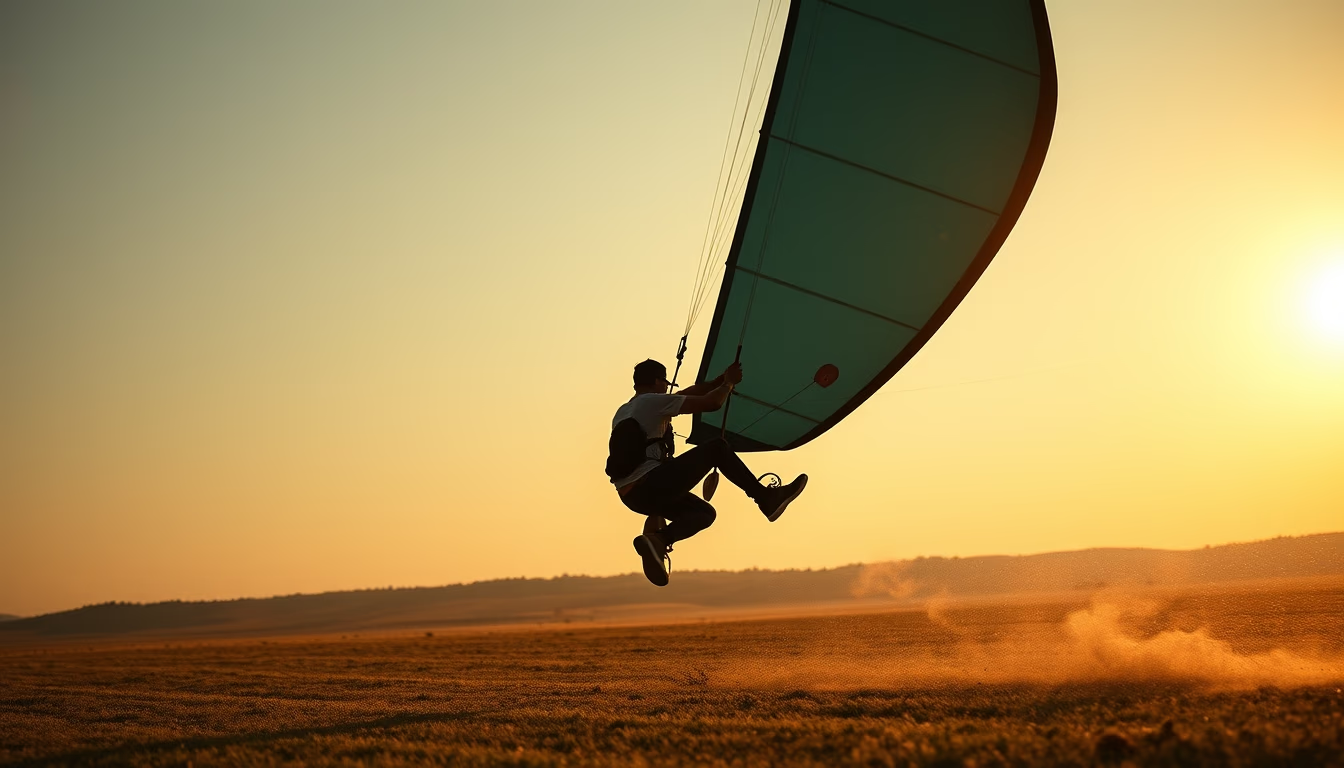
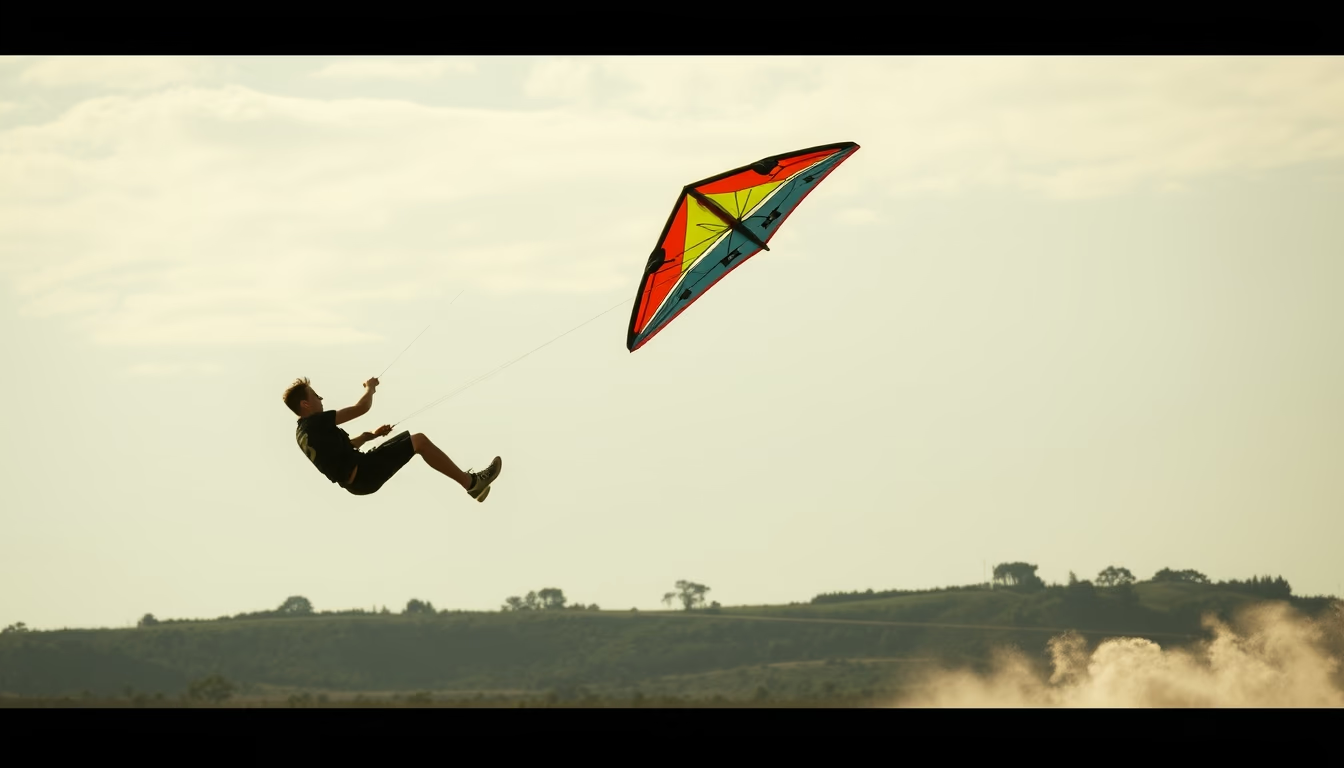
Sport kite stunt
1344×768 · AVIF · CC BY 4.0
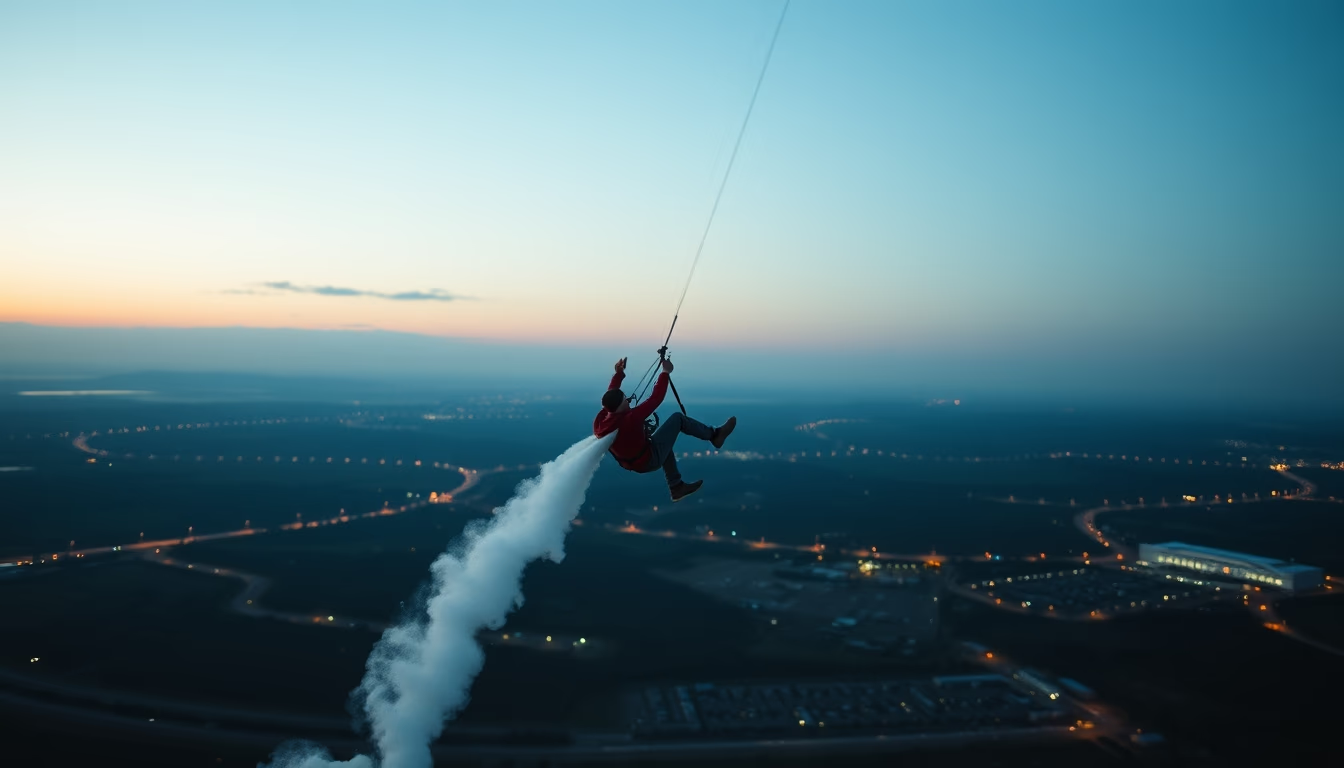
Stunt sport kiting, also known as acrobatic kiting, is a discipline that combines precise control and aerial maneuvers with high-performance kites.
About this subject
Stunt sport kiting emerged in the 1970s when Peter Powell in England and other enthusiasts began experimenting with two-line kites, enabling controlled movements in the sky. Unlike traditional single-line kites, stunt kites have two or four lines connected to a hand control that allows the pilot to steer forward, backward, turn, and execute precise loops.
Competitions in stunt kiting are governed by the International Kite Federation (IKF) and the American Kite Association (AKA), with events such as the World Cup of Stunt Kites. Pilots perform choreographed routines set to music, judged on precision, difficulty, and flow. Classic maneuvers include the axle, backspin, and fade, each requiring coordination between hand movements and wind conditions.
The sport has gained popularity especially in countries with consistent coastal winds, such as the United States, United Kingdom, Brazil (notably the Northeast), and Japan. Beaches like Jericoacoara in Brazil and Long Beach in the USA are known spots for practitioners. Beyond competition, many pilots fly for leisure or demonstrations at kite festivals, such as the Bali International Kite Festival.
Modern stunt kites are made from materials like ripstop nylon and carbon fiber, making them lightweight and durable. Their aerodynamic design allows speeds up to 150 km/h and maneuvers in seconds. Beginners are advised to start with a medium-sized two-line kite (1.5 to 2 meters wingspan) in winds of 10 to 25 km/h.
Frequently Asked Questions
How do I start with stunt sport kiting?
Start with a medium-sized two-line kite (1.5 to 2 meters wingspan) in steady winds of 10 to 25 km/h. Practice in open areas like beaches or fields, and look for online tutorials or local kiting clubs.
What is the difference between two-line and four-line kites?
Two-line kites are simpler and used for basic maneuvers, while four-line kites offer more control, including independent movement of each side, enabling advanced moves such as hovering and rotations.
Can I practice in any wind condition?
No. Very light winds (below 8 km/h) make it hard to keep the kite aloft, and strong winds (above 35 km/h) can damage the kite or become dangerous. The ideal range is 10 to 30 km/h, depending on kite size.
Direct URL
https://pub-c7d6a6ea828543ac903a74a341ccb2e1.r2.dev/imagens/sport-kite-stunt-aerial-drone-shot-fresh0.avifHow to credit
Include a visible link back to UtilizAí. Copy one of the snippets below:
<a href="https://xn--utiliza-eza.com/en/midia/imagens/sport-kite-stunt-aerial-drone-shot-fresh0">Sport kite stunt</a> by <a href="https://xn--utiliza-eza.com">UtilizAí</a>, licensed under <a href="https://creativecommons.org/licenses/by/4.0/">CC BY 4.0</a>.
[Sport kite stunt](https://xn--utiliza-eza.com/en/midia/imagens/sport-kite-stunt-aerial-drone-shot-fresh0) by [UtilizAí](https://xn--utiliza-eza.com), CC BY 4.0
License: CC-BY-4.0