Sphinx egypt face
1344×768 · AVIF · CC BY 4.0
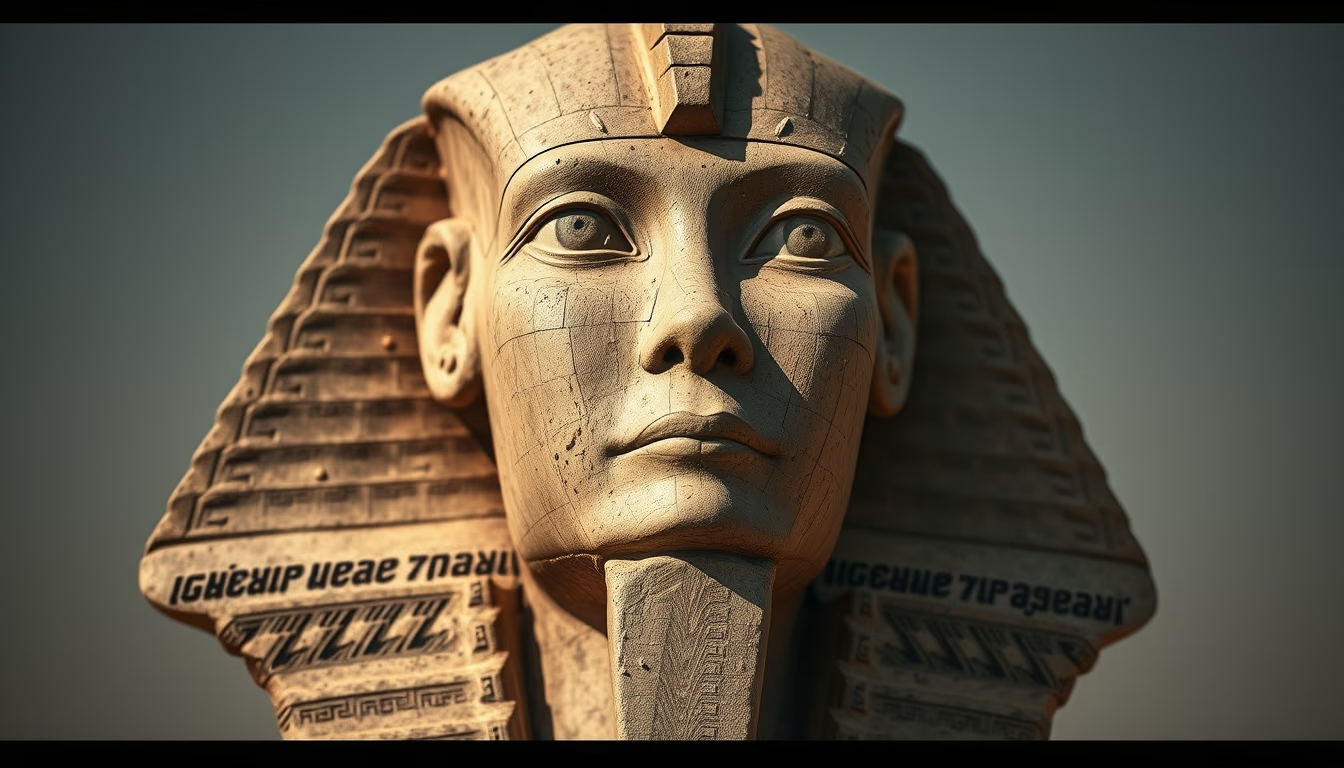
The Great Sphinx of Giza, with a lion's body and a human head, is one of the world's most famous monolithic statues, carved from limestone on the Giza Plateau, Egypt.
About this subject
The Great Sphinx of Giza is a monumental sculpture located on the Giza Plateau, on the west bank of the Nile near Cairo. Approximately 73 meters long and 20 meters high, it is considered the largest monolith statue in the world. Carved directly from limestone bedrock, its construction is believed to have occurred during the reign of Pharaoh Khafre (c. 2558, 2532 BC), as part of the funerary complex of the Pyramid of Khafre. The Sphinx represents a reclining lion with a human head, possibly the pharaoh himself, symbolizing strength and wisdom.
Over millennia, the Sphinx has suffered natural erosion and human damage. Its nose is missing, with various legends attributing the loss to Napoleonic cannons or Sufi iconoclasts. In fact, historical evidence indicates the nose was already absent by the 15th century, as shown in drawings by the Arab explorer Al-Maqrizi. The Sphinx has also been buried by desert sand for long periods, being excavated and restored several times, including a major restoration in the 1930s.
Culturally, the Sphinx is an icon of ancient Egypt and a symbol of mystery. The name "sphinx" comes from the Greek "sphingo" (to strangle), but the Egyptians called it "Shesepankh" (living image). It served as a guardian of the Giza Plateau, protecting the pyramids. The Sphinx is also aligned with the equinox, and its east-west orientation is significant in Egyptian cosmology.
Interestingly, the Sphinx has the body of a lion, an animal associated with the sun and royalty. Geological studies suggest the head may have been carved later, with proportions different from the body, indicating possible remodeling. Additionally, alternative theories, such as the "Water Erosion Hypothesis," propose that erosion at the base was caused by heavy rainfall in a much earlier period, challenging conventional dating.
Frequently Asked Questions
What is the true age of the Great Sphinx of Giza?
Most Egyptologists date the Sphinx to around 2500 BC, during the reign of Pharaoh Khafre. However, some alternative theories suggest it may be much older, based on water erosion patterns at its base.
Why is the Sphinx's nose broken?
There is no consensus, but the popular belief that Napoleon's soldiers shot it off is unfounded. Drawings from the 15th century already show the Sphinx without its nose, and the most likely cause is natural erosion or deliberate vandalism over the centuries.
Was the Sphinx built by aliens?
There is no scientific evidence for this. The construction of the Sphinx is attributed to the ancient Egyptians, who possessed advanced engineering and stoneworking skills, as demonstrated by other monumental structures from the same period.
Direct URL
https://pub-c7d6a6ea828543ac903a74a341ccb2e1.r2.dev/imagens/sphinx-egypt-face-high-fashion-editorial-p12.avifHow to credit
Include a visible link back to UtilizAí. Copy one of the snippets below:
<a href="https://xn--utiliza-eza.com/en/midia/imagens/sphinx-egypt-face-high-fashion-editorial-p12">Sphinx egypt face</a> by <a href="https://xn--utiliza-eza.com">UtilizAí</a>, licensed under <a href="https://creativecommons.org/licenses/by/4.0/">CC BY 4.0</a>.
[Sphinx egypt face](https://xn--utiliza-eza.com/en/midia/imagens/sphinx-egypt-face-high-fashion-editorial-p12) by [UtilizAí](https://xn--utiliza-eza.com), CC BY 4.0
License: CC-BY-4.0