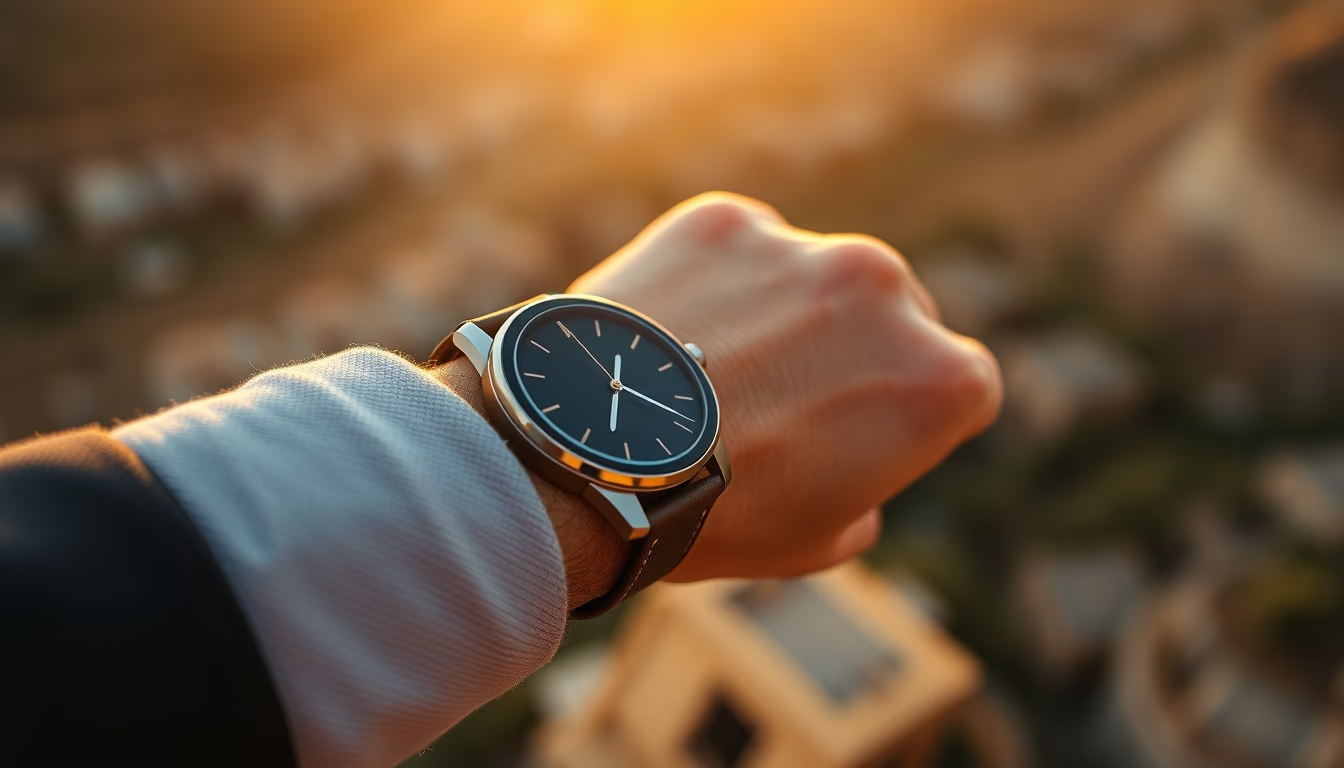
Smart watch on wrist closeup
1344×768 · AVIF · CC BY 4.0
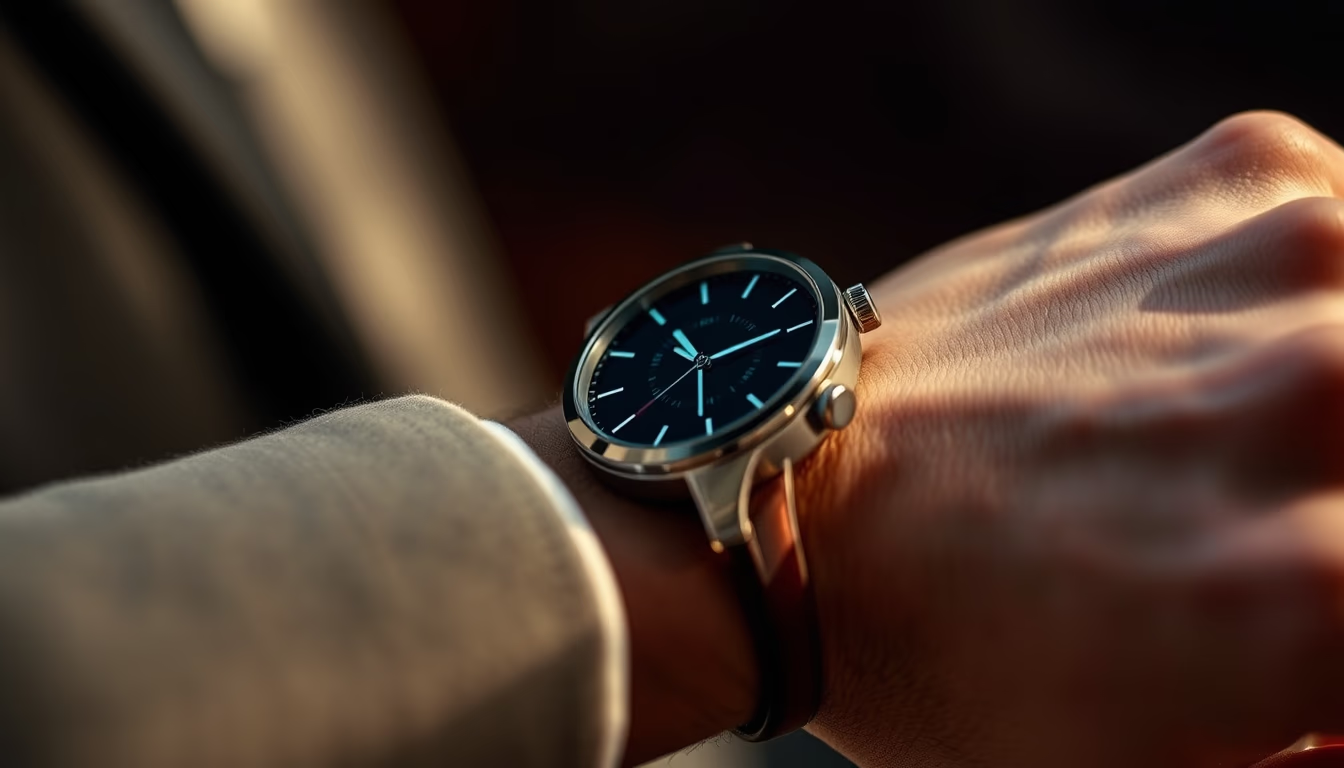
Smart watches have revolutionized how we monitor health and productivity, blending elegant design with advanced sensors.
About this subject
Smart watches are wearable devices that function as smartphone extensions, offering notifications, activity tracking, and health monitoring right on the wrist. Since the launch of the Pebble in 2013 and the Apple Watch in 2015, the market has grown exponentially, with brands like Samsung, Garmin, and Fitbit competing for innovation. These devices incorporate sensors such as accelerometers, gyroscopes, heart rate monitors, and pulse oximeters, enabling step counting, calorie tracking, sleep quality analysis, and even electrocardiograms in newer models.
Integration with digital ecosystems is a major appeal: users can reply to messages, control music, make contactless payments, and use voice assistants. Battery life ranges from one day (Apple Watch) to several weeks (Garmin), depending on activated features. Design has also evolved, with customizable watch faces and interchangeable bands, turning the smart watch into a fashion accessory as important as its functionality.
Culturally, smart watches represent the shift toward a more connected and data-driven lifestyle. They encourage healthy habits, such as standing after sedentary periods and tracking workouts. However, experts warn about potential anxiety from overexposure to health metrics. Future models are expected to include non-invasive glucose sensors and greater energy autonomy, solidifying wearables as a central piece of the Internet of Things (IoT).
Frequently Asked Questions
What are the main health features of a smart watch?
Modern smart watches monitor heart rate, blood oxygen (SpO2), sleep quality, steps, calories, and some offer ECG and fall detection.
Do smart watches completely replace traditional watches?
Not entirely. While smart watches offer extra functionalities, traditional watches are valued for timeless design, durability, and battery independence. Many users own both.
What is the average battery life of a smart watch?
It ranges from 1 to 14 days. Models with always-on displays and many notifications last about 24 hours, while sports-focused devices can last weeks with moderate use.
Direct URL
https://pub-c7d6a6ea828543ac903a74a341ccb2e1.r2.dev/imagens/smart-watch-on-wrist-closeup-fine-art-photography-p3.avifHow to credit
Include a visible link back to UtilizAí. Copy one of the snippets below:
<a href="https://xn--utiliza-eza.com/en/midia/imagens/smart-watch-on-wrist-closeup-fine-art-photography-p3">Smart watch on wrist closeup</a> by <a href="https://xn--utiliza-eza.com">UtilizAí</a>, licensed under <a href="https://creativecommons.org/licenses/by/4.0/">CC BY 4.0</a>.
[Smart watch on wrist closeup](https://xn--utiliza-eza.com/en/midia/imagens/smart-watch-on-wrist-closeup-fine-art-photography-p3) by [UtilizAí](https://xn--utiliza-eza.com), CC BY 4.0
License: CC-BY-4.0