Smart thermostat on wall
1344×768 · AVIF · CC BY 4.0
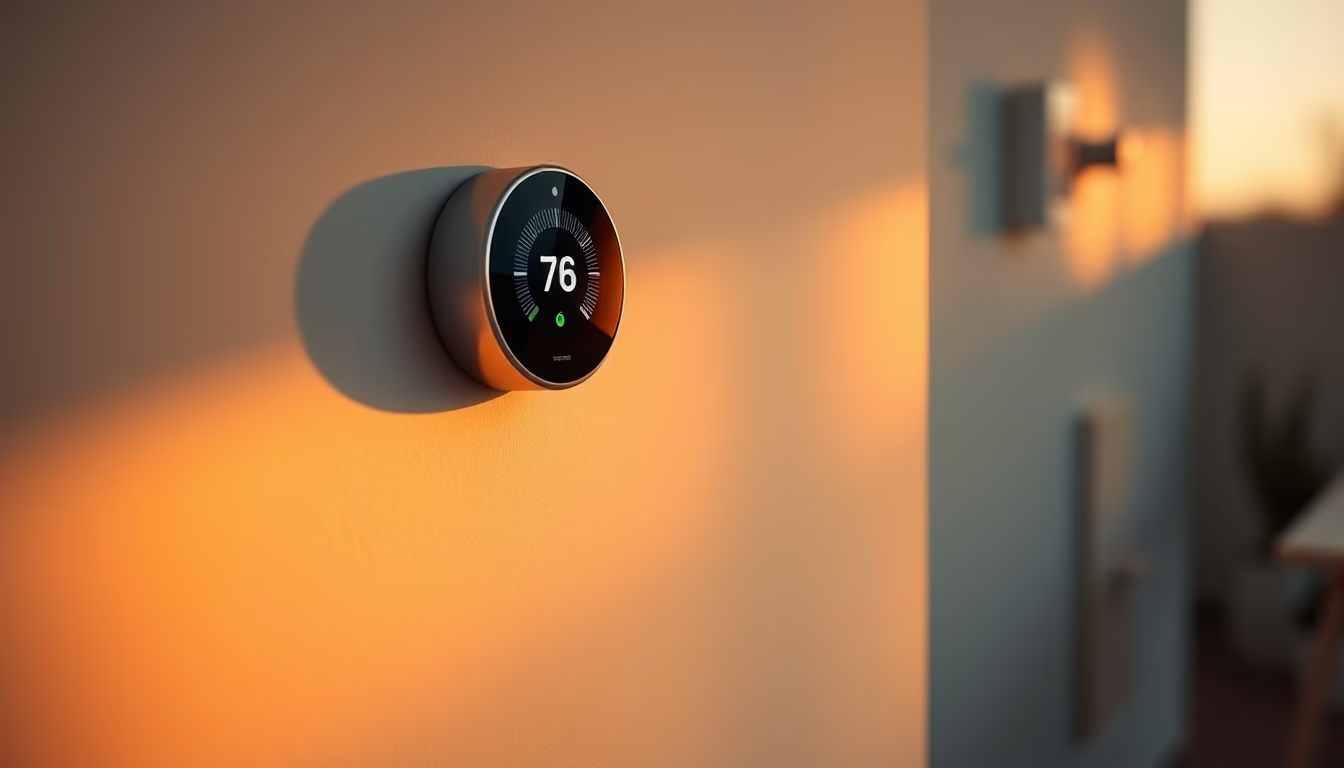
Smart thermostats enable remote temperature control and energy savings, integrating with virtual assistants and home automation systems.
About this subject
Smart thermostats are climate control devices that replace traditional models, offering Wi-Fi connectivity and learning algorithms to optimize energy consumption. Brands like Nest (Google), Ecobee, and Honeywell dominate the global market, with models that automatically adjust temperature based on occupancy, daily routines, and external weather conditions. In Brazil, adoption is growing driven by the search for energy efficiency and the expansion of the Internet of Things (IoT) in homes.
These devices typically connect to voice assistants such as Alexa, Google Assistant, and Siri, allowing voice commands or app-based control. Features like geofencing (detecting smartphone location) ensure that heating or cooling only occurs when necessary, reducing waste. Studies indicate that using smart thermostats can cut heating and cooling costs by 10% to 23%, depending on climate and user behavior.
Installation is generally compatible with 24V central HVAC systems common in North American constructions. In Brazil, compatibility with split systems and other cooling setups may require adapters or specific models. The trend for 2026 points to integration with smart grids and more sophisticated machine learning algorithms capable of learning residents' preferences and adjusting temperature for each room individually.
Interestingly, the first programmable thermostat was invented in 1906 by Warren Johnson, but smart models only emerged in the 2010s, with the Nest Learning Thermostat revolutionizing the market by offering an elegant interface and self-learning capability. Industry data shows that global smart thermostat sales exceeded 10 million units in 2023, with an annual growth projection of 15% until 2030.
Frequently Asked Questions
What is the real energy savings with a smart thermostat?
Studies by Nest and the U.S. Department of Energy show savings of 10% to 23% on heating and cooling costs, depending on climate and usage patterns.
Do smart thermostats work with common split air conditioners?
Most are designed for central HVAC systems. In countries like Brazil, adapters or specific models may be needed for split units with infrared remote control.
Do I need a virtual assistant to use a smart thermostat?
No, app-based control is sufficient. Integration with Alexa, Google Assistant, or Siri is optional but useful for voice commands.
Direct URL
https://pub-c7d6a6ea828543ac903a74a341ccb2e1.r2.dev/imagens/smart-thermostat-on-wall-cinematic-wide-shot-p5.avifHow to credit
Include a visible link back to UtilizAí. Copy one of the snippets below:
<a href="https://xn--utiliza-eza.com/en/midia/imagens/smart-thermostat-on-wall-cinematic-wide-shot-p5">Smart thermostat on wall</a> by <a href="https://xn--utiliza-eza.com">UtilizAí</a>, licensed under <a href="https://creativecommons.org/licenses/by/4.0/">CC BY 4.0</a>.
[Smart thermostat on wall](https://xn--utiliza-eza.com/en/midia/imagens/smart-thermostat-on-wall-cinematic-wide-shot-p5) by [UtilizAí](https://xn--utiliza-eza.com), CC BY 4.0
License: CC-BY-4.0