Smart bulb glowing color
1344×768 · AVIF · CC BY 4.0
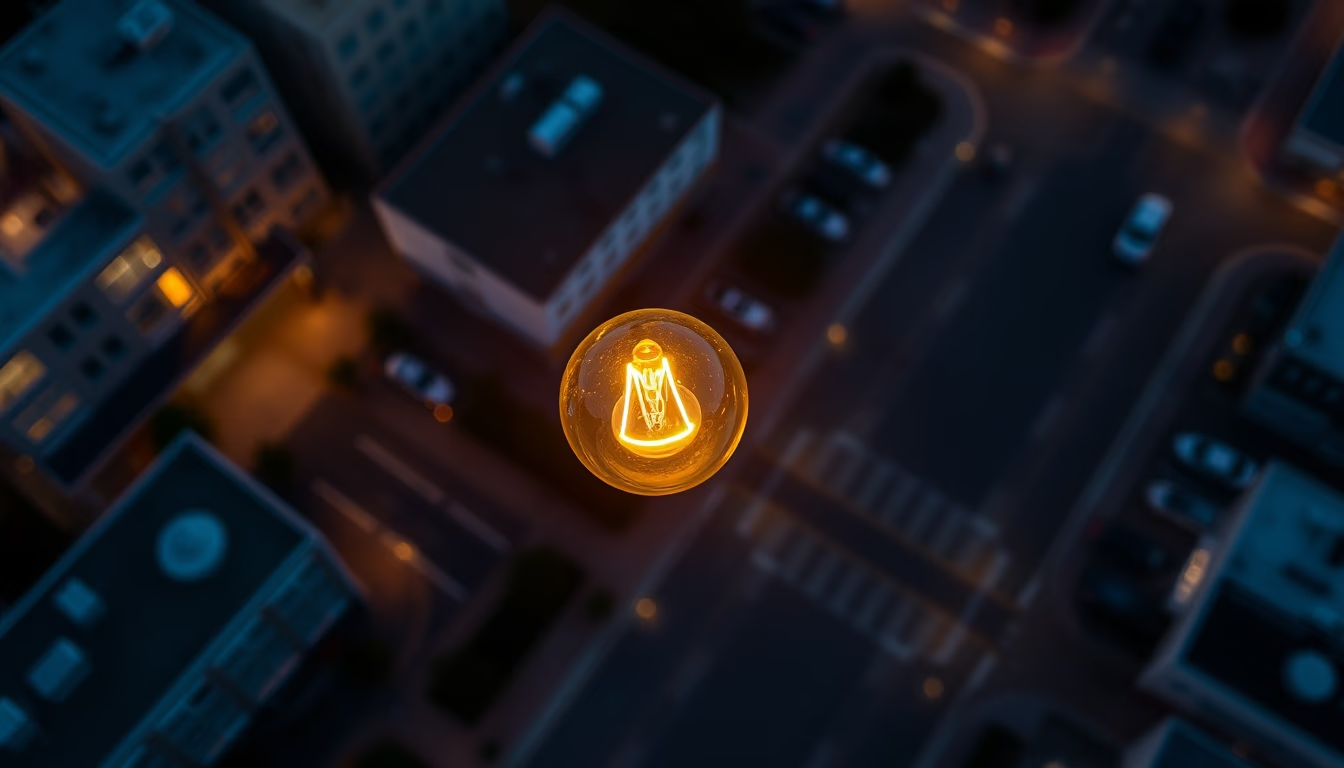
Smart bulbs with adjustable colors revolutionize home lighting, offering app control and integration with virtual assistants.
About this subject
Smart bulbs, also known as connected bulbs, are lighting devices that allow remote control via smartphone apps, voice commands, or scheduled automation. Unlike conventional bulbs, they use LEDs capable of changing color and brightness, creating customized environments. The technology relies on standards like Wi-Fi, Bluetooth, or Zigbee to connect to hubs or directly to the router. Modern models support millions of colors and white temperatures, from warm yellow to cool white for concentration.
The popularity of these bulbs grew with the expansion of the Internet of Things (IoT). Major manufacturers like Philips Hue, Xiaomi, and TP-Link dominate the market, offering ecosystems integrated with assistants like Alexa, Google Assistant, and Apple HomeKit. Interestingly, beyond aesthetics, studies indicate that dynamic lighting can improve mood, sleep, and productivity. For example, blue light in the morning helps regulate the circadian rhythm, while orange tones in the evening promote relaxation.
By 2026, trends point to greater energy efficiency and mesh connectivity, where bulbs act as signal repeaters, eliminating dead zones. Features like 'vacation mode' (random on/off patterns) are already common for security. Costs, once high, have dropped significantly, making the technology accessible. Installation is usually simple: replace the existing bulb and configure the app. However, it's important to check compatibility with local electrical systems, especially in installations with traditional dimmers.
Security is also relevant: firmware updates fix vulnerabilities, and using separate networks for IoT devices is recommended. With the growing adoption of smart homes, smart bulbs consolidate as the first step for many users. They not only save energy (LEDs consume up to 80% less than incandescent) but also offer convenience and personalization that traditional lighting cannot provide.
Frequently Asked Questions
Do I need a hub to use smart bulbs?
It depends on the model. Some bulbs connect directly to Wi-Fi, no hub required. Others, like Philips Hue, require a hub for full functionality. Check the product specifications.
Do smart bulbs consume a lot of power on standby?
No. Standby consumption is minimal, usually below 0.5 W. During use, LEDs are highly efficient, consuming 6, 12 W for a 60 W incandescent equivalent.
Can I control smart bulbs without internet?
Yes, as long as control is via Bluetooth or local Wi-Fi. For voice commands with assistants or remote access, an internet connection is required.
Direct URL
https://pub-c7d6a6ea828543ac903a74a341ccb2e1.r2.dev/imagens/smart-bulb-glowing-color-aerial-drone-shot-p4.avifHow to credit
Include a visible link back to UtilizAí. Copy one of the snippets below:
<a href="https://xn--utiliza-eza.com/en/midia/imagens/smart-bulb-glowing-color-aerial-drone-shot-p4">Smart bulb glowing color</a> by <a href="https://xn--utiliza-eza.com">UtilizAí</a>, licensed under <a href="https://creativecommons.org/licenses/by/4.0/">CC BY 4.0</a>.
[Smart bulb glowing color](https://xn--utiliza-eza.com/en/midia/imagens/smart-bulb-glowing-color-aerial-drone-shot-p4) by [UtilizAí](https://xn--utiliza-eza.com), CC BY 4.0
License: CC-BY-4.0