Silk road spices arrayed
1344×768 · AVIF · CC BY 4.0
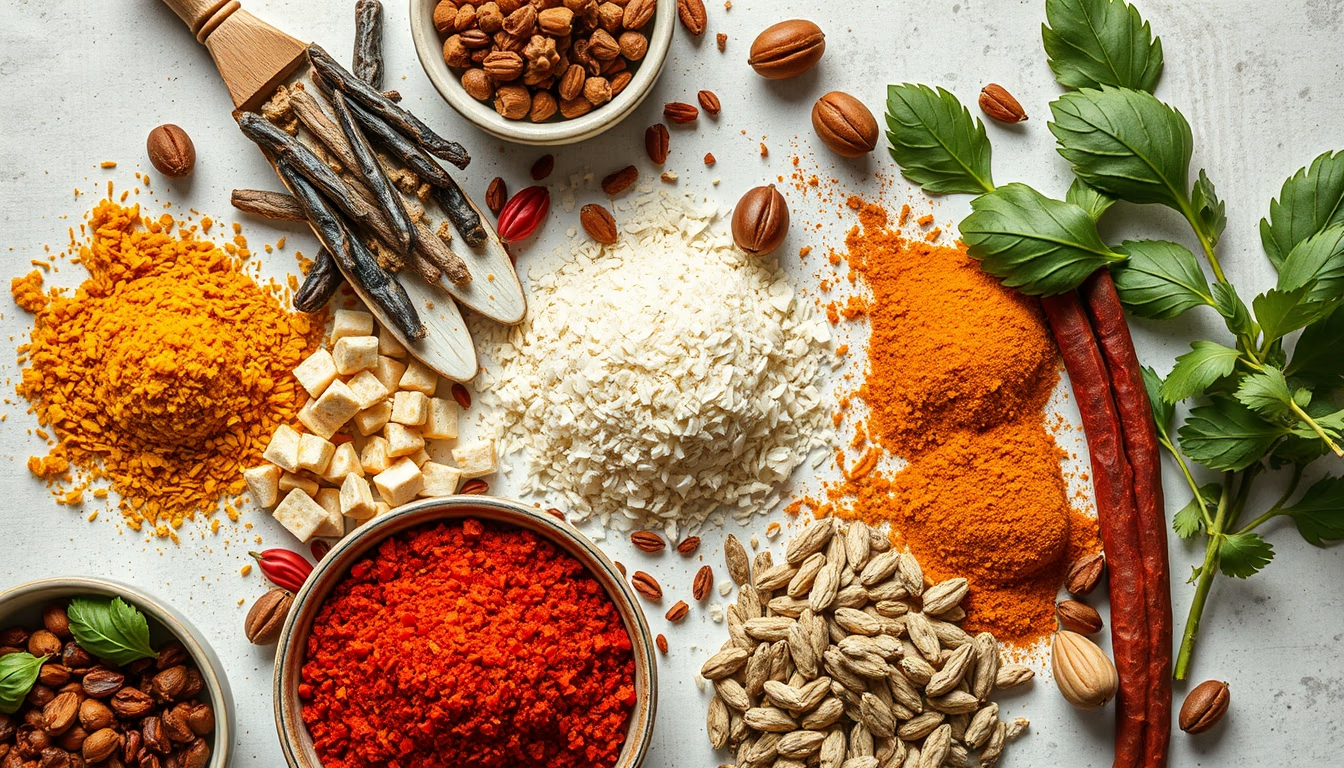
Silk Road spices: a legacy of global trade that transformed cuisines and economies for centuries.
About this subject
Spices were among the most valuable goods transported along the Silk Road, the ancient network of trade routes connecting East and West. Black pepper from India, cinnamon from Sri Lanka, cloves from the Maluku Islands, nutmeg, and saffron from Persia traveled thousands of kilometers over land and sea, passing through markets in Samarkand, Baghdad, and Constantinople before reaching Europe. These ingredients not only flavored food but were also used in medicine, perfumes, and religious rituals.
The spice trade flourished between the 7th and 15th centuries, driven by empires such as the Byzantine, Arab, and Mongol. Maritime routes also gained prominence with navigators like Vasco da Gama, who in 1498 found a direct sea route to India around Africa, reducing costs and breaking land monopolies. Spices like ginger and cardamom became status symbols in medieval Europe, where a handful of pepper could be worth a worker's annual salary.
The diversity of spices reflects the vast geography of the Silk Road, stretching from China to the Mediterranean. Cumin and coriander traveled from the Middle East to Asia, while vanilla and chili peppers arrived later from the Americas, expanding the global culinary repertoire. Today, many of these spices are cultivated in tropical and subtropical regions, but their historical legacy lives on in typical dishes of various cultures, such as Indian curry, Moroccan tagine, and the spices of garam masala.
Frequently Asked Questions
Which were the most valuable spices on the Silk Road?
Black pepper, cinnamon, cloves, nutmeg, and saffron were among the most valuable, as they were rare and highly demanded in Europe and the Middle East.
How did the Silk Road influence global cuisine?
Spices introduced new flavors and preservation techniques, leading to iconic dishes such as curry in India, tagine in Morocco, and paprika in Hungarian cuisine.
Why were spices so expensive in medieval Europe?
They were imported over long distances by land and sea, with high transportation costs and risks of piracy or tolls, making them luxury items affordable only to the elite.
Direct URL
https://pub-c7d6a6ea828543ac903a74a341ccb2e1.r2.dev/imagens/silk-road-spices-arrayed-isometric-flat-lay-fresh3.avifHow to credit
Include a visible link back to UtilizAí. Copy one of the snippets below:
<a href="https://xn--utiliza-eza.com/en/midia/imagens/silk-road-spices-arrayed-isometric-flat-lay-fresh3">Silk road spices arrayed</a> by <a href="https://xn--utiliza-eza.com">UtilizAí</a>, licensed under <a href="https://creativecommons.org/licenses/by/4.0/">CC BY 4.0</a>.
[Silk road spices arrayed](https://xn--utiliza-eza.com/en/midia/imagens/silk-road-spices-arrayed-isometric-flat-lay-fresh3) by [UtilizAí](https://xn--utiliza-eza.com), CC BY 4.0
License: CC-BY-4.0