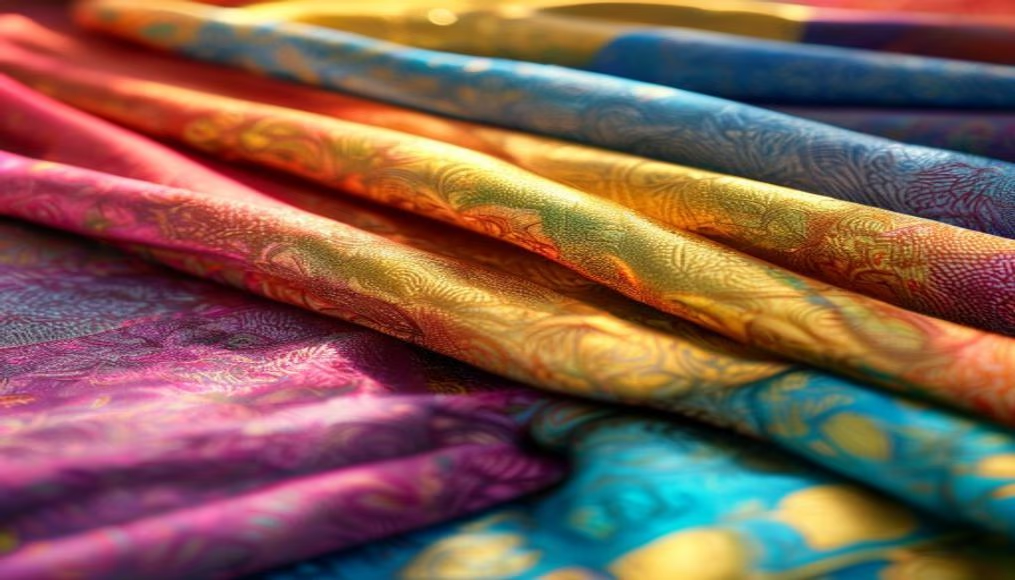
Silk fabric flowing close-up
1344×768 · AVIF · CC BY 4.0
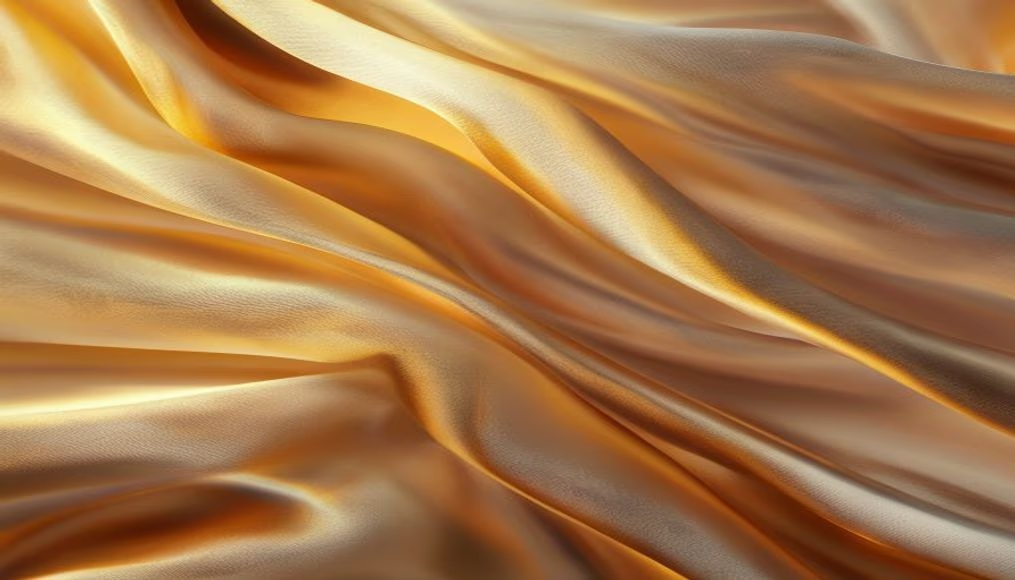
Silk fabric, renowned for its smoothness and luster, is one of the oldest and most valued materials in global fashion, originating from China.
About this subject
Silk is a natural protein fiber produced by the silkworm (Bombyx mori) during cocoon formation. Its production is believed to have begun in China around 2700 BC, where the process remained a closely guarded secret for millennia. The Silk Road, a network of trade routes connecting Asia to Europe, was named after this precious fabric, which was transported and exchanged for spices, gold, and other goods.
Silk's unique properties include its soft touch, natural luster, and thermoregulating ability, making it comfortable in both cold and warm weather. Unlike synthetic fibers, silk absorbs moisture without leaving the skin damp, is hypoallergenic, and resistant to dust mites. These characteristics make it ideal for luxury clothing such as evening gowns, shirts, and lingerie, as well as accessories like scarves and ties.
Culturally, silk has been a symbol of status and wealth. In ancient China, only nobility could wear it. Today, China remains the world's largest producer, accounting for about 70% of raw silk, followed by India. Varieties include tussah silk, produced by wild moths with a coarser texture, and eri silk, which does not require killing the silkworm and is considered more ethical.
To preserve silk, hand washing with mild detergent and drying in the shade is recommended. Silk is also used in medical applications, such as surgical sutures, due to its biocompatibility. In sustainable fashion, organic silk and vegan silk (made from plant fibers) are gaining ground, but traditional production still dominates the high-end market.
Frequently Asked Questions
How is silk produced?
Silk is produced from silkworm cocoons, which are boiled to extract continuous filaments. These filaments are twisted and woven into fabric.
Why is silk so expensive?
The production process is labor-intensive and requires a large number of cocoons. Additionally, silk has unique properties like softness and luster, associating it with luxury.
What are the main types of silk?
The main types include mulberry silk (most common), tussah silk (coarser), and eri silk (produced without killing the silkworm).
Direct URL
https://pub-c7d6a6ea828543ac903a74a341ccb2e1.r2.dev/imagens/silk-fabric-flowing-close-up-travel-photography-v10.avifHow to credit
Include a visible link back to UtilizAí. Copy one of the snippets below:
<a href="https://xn--utiliza-eza.com/en/midia/imagens/silk-fabric-flowing-close-up-travel-photography-v10">Silk fabric flowing close-up</a> by <a href="https://xn--utiliza-eza.com">UtilizAí</a>, licensed under <a href="https://creativecommons.org/licenses/by/4.0/">CC BY 4.0</a>.
[Silk fabric flowing close-up](https://xn--utiliza-eza.com/en/midia/imagens/silk-fabric-flowing-close-up-travel-photography-v10) by [UtilizAí](https://xn--utiliza-eza.com), CC BY 4.0
License: CC-BY-4.0