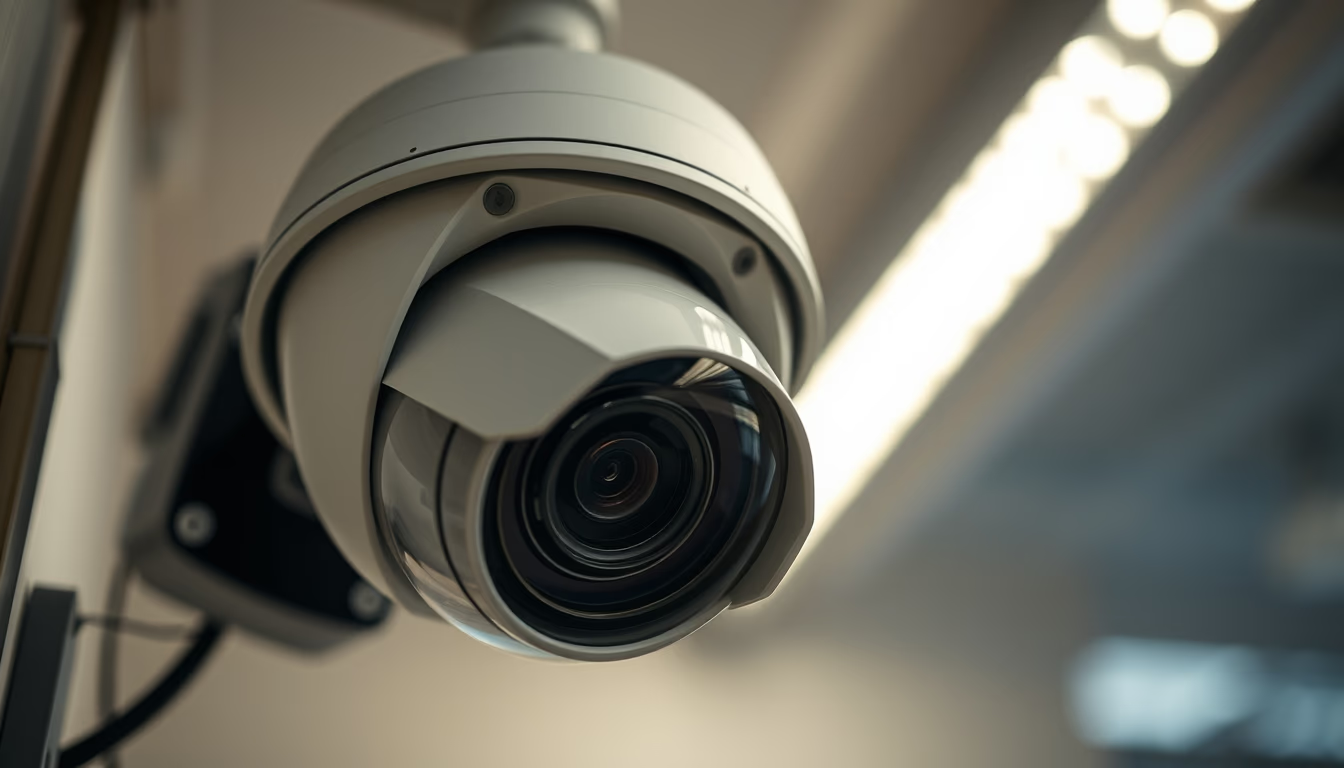
Security camera surveillance
1344×768 · AVIF · CC BY 4.0
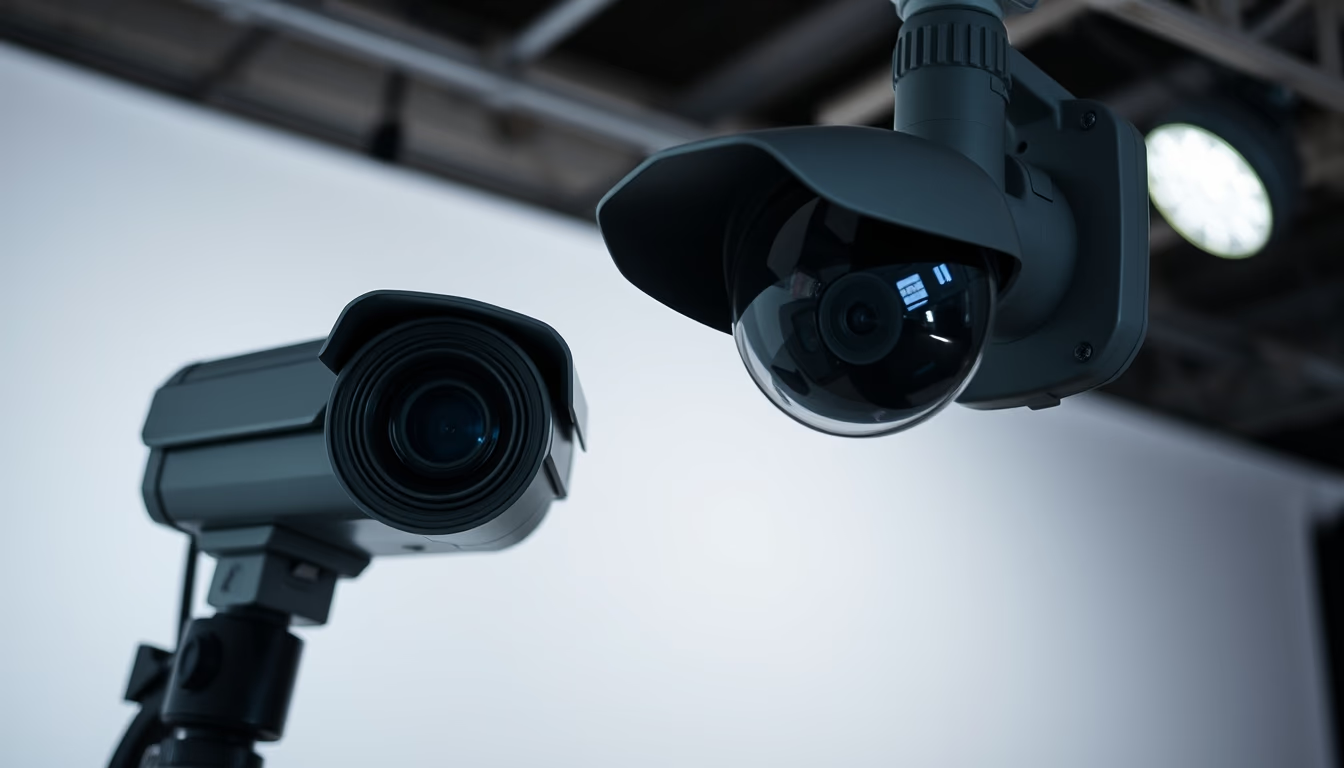
Residential security cameras have evolved into smart systems connected to the Internet of Things.
About this subject
Security cameras for home surveillance have evolved from mere passive recording devices. Today, they integrate into home automation ecosystems, offering motion detection, night vision, and real-time alerts via smartphone. The global smart home market is projected to reach $53.45 billion by 2025, with surveillance being a key segment.
These devices typically use Wi-Fi and protocols like Zigbee or Z-Wave to communicate with central hubs. Advanced models employ artificial intelligence to distinguish between people, animals, and vehicles, significantly reducing false alarms. Privacy remains a top concern: end-to-end encryption and local or cloud storage with strong passwords are recommended.
The widespread adoption of smart cameras also sparks debates on mass surveillance and consent. In the United States, laws vary by state, but the Fourth Amendment protects against unreasonable searches, influencing how recordings are used. Many manufacturers now include physical privacy shutters or privacy modes that disable the camera when needed.
Interestingly, the first CCTV system was installed in 1942 in Germany to monitor V-2 rocket launches. Today, video surveillance is a common tool in homes, businesses, and public spaces, with affordable options starting around $30.
Frequently Asked Questions
What are the main differences between IP and analog security cameras for home use?
IP cameras transmit digital video over a network, enabling remote access and higher resolution. Analog cameras use coaxial cables and DVRs, with quality usually limited to 720p or 1080p.
How does privacy regulation affect home security cameras?
Laws like GDPR in Europe and state laws in the US require clear disclosure if cameras capture public or common areas. Many manufacturers now offer privacy modes to comply.
What steps can I take to secure my smart camera from hackers?
Use strong passwords, enable two-factor authentication, update firmware regularly, and avoid cheap models with known exploits. A secure Wi-Fi network with WPA3 encryption is advised.
Direct URL
https://pub-c7d6a6ea828543ac903a74a341ccb2e1.r2.dev/imagens/security-camera-surveillance-studio-editorial-portrait-p4.avifHow to credit
Include a visible link back to UtilizAí. Copy one of the snippets below:
<a href="https://xn--utiliza-eza.com/en/midia/imagens/security-camera-surveillance-studio-editorial-portrait-p4">Security camera surveillance</a> by <a href="https://xn--utiliza-eza.com">UtilizAí</a>, licensed under <a href="https://creativecommons.org/licenses/by/4.0/">CC BY 4.0</a>.
[Security camera surveillance](https://xn--utiliza-eza.com/en/midia/imagens/security-camera-surveillance-studio-editorial-portrait-p4) by [UtilizAí](https://xn--utiliza-eza.com), CC BY 4.0
License: CC-BY-4.0