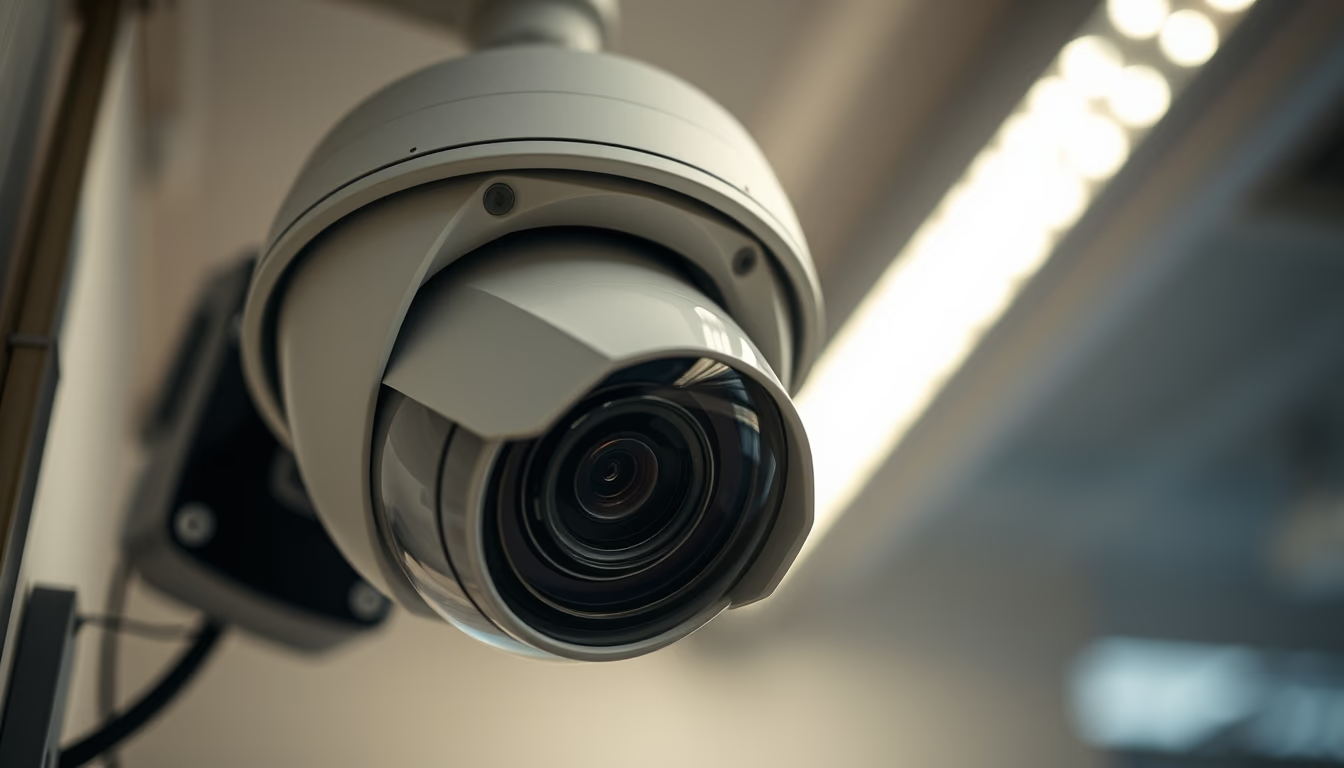
Security camera surveillance
1344×768 · AVIF · CC BY 4.0
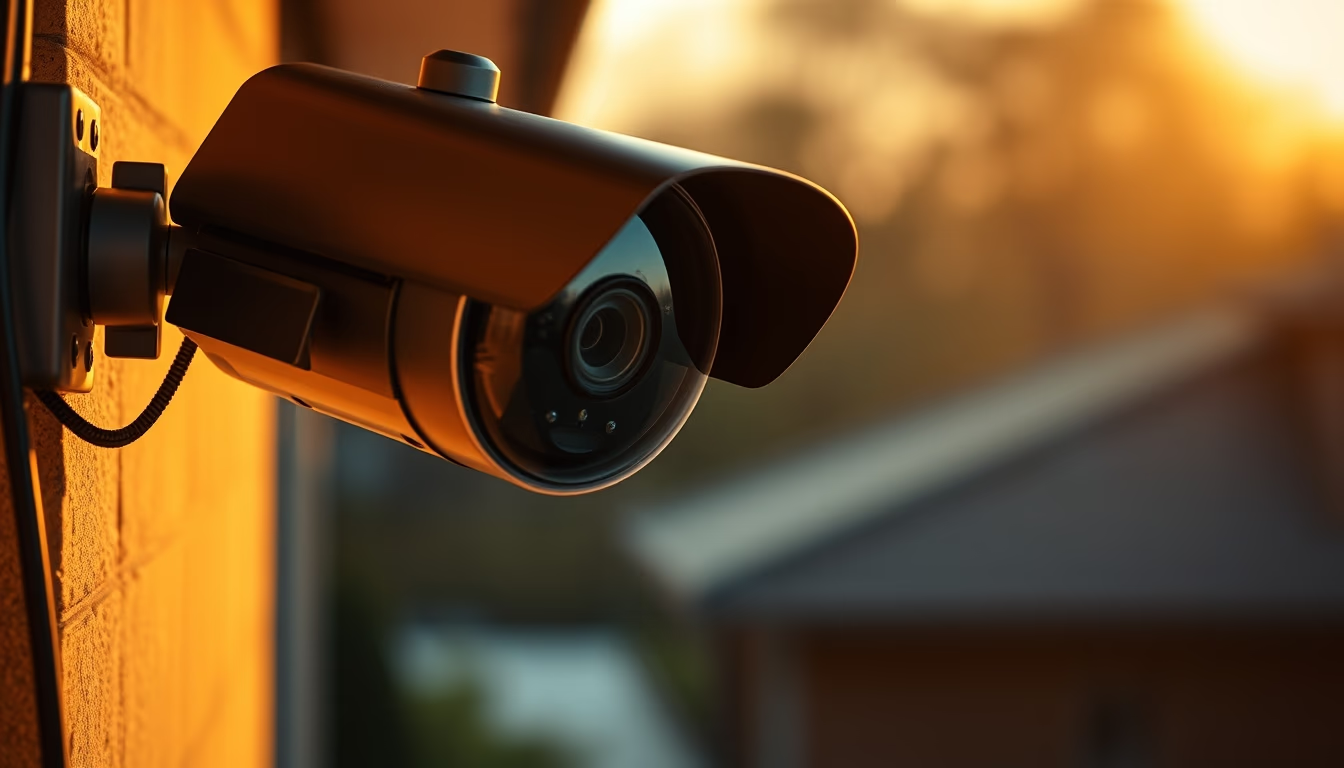
Security cameras monitor public and private spaces 24/7, with technology evolving from analog to IP and artificial intelligence.
About this subject
Security cameras are electronic surveillance devices that capture and record video footage for monitoring. The technology originated in the 1940s, initially used for missile testing, but became widespread in the 1970s with closed-circuit television (CCTV) systems. Today, there are an estimated over 1 billion security cameras in operation worldwide, according to IHS Markit. The shift to Internet Protocol (IP) cameras enabled network transmission, remote access, and integration with security systems.
Modern cameras incorporate motion detection, facial recognition, and video analytics powered by artificial intelligence (AI), which identifies suspicious behavior in real time. The global security camera market was valued at around US$20 billion in 2023, driven by smart cities and the Internet of Things (IoT). In Brazil, the General Data Protection Law (LGPD) regulates image capture and storage, requiring transparency and consent in private environments.
Applications range from homes to large urban centers. Studies show that the presence of cameras can reduce crime by up to 30% in monitored areas, but they also raise privacy and mass surveillance concerns. The world's largest camera network is in China, with over 200 million devices integrated into the Skynet system. In São Paulo, the Smart Sampa program operates 20,000 cameras connected to a control center. The trend is toward AI-enabled cameras and cloud storage, increasing efficiency and accessibility.
Frequently Asked Questions
How do AI-powered security cameras work?
They use computer vision algorithms to detect objects, people, or specific behaviors in real time, such as suspicious movements or license plate recognition. AI analyzes the video stream and triggers automatic alerts.
Can security cameras be hacked?
Yes, if not properly secured. It is essential to use strong passwords, regularly update firmware, and configure separate networks for IoT devices. Cameras with remote access require encryption and robust authentication.
What is the difference between analog and IP cameras?
Analog cameras transmit signals via coaxial cable to a DVR, with limited resolution (typically up to 720x480). IP cameras digitize and send data over a network, offering higher resolutions (4K or more), advanced features like continuous recording, and remote access via app.
Direct URL
https://pub-c7d6a6ea828543ac903a74a341ccb2e1.r2.dev/imagens/security-camera-surveillance-cinematic-wide-shot-p3.avifHow to credit
Include a visible link back to UtilizAí. Copy one of the snippets below:
<a href="https://xn--utiliza-eza.com/en/midia/imagens/security-camera-surveillance-cinematic-wide-shot-p3">Security camera surveillance</a> by <a href="https://xn--utiliza-eza.com">UtilizAí</a>, licensed under <a href="https://creativecommons.org/licenses/by/4.0/">CC BY 4.0</a>.
[Security camera surveillance](https://xn--utiliza-eza.com/en/midia/imagens/security-camera-surveillance-cinematic-wide-shot-p3) by [UtilizAí](https://xn--utiliza-eza.com), CC BY 4.0
License: CC-BY-4.0