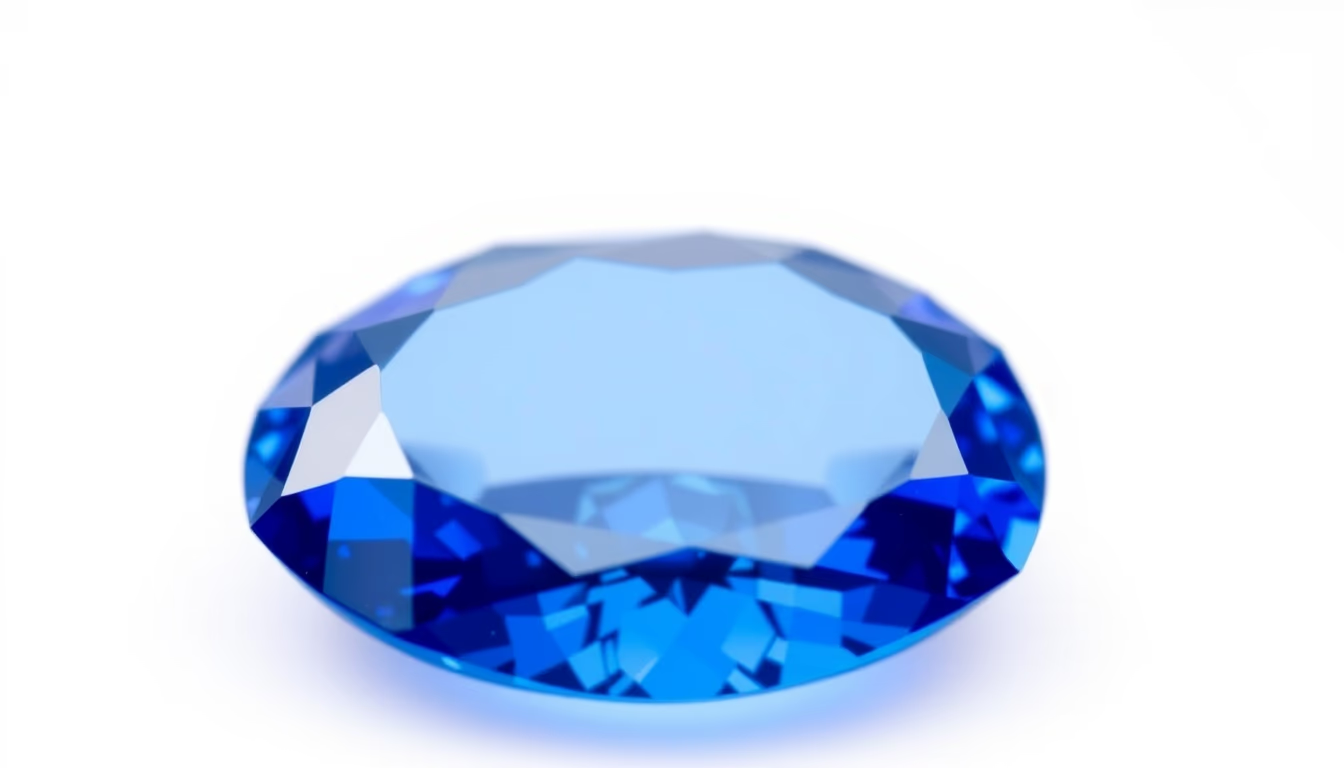
Sapphire blue gemstone
1344×768 · AVIF · CC BY 4.0

Blue sapphire, a variety of the mineral corundum, is one of the world's most valuable gemstones, prized for its hardness and intense color.
About this subject
Blue sapphire belongs to the corundum family, the same mineral that produces ruby. Its characteristic color comes from the presence of iron and titanium in its crystal structure. On the Mohs scale, sapphire has a hardness of 9, second only to diamond, making it extremely scratch-resistant and ideal for everyday jewelry. The most famous sapphires come from regions such as Kashmir, Myanmar, Sri Lanka, and Madagascar. Kashmir sapphires, with their velvety blue tone, are considered the rarest and most valuable, but current deposits in other countries produce gems of comparable quality.
Historically, blue sapphire has been associated with royalty and power. Medieval European kings and queens believed the gem protected against envy and harm. A famous example is the engagement ring of Princess Diana, now worn by the Duchess of Cambridge, featuring a blue sapphire surrounded by diamonds. Beyond jewelry, synthetic sapphire is widely used in electronic components, such as substrates for LEDs and watch crystals, due to its transparency and high-temperature resistance.
The gemstone is also the birthstone for September and symbolizes wisdom, purity, and fidelity. Notable historical specimens include the Logan Sapphire, weighing 422 carats, displayed at the Smithsonian, and the Star of India, a 563-carat star sapphire at the American Museum of Natural History. The ideal color for a blue sapphire is an intense, saturated blue without greenish or grayish undertones, often described as "cornflower blue" or "royal blue." Heat treatment is common to enhance color and clarity and is widely accepted in the trade.
Frequently Asked Questions
What is the difference between sapphire and ruby?
Both are varieties of the mineral corundum, but ruby is the red variety caused by chromium, while sapphire can be blue, pink, yellow, or green. Blue sapphire is the most famous.
How can I tell if a blue sapphire is natural or treated?
Most sapphires are heat-treated to improve color, and this is considered standard. Untreated stones are rarer and more expensive. A gemological laboratory can identify treatments through microscopic examination and spectroscopy.
What is the value of a good quality blue sapphire?
Value depends on color, clarity, cut, carat weight, and origin. Intense, clean blue sapphires from Kashmir can cost over US$10,000 per carat, while commercial stones may range from US$200 to US$2,000 per carat.
Direct URL
https://pub-c7d6a6ea828543ac903a74a341ccb2e1.r2.dev/imagens/sapphire-blue-gemstone-cinematic-wide-shot-p4.avifHow to credit
Include a visible link back to UtilizAí. Copy one of the snippets below:
<a href="https://xn--utiliza-eza.com/en/midia/imagens/sapphire-blue-gemstone-cinematic-wide-shot-p4">Sapphire blue gemstone</a> by <a href="https://xn--utiliza-eza.com">UtilizAí</a>, licensed under <a href="https://creativecommons.org/licenses/by/4.0/">CC BY 4.0</a>.
[Sapphire blue gemstone](https://xn--utiliza-eza.com/en/midia/imagens/sapphire-blue-gemstone-cinematic-wide-shot-p4) by [UtilizAí](https://xn--utiliza-eza.com), CC BY 4.0
License: CC-BY-4.0