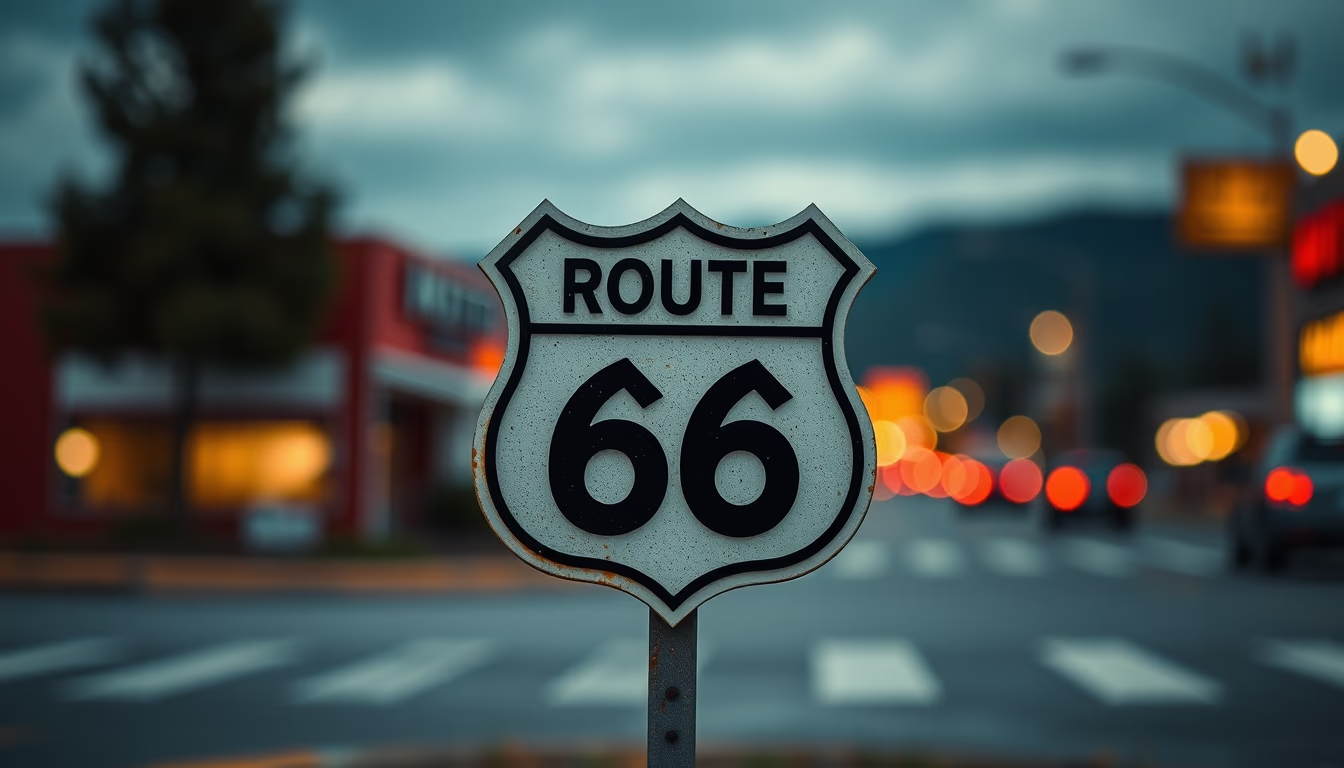
Route 66 motel neon
1344×768 · AVIF · CC BY 4.0
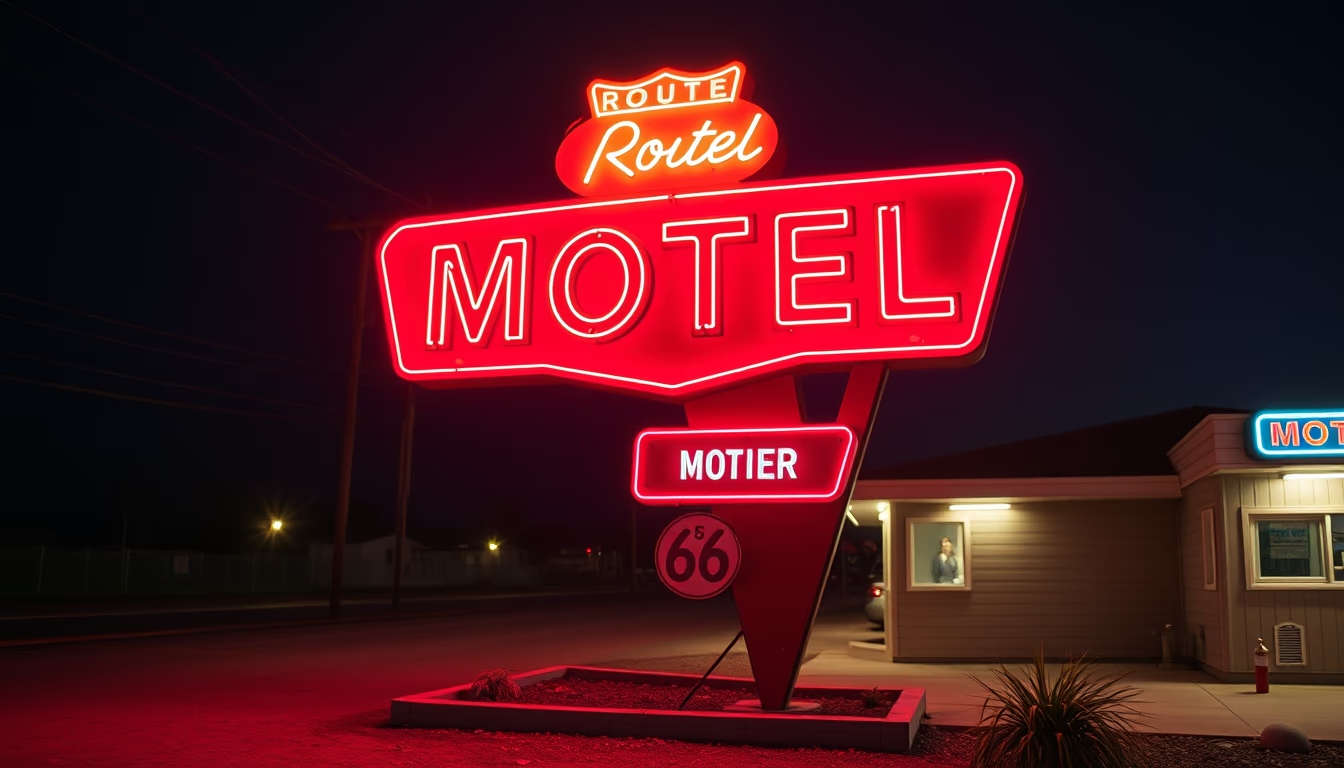
Historic motel neon signs dot the legendary Route 66, icons of 20th-century American car culture.
About this subject
Route 66, officially U.S. Highway 66, was created in 1926 and stretched 3,940 km from Chicago to Santa Monica, California. During its peak in the 1940s-1960s, the highway became the main artery for migrants, tourists, and truckers. Along the route, hundreds of motels emerged to serve travelers, many adorned with colorful, flashy neon signs. These signs not only advertised vacancies but also competed for attention amidst the desert and nighttime landscape.
The sign styles ranged from art deco to kitsch, with slanted letters, blinking arrows, and figures like Native Americans or cowboys. Companies like Neon Works and Federal Sign produced these pieces. Many motels adopted names evoking the American West, such as "El Rancho", "The Wigwam" (with tepees), or "Blue Swallow". Neon was chosen for its visibility and lower maintenance cost compared to incandescent bulbs.
With the decline of Route 66 after the creation of the interstate highway system in the 1970s, many motels closed and their signs were dismantled or abandoned. However, preservation movements like the Route 66 Association have restored these symbols. Cities like Tucumcari, New Mexico, and Williams, Arizona, maintain collections of restored neon, attracting tourists seeking road nostalgia. The motel neon sign became one of the most photographed icons of the road, alongside gas stations and diners.
Interestingly, the neon technique was invented by Georges Claude in 1910 in France but became popular in the United States from the 1920s onward. Each neon color results from different gases: red from argon and blue from mercury. Route 66 signs are recognized as American folk art, with some listed on the National Register of Historic Places.
Frequently Asked Questions
Why are neon signs so associated with Route 66?
During Route 66's heyday, neon signs were the most effective way to attract travelers at night. They became symbols of American road optimism and freedom, and many survive as cultural icons.
How many original Route 66 motels still have neon?
Hundreds of original motels still exist along the route, but only a fraction have functioning neon signs. Preservation organizations work to restore and maintain these historic signs.
Where can I see motel neon signs on Route 66 today?
Tucumcari (New Mexico), Holbrook (Arizona), and Springfield (Missouri) have notable concentrations of preserved neon. The Neon Museum in Las Vegas also displays historic examples.
Direct URL
https://pub-c7d6a6ea828543ac903a74a341ccb2e1.r2.dev/imagens/route-66-motel-neon-magazine-editorial-fresh1.avifHow to credit
Include a visible link back to UtilizAí. Copy one of the snippets below:
<a href="https://xn--utiliza-eza.com/en/midia/imagens/route-66-motel-neon-magazine-editorial-fresh1">Route 66 motel neon</a> by <a href="https://xn--utiliza-eza.com">UtilizAí</a>, licensed under <a href="https://creativecommons.org/licenses/by/4.0/">CC BY 4.0</a>.
[Route 66 motel neon](https://xn--utiliza-eza.com/en/midia/imagens/route-66-motel-neon-magazine-editorial-fresh1) by [UtilizAí](https://xn--utiliza-eza.com), CC BY 4.0
License: CC-BY-4.0