Roman silver denarius coin
1344×768 · AVIF · CC BY 4.0
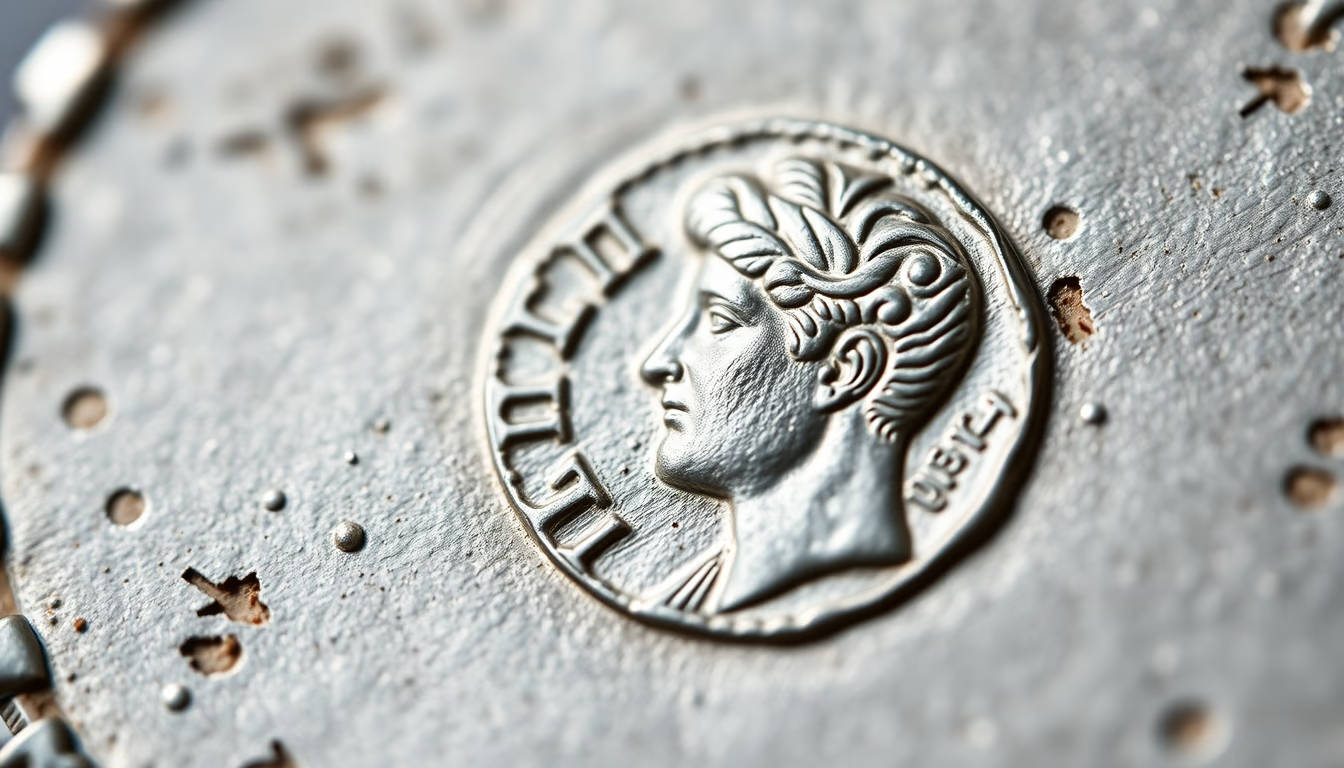
The Roman silver denarius was the primary coin of the Republic and Empire, minted for centuries and essential to the ancient economy.
About this subject
The silver denarius was introduced around 211 BC during the Second Punic War to finance Rome's military campaigns. It replaced the bronze as-based coinage and became the backbone of the Roman monetary system for over 450 years. Its name derives from Latin deni, meaning "ten," as it was initially worth 10 asses.
Standard denarii from the early period often featured the helmeted goddess Roma on the obverse, symbolizing the city, and the Dioscuri (Castor and Pollux) on horseback on the reverse, referencing the legend that helped Rome at the Battle of Lake Regillus. Over time, designs shifted to portraits of emperors, deities, and political or military scenes, reflecting propaganda and power.
The silver purity of the denarius varied significantly. Initially around 95% pure, emperors such as Nero and Trajan reduced the fineness to fund wars and expenses, eventually dropping below 50% by the 3rd century AD. This debasement contributed to inflation and economic decline. Nevertheless, the denarius remained a key trade currency across the Mediterranean, widely imitated by neighboring kingdoms.
Today, denarii are valuable for collectors and historians, offering insights into Roman chronology, iconography, and economy. Well-preserved specimens, such as the one depicted in the image (with macro close-up details), allow study of minting techniques and regional varieties. Roman numismatics remains active, with new discoveries emerging from archaeological sites across Europe and the Middle East.
Frequently Asked Questions
What was the value of a denarius in ancient Rome?
A denarius was worth 10 asses in the early Republic and later 16 asses after a reform. It represented a day's pay for a soldier or unskilled worker.
Why did the silver content of the denarius decrease over time?
Emperors reduced silver purity to mint more coins for military campaigns or public projects, causing inflation and loss of trust in the currency.
What do the images on denarii represent?
Initially the goddess Roma and the Dioscuri; later emperors, deities, and propaganda scenes. They were used to spread political and religious messages.
Direct URL
https://pub-c7d6a6ea828543ac903a74a341ccb2e1.r2.dev/imagens/roman-silver-denarius-coin-macro-closeup-fresh4.avifHow to credit
Include a visible link back to UtilizAí. Copy one of the snippets below:
<a href="https://xn--utiliza-eza.com/en/midia/imagens/roman-silver-denarius-coin-macro-closeup-fresh4">Roman silver denarius coin</a> by <a href="https://xn--utiliza-eza.com">UtilizAí</a>, licensed under <a href="https://creativecommons.org/licenses/by/4.0/">CC BY 4.0</a>.
[Roman silver denarius coin](https://xn--utiliza-eza.com/en/midia/imagens/roman-silver-denarius-coin-macro-closeup-fresh4) by [UtilizAí](https://xn--utiliza-eza.com), CC BY 4.0
License: CC-BY-4.0