Robotic prosthesis hand
1344×768 · AVIF · CC BY 4.0
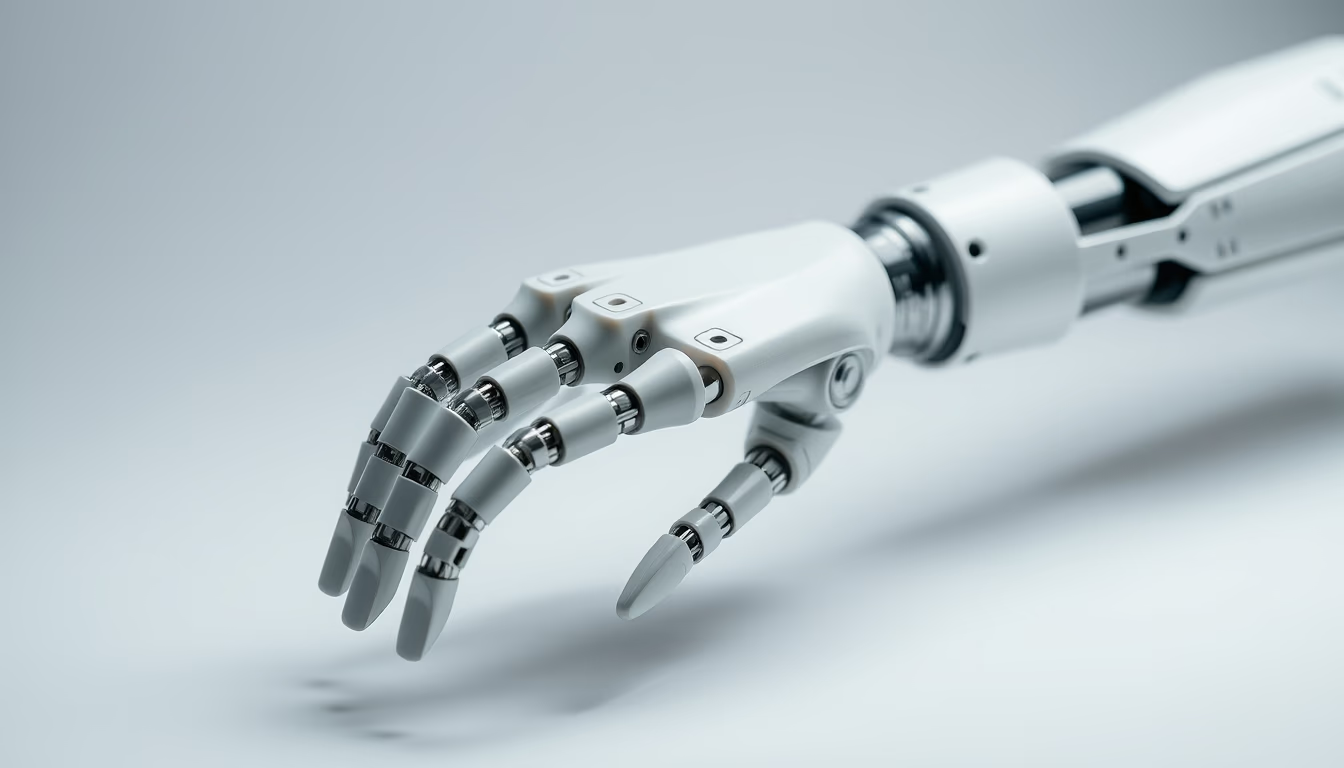
Robotic prosthetic hands combine biomedical engineering and artificial intelligence to restore movement and sensation.
About this subject
Robotic prosthetic hands represent a significant advancement in upper-limb rehabilitation. Unlike traditional passive or mechanical prostheses, these devices use motors, sensors, and machine learning algorithms to interpret electrical signals from residual muscles, enabling precise movements such as pinch, grip, and finger extension.
The field evolved from early myoelectric prostheses in the 1960s, which used surface electrodes to capture electromyographic (EMG) signals. The incorporation of digital processing and artificial intelligence in recent decades has allowed modern prostheses like the i-Limb, Bebionic, and Michelangelo to offer multiple grip patterns and vibratory sensory feedback. Current research explores brain-machine interfaces and functional electrical stimulation to restore tactile sensation.
In Brazil, access to robotic prostheses is still limited by high costs, but institutions such as the University of São Paulo (USP) and the Aeronautics Institute of Technology (ITA) develop open-source and additive manufacturing projects to reduce barriers. International collaborations like the Open Bionics program aim to create 3D-printed prostheses with designs inspired by pop culture characters, boosting acceptance among younger users.
The global market for robotic prosthetics is expected to exceed $2 billion by 2028, driven by aging populations and rising amputations due to diabetes and conflicts. Integration with the Internet of Things (IoT) and battery miniaturization promise even lighter, more autonomous devices.
Frequently Asked Questions
How does a robotic prosthetic hand work?
It captures electrical signals from residual muscles via electrodes, processes them with AI, and activates motors to move fingers. Some models also provide sensory feedback through vibration.
How much does a robotic prosthetic hand cost?
Prices range from $10,000 to $80,000, depending on complexity and brand. Open-source projects have reduced costs to around $1,000 for 3D-printed versions.
What is the difference between myoelectric and robotic prostheses?
All robotic prostheses are myoelectric, but not all myoelectric are robotic. Robotic versions use digital processing and pattern recognition algorithms for more natural movements and multiple grip patterns.
Direct URL
https://pub-c7d6a6ea828543ac903a74a341ccb2e1.r2.dev/imagens/robotic-prosthesis-hand-studio-still-life-p4.avifHow to credit
Include a visible link back to UtilizAí. Copy one of the snippets below:
<a href="https://xn--utiliza-eza.com/en/midia/imagens/robotic-prosthesis-hand-studio-still-life-p4">Robotic prosthesis hand</a> by <a href="https://xn--utiliza-eza.com">UtilizAí</a>, licensed under <a href="https://creativecommons.org/licenses/by/4.0/">CC BY 4.0</a>.
[Robotic prosthesis hand](https://xn--utiliza-eza.com/en/midia/imagens/robotic-prosthesis-hand-studio-still-life-p4) by [UtilizAí](https://xn--utiliza-eza.com), CC BY 4.0
License: CC-BY-4.0