Robot arm assembling car
1344×768 · AVIF · CC BY 4.0
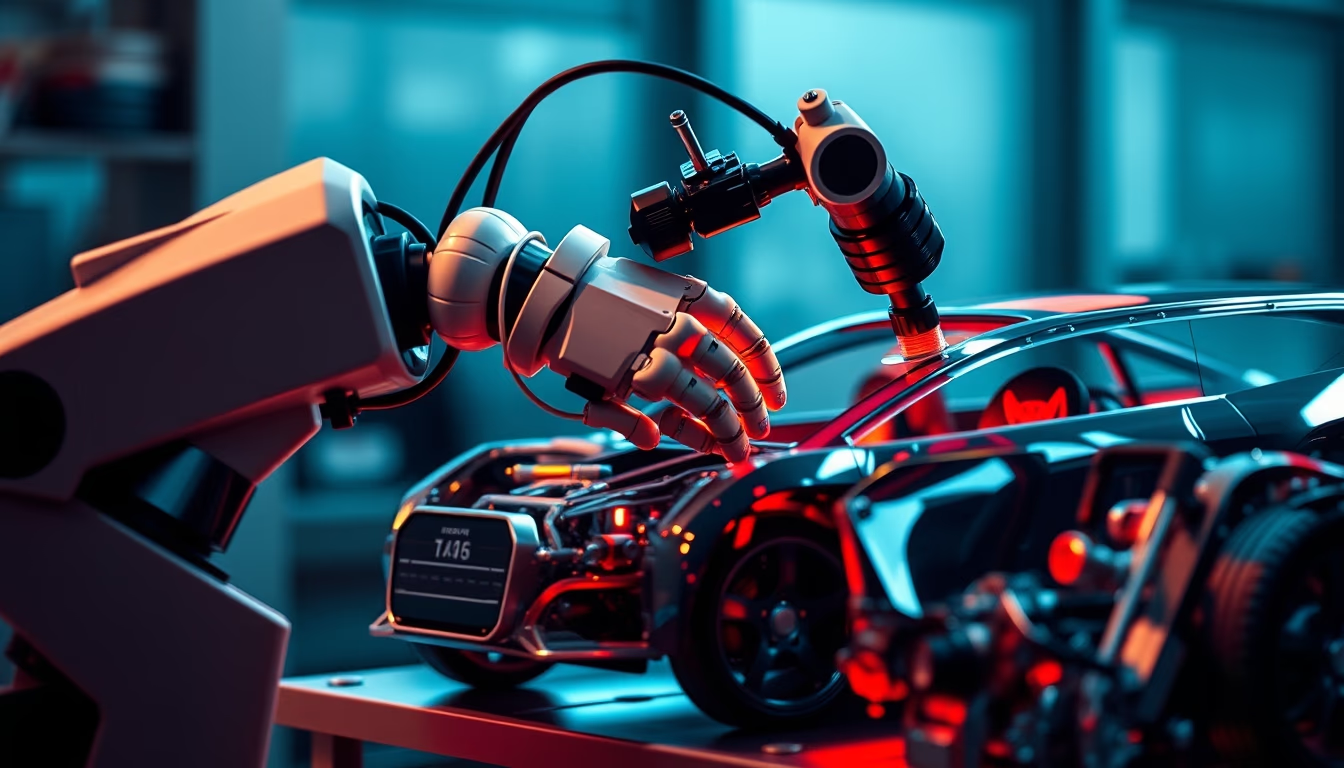
Robotic arms revolutionized automotive assembly, boosting precision and speed on production lines since the 1960s.
About this subject
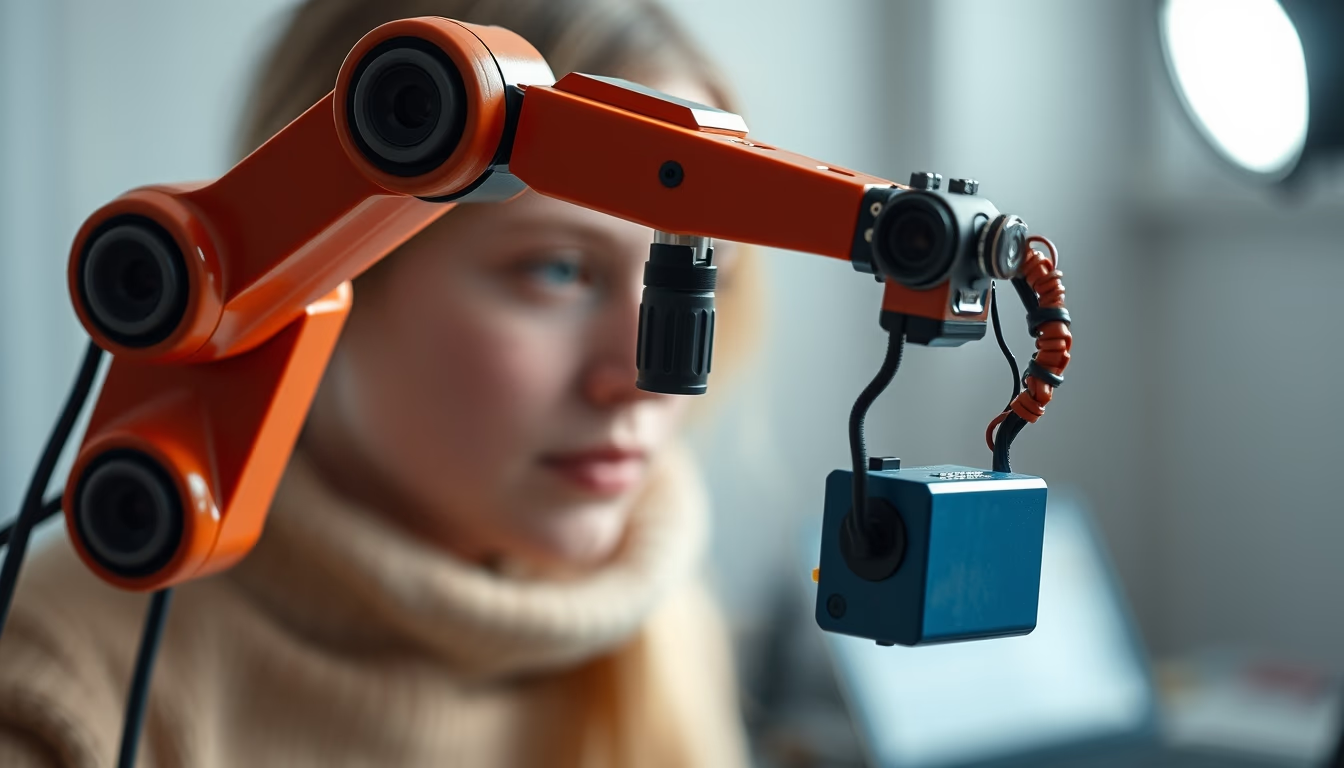
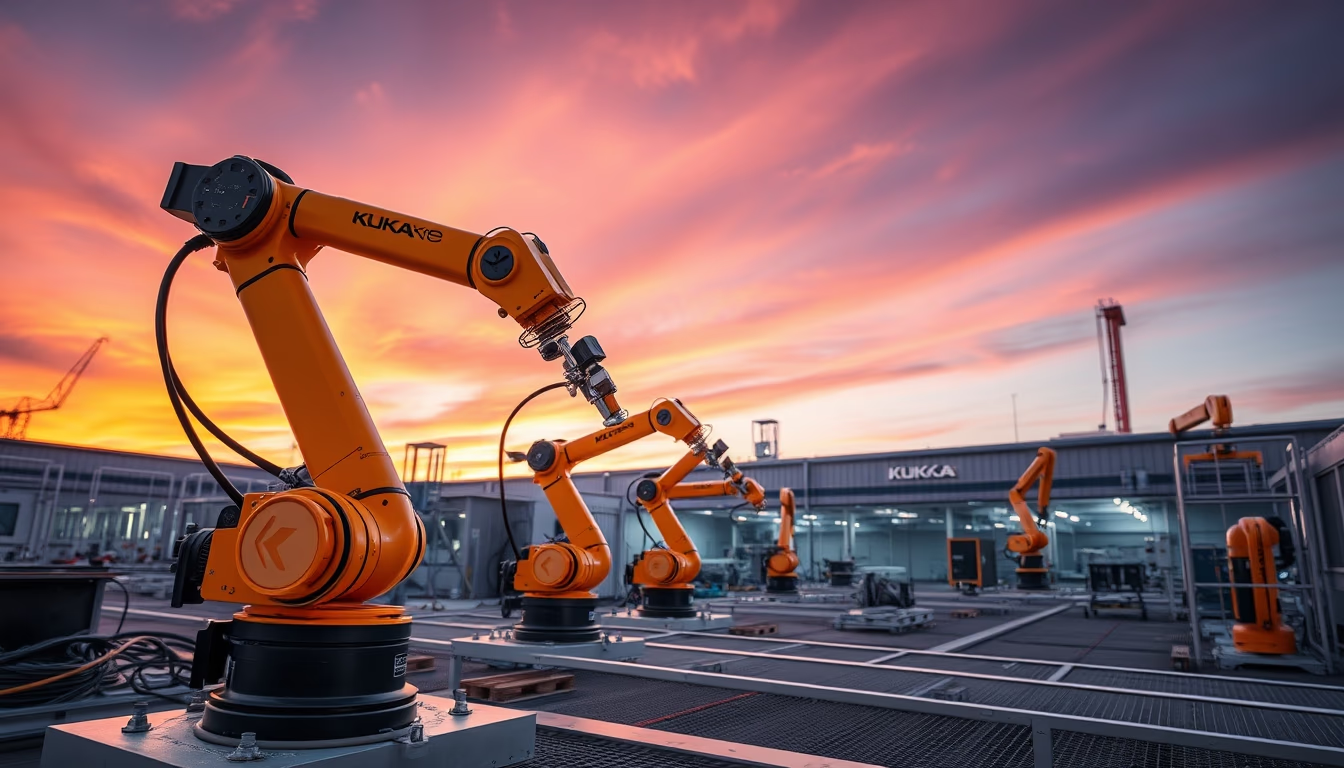
The introduction of robotic arms in the automotive industry dates back to 1961, when General Motors installed the first industrial robot, the Unimate, at its factory in Trenton, New Jersey. Since then, robotics has become essential in vehicle assembly, performing tasks such as welding, painting, component assembly, and quality inspection. These robots, typically articulated arms with six axes of movement, offer millimeter repeatability and operate 24/7, significantly boosting productivity.
Currently, about 70% of industrial robots installed globally are in the automotive industry, according to the International Federation of Robotics. Companies such as ABB, KUKA, and Fanuc dominate the market, providing systems capable of lifting loads up to 500 kilograms and performing precise movements at speeds exceeding 2 meters per second. In painting, robots ensure uniform coats without paint waste, while in spot welding, they execute thousands of weld points per vehicle with consistency.
The latest trend is the adoption of collaborative robots, or cobots, which work side by side with humans without safety cages. Equipped with force sensors and machine vision, they assist in delicate tasks like panel assembly and cable insertion. Moreover, Industry 4.0 integrates these robots with IoT and AI systems, enabling predictive maintenance and real-time optimization of the production line. Despite advances, final assembly of complex parts still relies on human skill, but the trend is towards increasing automation with ever more autonomous robots.
Frequently Asked Questions
How are robots programmed to assemble cars?
Industrial robots are programmed using specific languages like RAPID (ABB) or KRL (KUKA), or via teach pendant where an operator manually guides the robotic arm through desired movements. Today, offline simulation in software such as RoboDK is also used to optimize trajectories before deployment.
What types of robots are most used in the automotive industry?
The most common are 6-axis articulated robots, used for welding, painting, and handling. SCARA robots are employed for precision assembly, and Cartesian robots for pick-and-place tasks. Collaborative cobots are gaining ground in operations requiring human interaction.
Have robots completely replaced humans in assembly?
No. While robots handle repetitive and high-precision tasks, final assembly of complex items like wiring harnesses and interior components still requires human dexterity. The trend is collaboration between humans and robots, not total replacement.
Direct URL
https://pub-c7d6a6ea828543ac903a74a341ccb2e1.r2.dev/imagens/robot-arm-assembling-car-magazine-editorial-p0.avifHow to credit
Include a visible link back to UtilizAí. Copy one of the snippets below:
<a href="https://xn--utiliza-eza.com/en/midia/imagens/robot-arm-assembling-car-magazine-editorial-p0">Robot arm assembling car</a> by <a href="https://xn--utiliza-eza.com">UtilizAí</a>, licensed under <a href="https://creativecommons.org/licenses/by/4.0/">CC BY 4.0</a>.
[Robot arm assembling car](https://xn--utiliza-eza.com/en/midia/imagens/robot-arm-assembling-car-magazine-editorial-p0) by [UtilizAí](https://xn--utiliza-eza.com), CC BY 4.0
License: CC-BY-4.0