Robot arm 3d printer
1344×768 · AVIF · CC BY 4.0

Robotic arms are revolutionizing 3D printing by enabling large-scale fabrication and complex geometries, overcoming traditional printer limitations.
About this subject
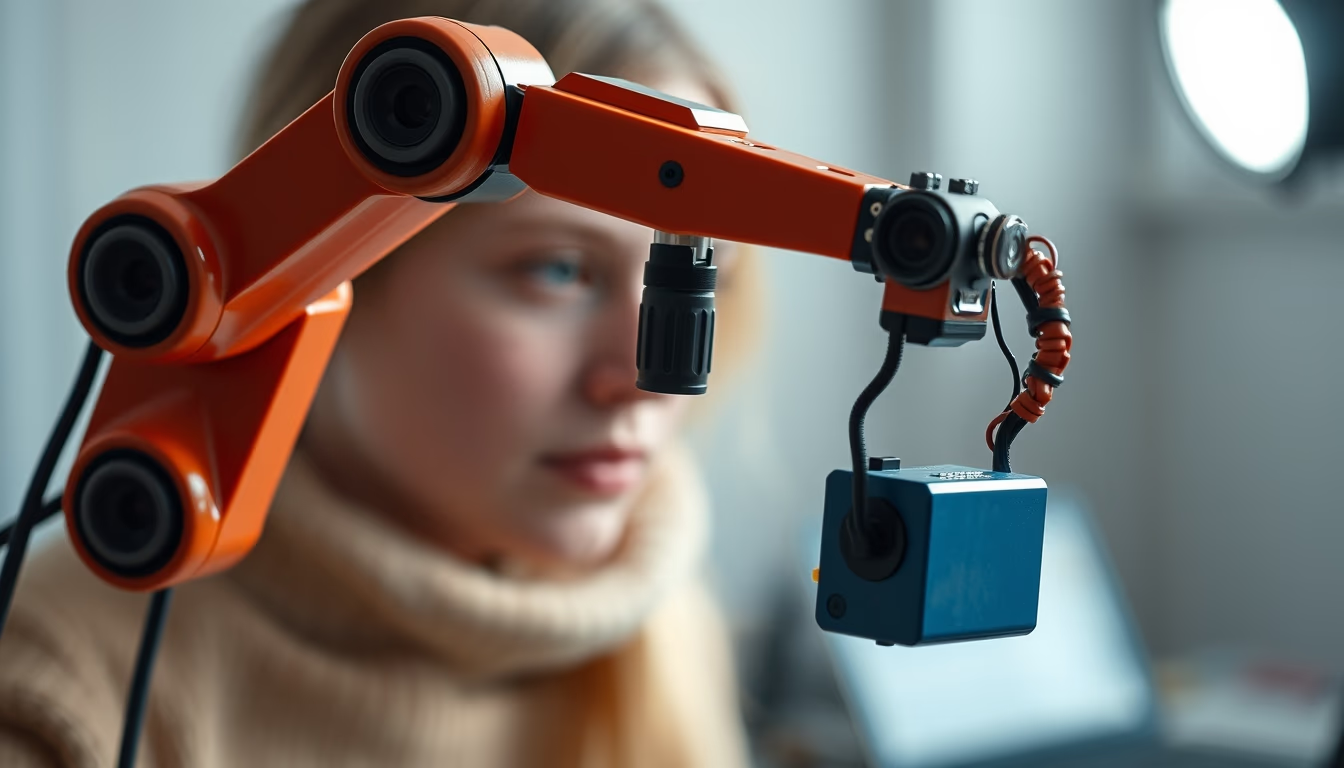
The use of robotic arms in 3D printing represents a significant advance in additive manufacturing. Unlike conventional Cartesian 3D printers, which move along linear axes (X, Y, Z), robotic arms have multiple degrees of freedom, typically six, enabling articulated movements and printing in any orientation. This flexibility allows the creation of parts with complex geometries, such as organic structures, curved shapes, and overhangs, without extensive support material.
Robotic arm 3D printing is particularly relevant in aerospace, automotive, and construction industries. For instance, the company ICON uses robotic arms to print entire houses with concrete, reducing time and costs. Moreover, robotic arms can be equipped with extruders to deposit materials like polymers, metals, ceramics, and composites. The precision and repeatability of industrial robots, combined with freedom of movement, enable the printing of large parts, such as turbine blades and aircraft components.
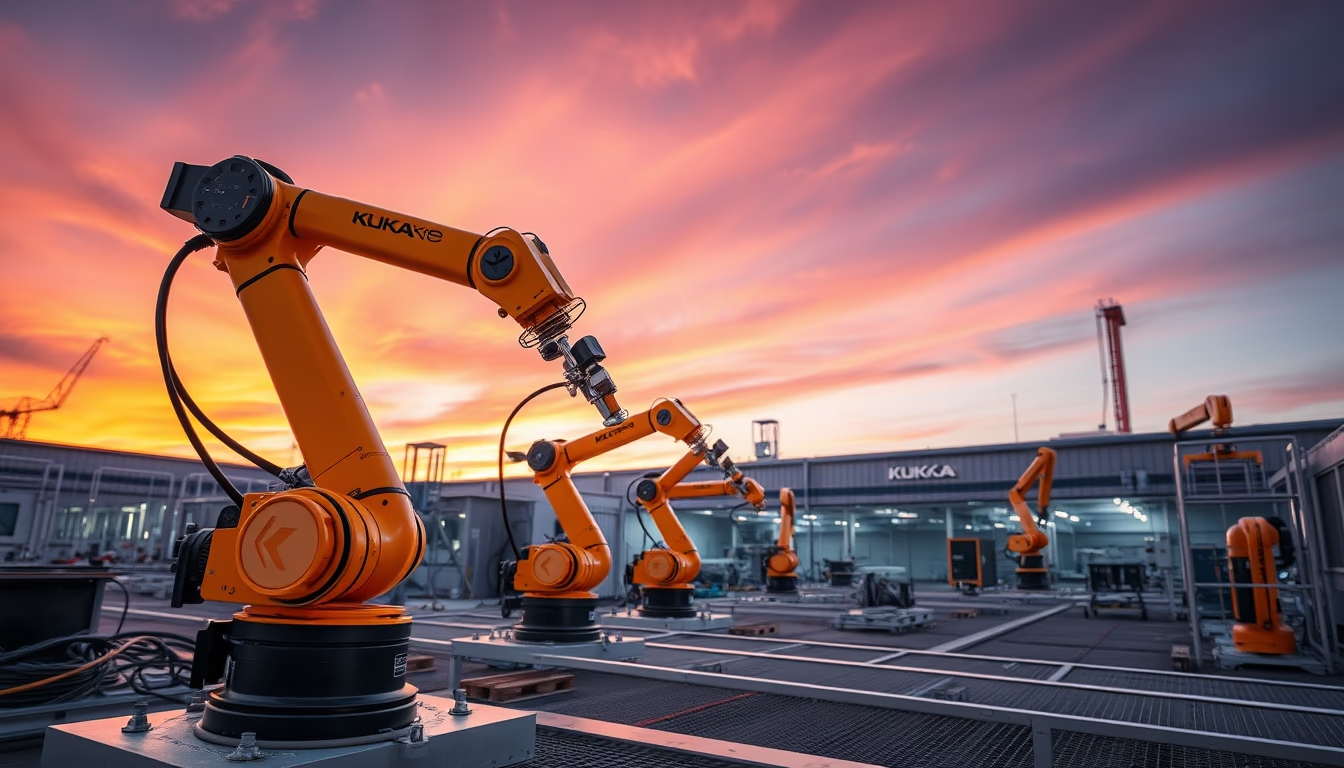
A technical curiosity is that robotic arms for 3D printing often employ advanced control systems, such as inertia compensation and real-time trajectory planning, to maintain print quality at varying speeds. Additionally, integration with parametric modeling and simulation software optimizes the toolpath, minimizing surface defects. Companies like KUKA, ABB, and Fanuc offer robots adapted for this purpose, with specific software packages for additive manufacturing.
In the Brazilian context, the adoption of robotic arms for 3D printing is still emerging, but there are academic initiatives and startups exploring the technology, such as using collaborative robots for rapid prototyping and spare parts production. The trend is that, with decreasing robot costs and material advancements, this technology will become more accessible to small and medium enterprises, expanding possibilities for customized and on-demand production.
Frequently Asked Questions
What are the main advantages of using a robotic arm in 3D printing?
The main advantages include multi-axis freedom of movement, enabling complex geometries without supports, the ability to print large parts, and greater efficiency in processes like concrete or metal printing.
What materials can be used with a robotic arm for 3D printing?
Robotic arms can handle a wide range of materials, including polymers (PLA, ABS, nylon), metals (steel, titanium), ceramics, concrete, and composites. The choice depends on the extruder type and application.
Is robotic arm 3D printing more expensive than traditional 3D printing?
Initially, the cost of a robotic arm and integration may be higher, but for large or complex parts, reduced support material and one-step fabrication can offset the investment, making per-part costs competitive.
Direct URL
https://pub-c7d6a6ea828543ac903a74a341ccb2e1.r2.dev/imagens/robot-arm-3d-printer-travel-photography-p7.avifHow to credit
Include a visible link back to UtilizAí. Copy one of the snippets below:
<a href="https://xn--utiliza-eza.com/en/midia/imagens/robot-arm-3d-printer-travel-photography-p7">Robot arm 3d printer</a> by <a href="https://xn--utiliza-eza.com">UtilizAí</a>, licensed under <a href="https://creativecommons.org/licenses/by/4.0/">CC BY 4.0</a>.
[Robot arm 3d printer](https://xn--utiliza-eza.com/en/midia/imagens/robot-arm-3d-printer-travel-photography-p7) by [UtilizAí](https://xn--utiliza-eza.com), CC BY 4.0
License: CC-BY-4.0