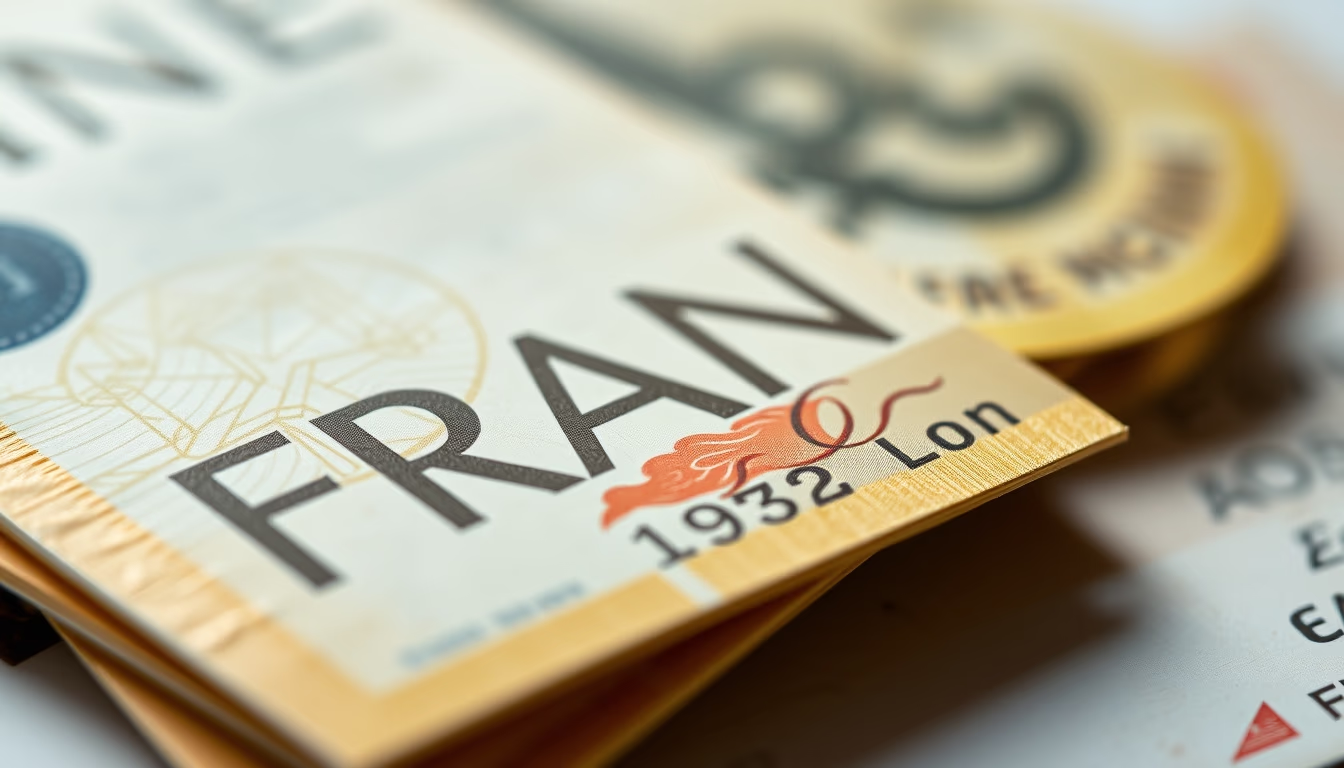
Reichsmark germany 1920
1344×768 · AVIF · CC BY 4.0

The 1920 German Reichsmark was the official currency of the Weimar Republic during the hyperinflation that marked the post-World War I economy.
About this subject
The Reichsmark was introduced in 1924 as part of a monetary reform that replaced the Papiermark, which had suffered devastating hyperinflation. In 1920, Germany still used the Papiermark, but the term Reichsmark often refers to coins and banknotes issued during the Weimar Republic. The hyperinflation of 1923 was one of the most extreme economic events in history, with prices doubling every few days. Buying a loaf of bread required millions of marks. The Reichsmark was stabilized by backing it with gold and agricultural land, temporarily restoring confidence.
Reichsmark coins featured the imperial coat of arms (German eagle) and denominations like 1, 2, 5, and 10 Reichsmark, typically struck in silver until 1935. Banknotes included portraits of historical figures and allegories, such as the famous 50 Reichsmark note of 1924 depicting a farmer. After the Nazi rise to power, the Reichsmark remained in use but with exchange controls and forced devaluation.
Interestingly, many notes from 1920 still bore the Papiermark denomination but were printed in series during inflation. Collectors value well-preserved specimens, especially „Notgeld“ (emergency money) that circulated alongside. The Reichsmark remained legal tender until the 1948 reform, when it was replaced by the Deutsche Mark in West Germany.
Frequently Asked Questions
What caused the hyperinflation in Germany in 1923?
Hyperinflation was caused by massive money printing to pay war reparations imposed by the Treaty of Versailles, combined with loss of productive capacity and lack of confidence in the currency.
What was the value of 1 Reichsmark in 1920?
In 1920, the Papiermark was still in use; the Reichsmark was only introduced in 1924. At that time, 1 Reichsmark equaled 1 trillion Papiermarks after the reform.
When was the Reichsmark replaced?
The Reichsmark was replaced by the Deutsche Mark in West Germany in 1948 and by the East German Mark in 1948, 1949. It remained in use until the post-war monetary reform.
Direct URL
https://pub-c7d6a6ea828543ac903a74a341ccb2e1.r2.dev/imagens/reichsmark-germany-1920-rembrandt-lighting-dramatic-shadows-fresh15.avifHow to credit
Include a visible link back to UtilizAí. Copy one of the snippets below:
<a href="https://xn--utiliza-eza.com/en/midia/imagens/reichsmark-germany-1920-rembrandt-lighting-dramatic-shadows-fresh15">Reichsmark germany 1920</a> by <a href="https://xn--utiliza-eza.com">UtilizAí</a>, licensed under <a href="https://creativecommons.org/licenses/by/4.0/">CC BY 4.0</a>.
[Reichsmark germany 1920](https://xn--utiliza-eza.com/en/midia/imagens/reichsmark-germany-1920-rembrandt-lighting-dramatic-shadows-fresh15) by [UtilizAí](https://xn--utiliza-eza.com), CC BY 4.0
License: CC-BY-4.0