Red panda in tree
1344×768 · AVIF · CC BY 4.0
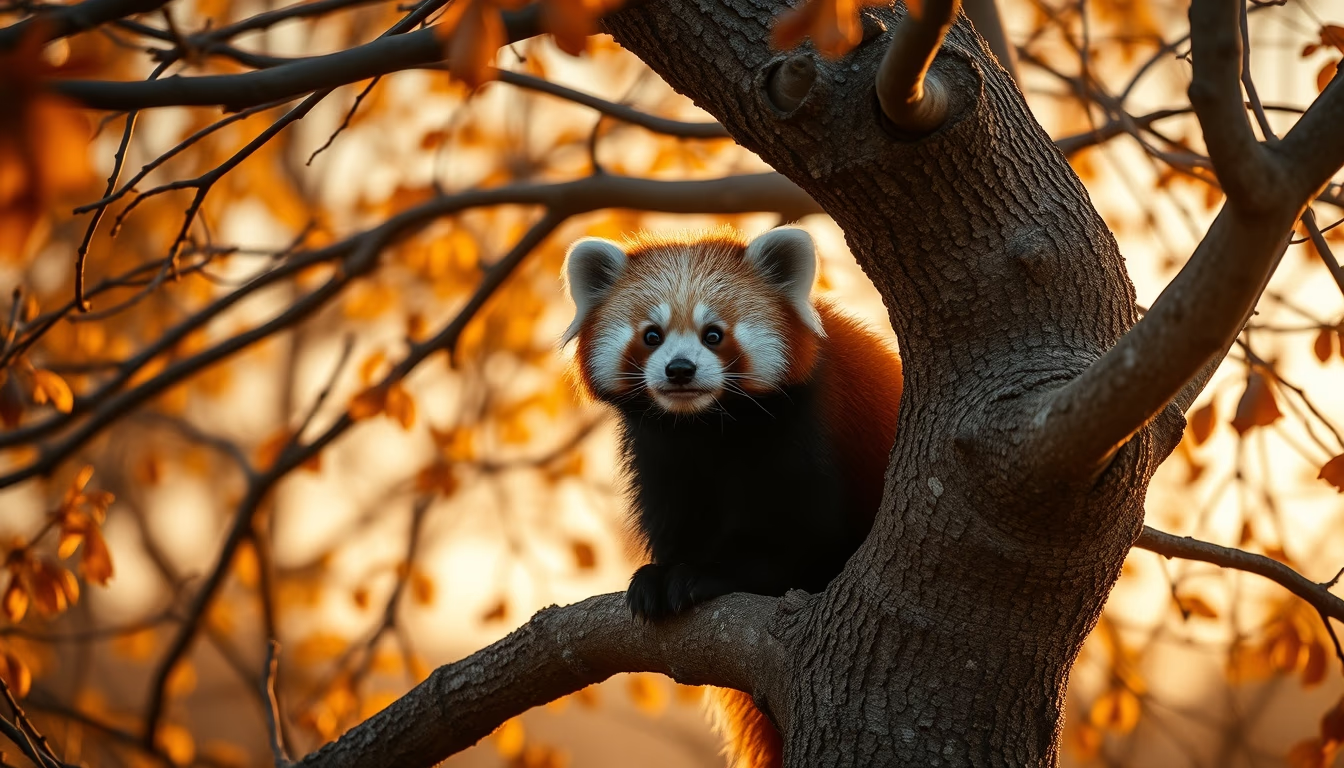
The red panda (Ailurus fulgens) is an endangered arboreal mammal found in the temperate forests of the Himalayas and southwestern China.
About this subject
The red panda, also known as the firefox or lesser panda, is a unique species inhabiting the temperate forests of the Himalayan mountains, including Nepal, India, Bhutan, Myanmar, and southwestern China. Despite its name, it is not closely related to the giant panda; it belongs to its own family, Ailuridae. Red pandas are solitary and crepuscular, spending most of their time in trees, where they feed primarily on bamboo, about 95% of their diet. Unlike giant pandas, they also consume fruits, acorns, roots, and occasionally small insects or eggs.
Their thick reddish fur provides camouflage among mosses and lichens on trees, while the ringed tail aids in balance and serves as a blanket during cold nights. Red pandas are expert climbers: they have semi-retractable claws and a wrist joint that allows them to rotate their ankles, facilitating head-first descent down trunks. These adaptations are essential for an animal living at altitudes between 2,200 and 4,800 meters.
Unfortunately, the species is listed as Endangered by the IUCN, with an estimated population of fewer than 10,000 mature individuals. Major threats include habitat loss due to deforestation, illegal hunting for their fur and tails (used in cultural ceremonies), and forest fragmentation. The population is estimated to have declined by about 50% over the last three generations. Conservation programs in zoos and protected areas, such as Singalila National Park in India and Wolong Nature Reserve in China, aim to reverse this trend, but the species still faces an uncertain future.
Interestingly, the red panda was scientifically described by Frederic Cuvier in 1825, fifty years before the giant panda. Its scientific name, Ailurus fulgens, means "shining cat" in Greek and Latin. In Bhutan, it is known as "habre" and is considered a cultural symbol. Despite its popularity in zoos, captive breeding is challenging due to specific mating rituals and high cub mortality rates.
Frequently Asked Questions
Is the red panda related to the giant panda?
No. Despite the name, the red panda belongs to its own family (Ailuridae), while the giant panda is in the bear family (Ursidae). They share a bamboo-based diet but are evolutionarily distant.
How many red pandas are left in the wild?
There are estimated to be fewer than 10,000 mature individuals in the wild, with a declining population. The species is listed as Endangered by the IUCN.
What do red pandas eat besides bamboo?
Although bamboo makes up about 95% of their diet, they also eat fruits, acorns, roots, mushrooms, and occasionally small insects, eggs, or bird chicks.
Direct URL
https://pub-c7d6a6ea828543ac903a74a341ccb2e1.r2.dev/imagens/red-panda-in-tree-travel-photography.avifHow to credit
Include a visible link back to UtilizAí. Copy one of the snippets below:
<a href="https://xn--utiliza-eza.com/en/midia/imagens/red-panda-in-tree-travel-photography">Red panda in tree</a> by <a href="https://xn--utiliza-eza.com">UtilizAí</a>, licensed under <a href="https://creativecommons.org/licenses/by/4.0/">CC BY 4.0</a>.
[Red panda in tree](https://xn--utiliza-eza.com/en/midia/imagens/red-panda-in-tree-travel-photography) by [UtilizAí](https://xn--utiliza-eza.com), CC BY 4.0
License: CC-BY-4.0