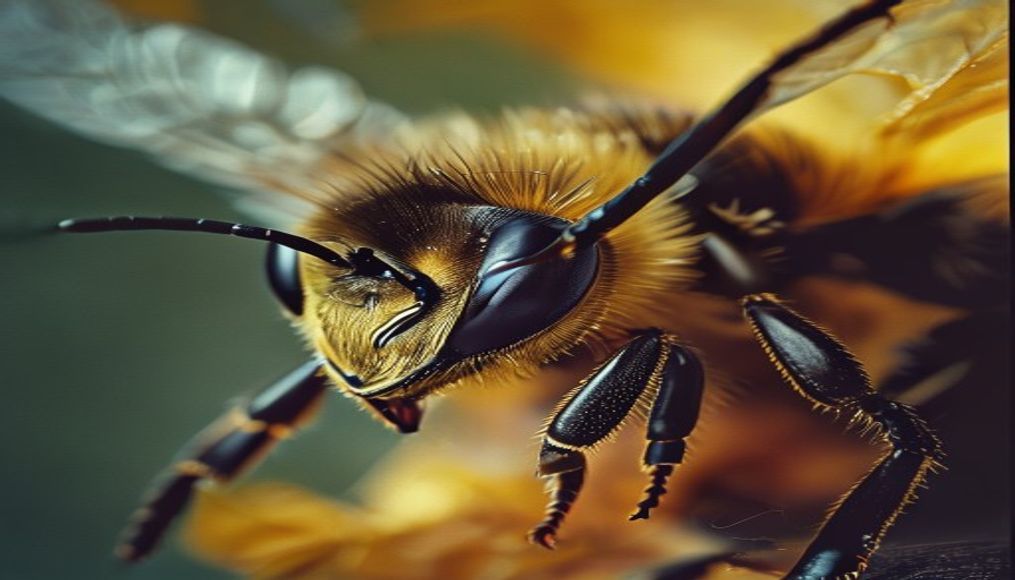
Queen bee macro
1344×768 · AVIF · CC BY 4.0
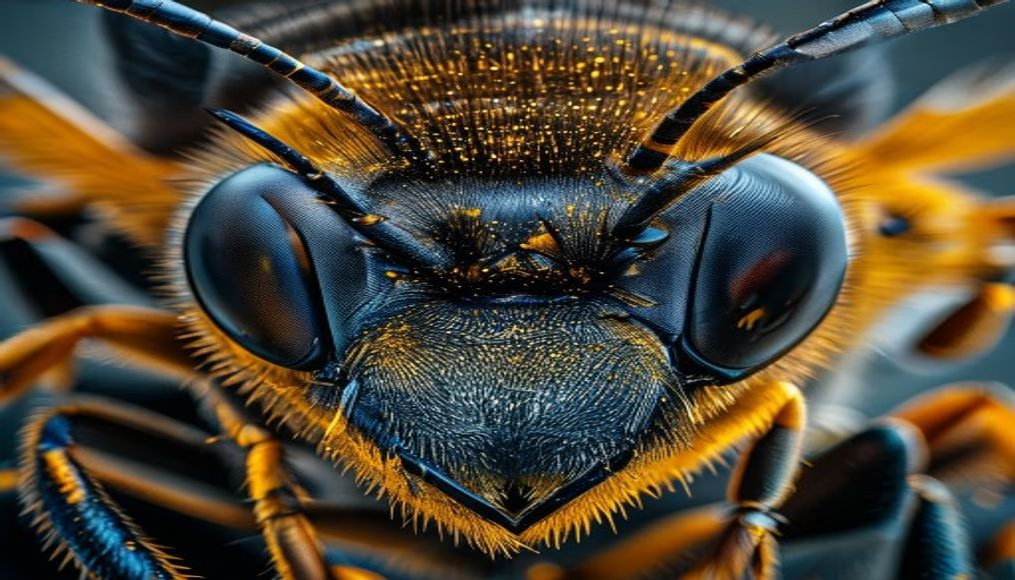
The queen bee is the heart of the hive, responsible for egg laying and regulating the colony through pheromones.
About this subject
The queen bee is the only fertile female in a honey bee colony (Apis mellifera). Her primary role is egg laying, capable of depositing up to 2,000 eggs per day during peak season. She is fed exclusively royal jelly throughout her life, which differentiates her from workers and drones. The queen produces pheromones that inhibit the development of new queens in royal cells and maintain colony cohesion.
The life cycle of a queen begins when a larva is selected by worker bees to be fed royal jelly in a specialized cell. After 16 days, the queen emerges and then undertakes mating flights with multiple drones. She stores sperm in a spermatheca and uses it throughout her life, which can last 2 to 5 years. An aging or low-egg-producing queen is replaced by a new queen through a process called supersedure.
In beekeeping, the queen is often marked with a specific color for easy identification and monitoring. Beekeepers regularly check for the presence and health of the queen, as well as her laying pattern. Loss of the queen can lead to hive disorganization, with workers developing ovaries and laying unfertilized eggs that only produce drones, eventually leading to colony collapse.
Macrophotography of queen bees reveals stunning details, such as their compound eyes, thorax, and elongated abdomen compared to workers. The golden color and translucent wings are striking features. This photographic practice aids in morphological study and scientific communication about the importance of bees for pollination and biodiversity.
Frequently Asked Questions
How can you identify a queen bee in a hive?
The queen is usually larger than worker bees, with a longer and pointed abdomen. She lacks pollen baskets on her legs and moves more slowly. Beekeepers often mark her with a colored dot on the thorax.
What happens if the queen bee dies?
Worker bees detect the absence of pheromones and start rearing a new queen by feeding young larvae royal jelly. If no suitable larvae are available, the colony may create an emergency queen from existing eggs or larvae.
How many eggs does a queen bee lay per day?
A healthy queen can lay between 1,500 and 2,000 eggs per day during spring and summer, totaling over 200,000 eggs per year.
Direct URL
https://pub-c7d6a6ea828543ac903a74a341ccb2e1.r2.dev/imagens/queen-bee-macro-architectural-photography-p3.avifHow to credit
Include a visible link back to UtilizAí. Copy one of the snippets below:
<a href="https://xn--utiliza-eza.com/en/midia/imagens/queen-bee-macro-architectural-photography-p3">Queen bee macro</a> by <a href="https://xn--utiliza-eza.com">UtilizAí</a>, licensed under <a href="https://creativecommons.org/licenses/by/4.0/">CC BY 4.0</a>.
[Queen bee macro](https://xn--utiliza-eza.com/en/midia/imagens/queen-bee-macro-architectural-photography-p3) by [UtilizAí](https://xn--utiliza-eza.com), CC BY 4.0
License: CC-BY-4.0