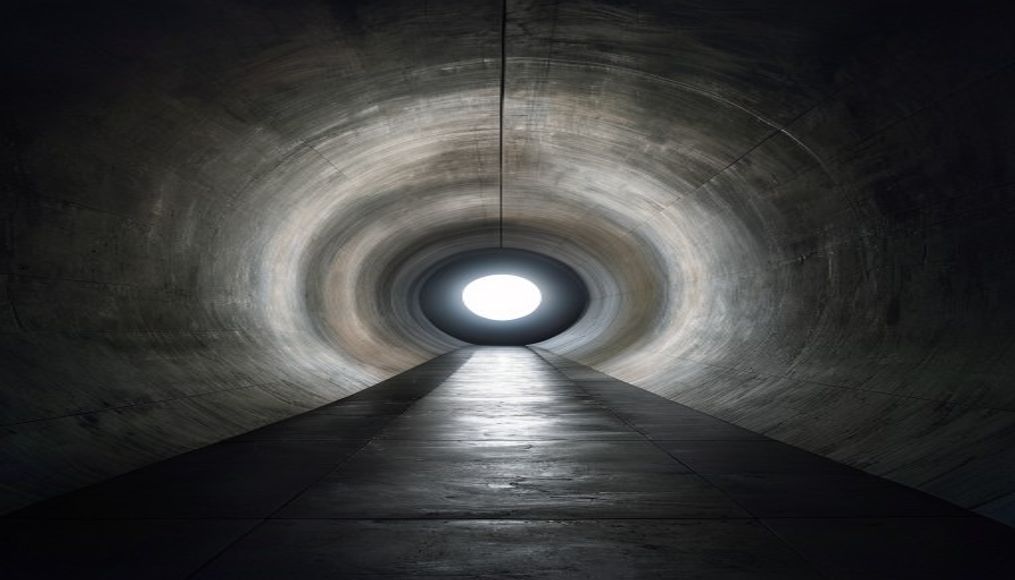
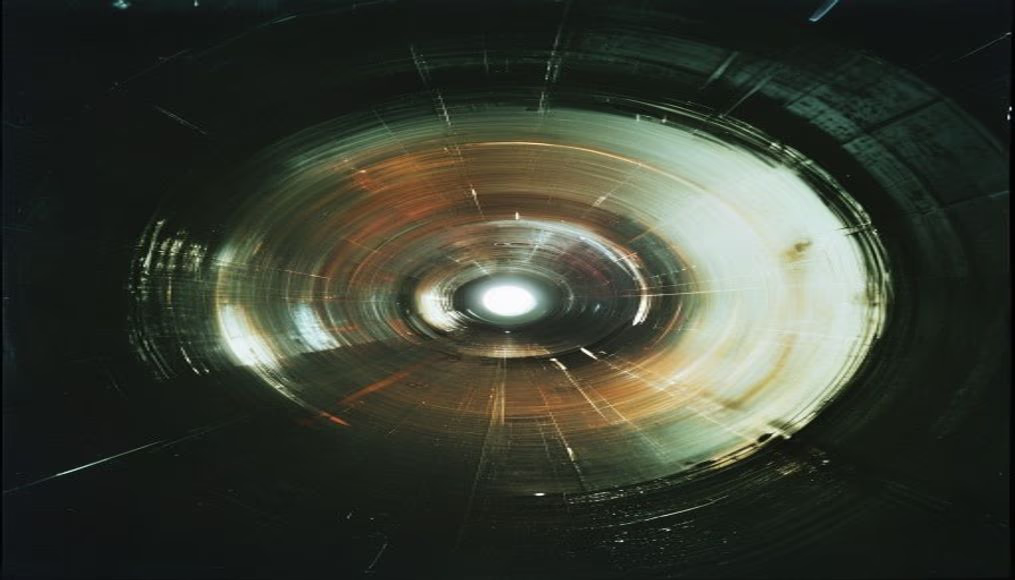
Protoplanetary disk forming
1344×768 · AVIF · CC BY 4.0

Protoplanetary disks are structures of gas and dust around young stars, where planets like those in the Solar System form over millions of years.
About this subject
A protoplanetary disk is a rotating cloud of gas and dust surrounding a newly formed star. These disks are the cradles of planetary systems, supplying the material for planetesimals to aggregate and eventually become planets. The process begins when a molecular cloud collapses under gravity, forming a protostar at the center and an accretion disk around it. Over time, dust particles collide and stick together, growing in size until they form rocky bodies or gas giants, depending on the distance from the star.
Observations of protoplanetary disks have revolutionized our understanding of planet formation. The Hubble Space Telescope and, more recently, ALMA (Atacama Large Millimeter/submillimeter Array) have captured detailed images of these disks, revealing rings and gaps that indicate the presence of forming planets. A notable example is the HL Tauri system, whose disk exhibits sharp structures suggesting young planets carving material around them. Spectroscopic studies also identify complex organic molecules in these disks, such as methanol and hydrogen cyanide, providing the basic ingredients for life.
The average lifespan of a protoplanetary disk is 1 to 10 million years, a relatively short period in cosmic scales. During this time, dust agglomerates into planetesimals up to hundreds of kilometers across, which then gravitationally attract more material. Gas giants like Jupiter can form quickly, while rocky planets like Earth take longer to accumulate mass. The disk's composition varies radially: closer to the star, heat evaporates ices, leaving silicates and metals; farther out, ices of water, methane, and ammonia remain solid, influencing the type of planet that forms.
Understanding protoplanetary disks also has implications for astrobiology. The formation of planets in habitable zones, where temperature allows liquid water, depends directly on the disk's structure and evolution. Stars with massive disks tend to form richer planetary systems. Recent observations suggest that many disks are disrupted by neighboring stars, ejecting or fragmenting material, which can halt planet formation. This explains why systems like ours, with an isolated star, may be more conducive to life's emergence.
Frequently Asked Questions
What is a protoplanetary disk?
It is a structure of gas and dust orbiting a young star, providing the material for planet formation. These disks can span hundreds of astronomical units and last a few million years.
How do planets form from a protoplanetary disk?
Dust particles collide and stick together, growing into larger bodies. When they reach a few kilometers in size, gravity attracts more material, forming planetesimals and eventually protoplanets. Remaining gas in the disk can be captured to form the atmospheres of gas giants.
What are the most famous observed protoplanetary disks?
The disk of the star HL Tauri, captured by ALMA, shows sharp rings and gaps. Another example is the TW Hydrae system, where a gap at 80 astronomical units may indicate a young planet.
Direct URL
https://pub-c7d6a6ea828543ac903a74a341ccb2e1.r2.dev/imagens/protoplanetary-disk-forming-minimalist-composition-p6.avifHow to credit
Include a visible link back to UtilizAí. Copy one of the snippets below:
<a href="https://xn--utiliza-eza.com/en/midia/imagens/protoplanetary-disk-forming-minimalist-composition-p6">Protoplanetary disk forming</a> by <a href="https://xn--utiliza-eza.com">UtilizAí</a>, licensed under <a href="https://creativecommons.org/licenses/by/4.0/">CC BY 4.0</a>.
[Protoplanetary disk forming](https://xn--utiliza-eza.com/en/midia/imagens/protoplanetary-disk-forming-minimalist-composition-p6) by [UtilizAí](https://xn--utiliza-eza.com), CC BY 4.0
License: CC-BY-4.0