Pottery wheel hands clay
1344×768 · AVIF · CC BY 4.0
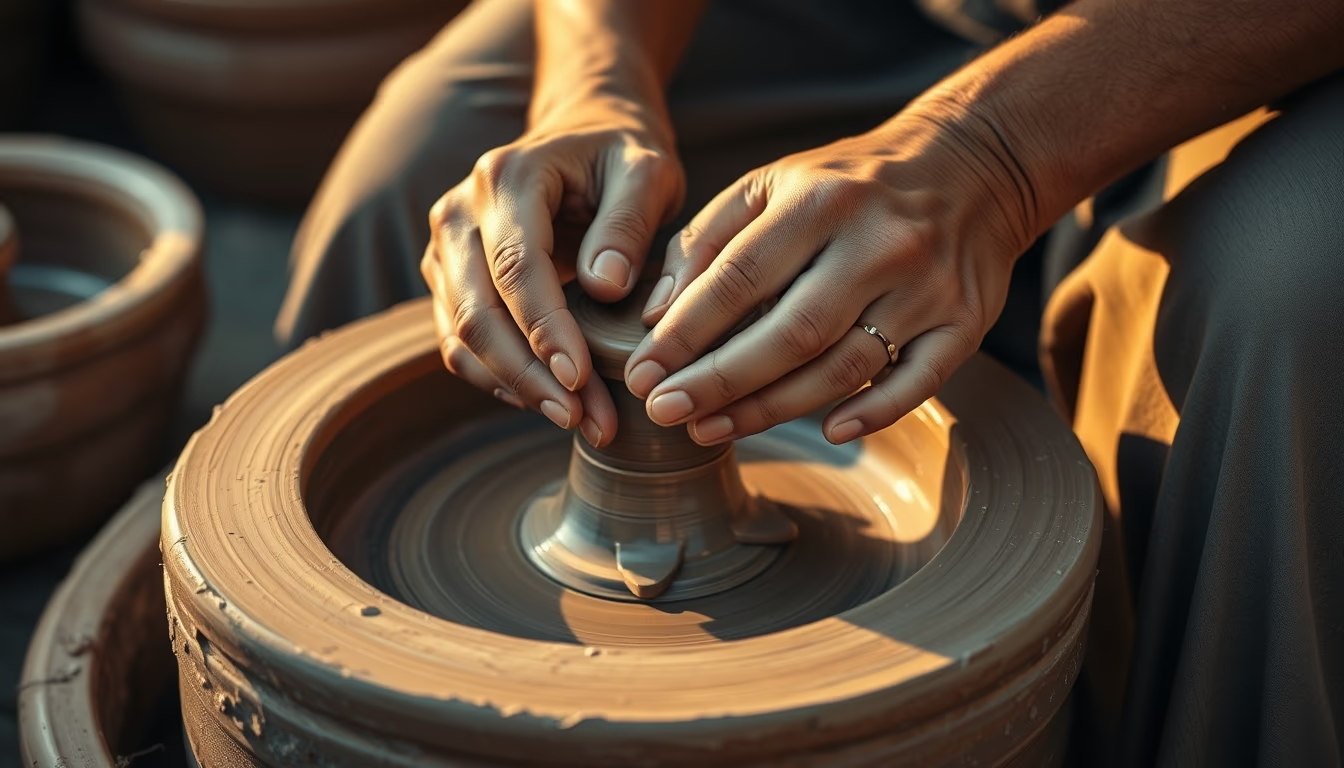
The potter's wheel is an ancient tool that shapes clay into functional and artistic pieces, present in cultures worldwide.
About this subject
The potter's wheel, also known as a throwing wheel, is one of the most iconic tools in handmade ceramics. Its basic principle is a rotating disc that allows the artisan to shape clay with their hands, using centrifugal force and controlled pressure to create symmetrical forms. Although the exact origin is uncertain, archaeological evidence suggests that the first wheels appeared in Mesopotamia around 3500 BCE, revolutionizing the production of vessels, plates, and jars.
In Brazil, pottery made on the potter's wheel has a strong tradition in communities such as the Vale do Jequitinhonha (Minas Gerais), where pieces are produced with local clays and techniques passed down through generations. This activity not only preserves ancestral knowledge but also generates income for many families. Moreover, the potter's wheel is often depicted in travel photography, symbolizing the encounter between artisan and raw material.
From a technical standpoint, the process requires fine motor coordination and tactile sensitivity. The potter centers the clay on the disc, wets their hands, and with precise movements opens a center to form walls. The wheel speed can be adjusted according to the stage: slow for detailed modeling, faster for symmetry. Pieces such as pots, bowls, and even tiles can be produced. The practice also values controlled imperfection, as each object carries unique marks of the artisan.
Culturally, the potter's wheel appears in historical references, such as the Greek legend of the potter and the god Prometheus, and remains an icon of human creativity. In an increasingly industrialized world, pottery made on the wheel represents cultural resistance and sustainability, as it uses renewable natural resources and promotes conscious consumption.
Frequently Asked Questions
What is the difference between a potter's wheel and a throwing wheel?
They are essentially the same tool. 'Throwing wheel' is often used to emphasize the hand-building technique, while 'potter's wheel' is the general term for the rotating device used to shape clay.
How do you maintain a potter's wheel?
Regular maintenance includes lubricating bearings, cleaning the wheel head after each use, and checking the motor or pedal mechanism. Speed calibration should also be done periodically.
Can pottery made on a wheel be used for everyday purposes?
Yes, wheel-thrown pieces like plates, mugs, and bowls are fully functional after firing and glazing. However, ensure that the glaze is food-safe if intended for cooking or eating.
Direct URL
https://pub-c7d6a6ea828543ac903a74a341ccb2e1.r2.dev/imagens/pottery-wheel-hands-clay-travel-photography-p3.avifHow to credit
Include a visible link back to UtilizAí. Copy one of the snippets below:
<a href="https://xn--utiliza-eza.com/en/midia/imagens/pottery-wheel-hands-clay-travel-photography-p3">Pottery wheel hands clay</a> by <a href="https://xn--utiliza-eza.com">UtilizAí</a>, licensed under <a href="https://creativecommons.org/licenses/by/4.0/">CC BY 4.0</a>.
[Pottery wheel hands clay](https://xn--utiliza-eza.com/en/midia/imagens/pottery-wheel-hands-clay-travel-photography-p3) by [UtilizAí](https://xn--utiliza-eza.com), CC BY 4.0
License: CC-BY-4.0