Pottery wheel hands clay
1344×768 · AVIF · CC BY 4.0
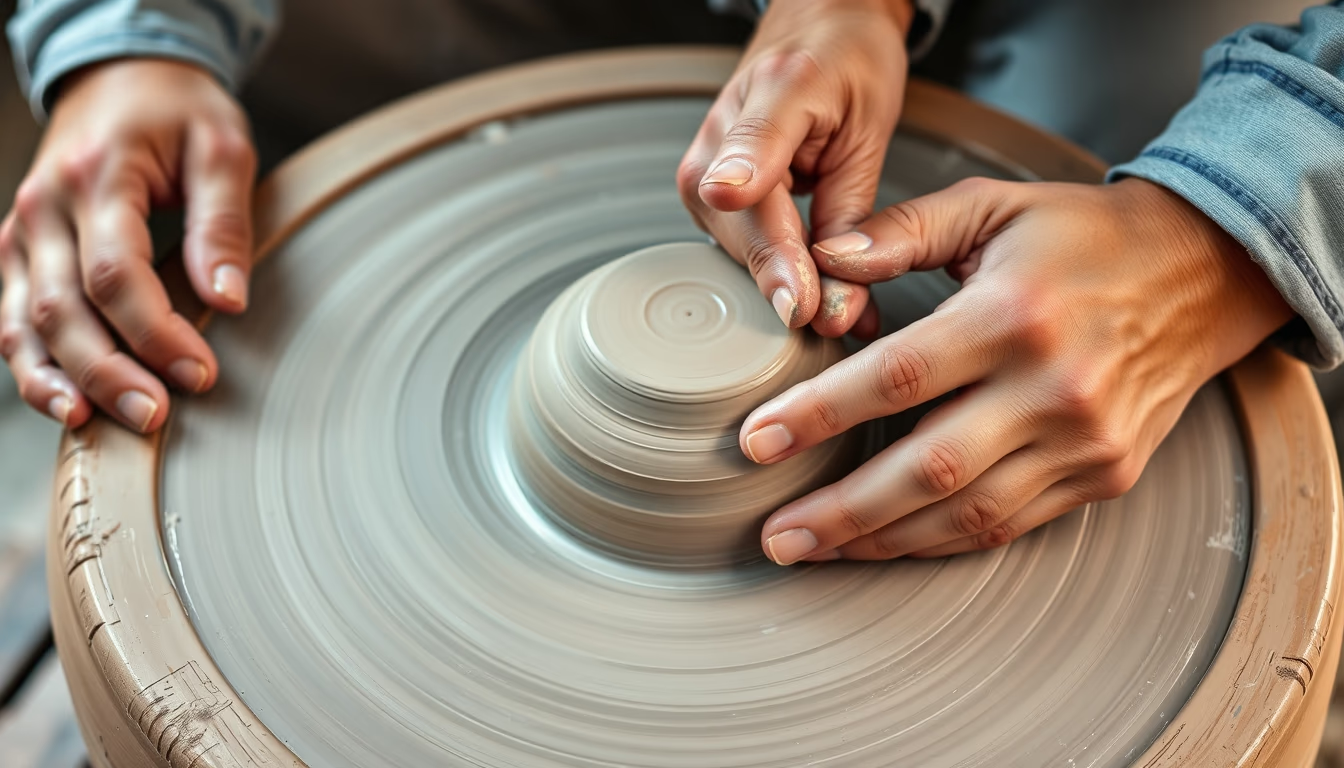
Hands shaping clay on a pottery wheel, an ancient craft blending technique and creativity in ceramic production.
About this subject
The pottery wheel, also known as a potter's wheel, has been an essential tool in ceramic production for thousands of years. Originating in Mesopotamia around 3000 BCE, the wheel allowed potters to create symmetrical and thinner pieces, revolutionizing ceramic art. The process involves centering clay on the spinning disc, opening a hole in the center, and pulling the walls upward to form vessels, bowls, and jars. The technique requires balance between hand pressure and wheel speed, mastered through years of practice.
Pottery made on the wheel holds deep cultural significance in many civilizations. In Japan, the Jomon style used manual rotation before the wheel, but the potter's wheel was later introduced, influencing Raku pottery and the tea ceremony tradition. In Brazil, manual pottery is still practiced by indigenous communities and artisans in the Jequitinhonha Valley, where clay is transformed into utensils and sculptures. The mechanical wheel, popularized from the 20th century, facilitated mass production, but handcrafted wheel pottery remains valued for its authenticity.
Interestingly, wheel speed directly influences the outcome: slow speeds are used for large, thick pieces, while high speeds allow delicate forms and thin walls. The clay must have ideal consistency, neither too dry nor too wet, to avoid cracking during drying and firing. After shaping, the piece undergoes firing in kilns that can reach temperatures above 1000°C, vitrifying or not depending on the type of ceramic.
Today, handcrafted pottery is experiencing a revival as a therapeutic and sustainable hobby. Pottery wheel workshops are multiplying in Brazilian cities, offering courses that connect people to ancestral traditions. Beyond aesthetic value, handmade pottery carries the artisan's energy, each piece unique, differing from standardized industrial production.
Frequently Asked Questions
What is the origin of the pottery wheel?
The pottery wheel originated in Mesopotamia around 3000 BCE, revolutionizing ceramic production by enabling more symmetrical and thinner pieces.
How does a potter's wheel work?
The wheel spins clay at high speed while the potter shapes it with hands, using pressure and movement to create forms like bowls and vases.
Is handmade pottery sustainable?
Yes, handmade pottery uses natural clay, low-impact processes, and promotes conscious consumption, also being a therapeutic activity.
Direct URL
https://pub-c7d6a6ea828543ac903a74a341ccb2e1.r2.dev/imagens/pottery-wheel-hands-clay-magazine-editorial-p1.avifHow to credit
Include a visible link back to UtilizAí. Copy one of the snippets below:
<a href="https://xn--utiliza-eza.com/en/midia/imagens/pottery-wheel-hands-clay-magazine-editorial-p1">Pottery wheel hands clay</a> by <a href="https://xn--utiliza-eza.com">UtilizAí</a>, licensed under <a href="https://creativecommons.org/licenses/by/4.0/">CC BY 4.0</a>.
[Pottery wheel hands clay](https://xn--utiliza-eza.com/en/midia/imagens/pottery-wheel-hands-clay-magazine-editorial-p1) by [UtilizAí](https://xn--utiliza-eza.com), CC BY 4.0
License: CC-BY-4.0