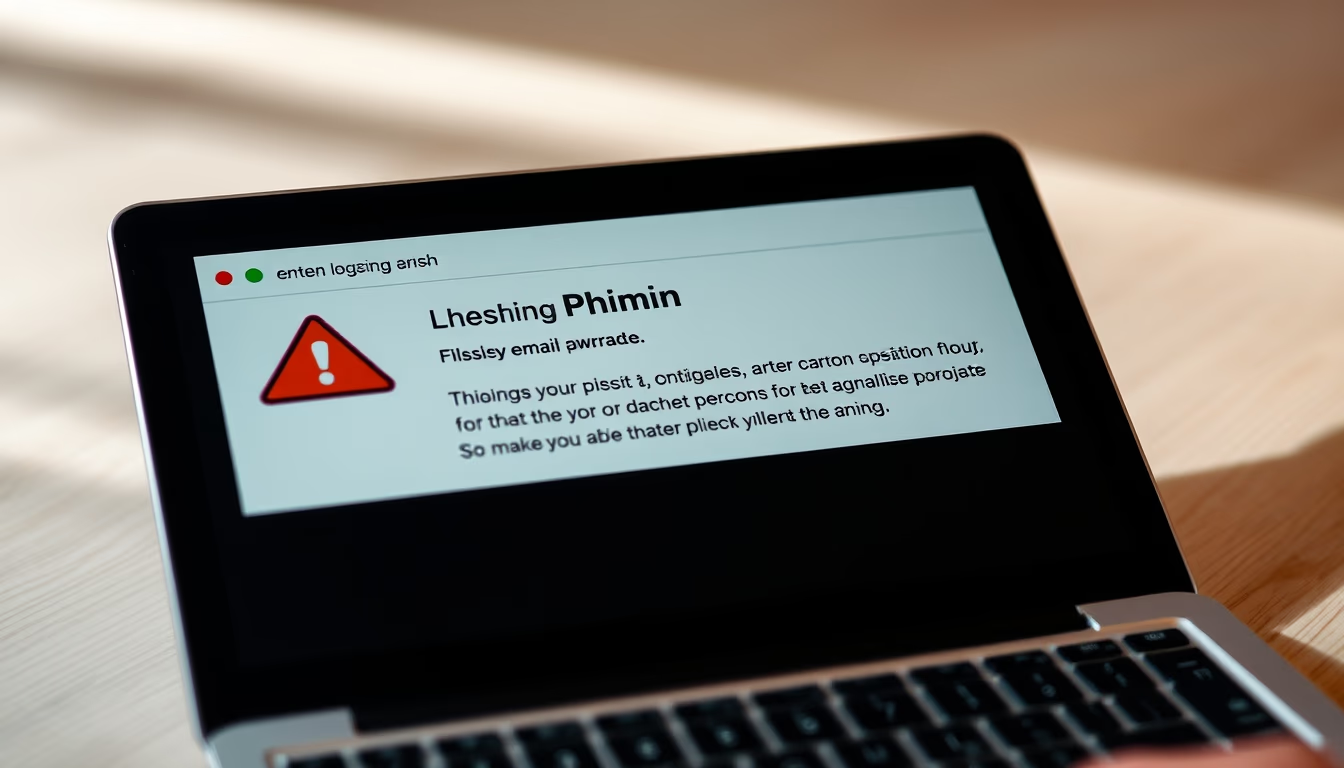
Phishing email warning
1344×768 · AVIF · CC BY 4.0

Phishing emails are one of the most common cyber scams: fraudulent messages mimicking legitimate companies to steal personal and financial data.
About this subject
Phishing email is a social engineering technique used by cybercriminals to obtain confidential information such as passwords, credit card numbers, and bank data. According to Talos Intelligence, over 3.4 billion phishing emails are sent daily worldwide. The term "phishing" is a variant of "fishing," as attackers cast digital lures to hook potential victims.
These emails typically impersonate trusted institutions like banks, social media platforms, or streaming services. They use real logos, urgent language ("your account will be closed"), and malicious links leading to fake login pages. A Verizon study found that 36% of data breaches in 2021 involved phishing, with an average cost per incident exceeding $4 million.
To protect yourself, always verify the sender's actual address, hover over links before clicking, and avoid providing personal information via email. Companies invest in awareness training and anti-spam filters. Brazil, according to Kaspersky's threat report, ranks among the top countries for phishing attacks in Latin America.
A notable fact: phishing originated in the mid-1990s, initially targeting AOL users. It has since evolved into variants like spear phishing (targeting a specific individual) and whaling (targeting executives). Continuous awareness and two-factor authentication remain the best defenses against this persistent threat.
Frequently Asked Questions
What should I do if I receive a suspicious phishing email?
Do not click on links or download attachments. Report the email as phishing to your email provider (Gmail, Outlook, etc.) and, if possible, forward it to the legitimate institution being impersonated. Then delete the email.
How can I identify a common phishing email?
Look for spelling mistakes, a strange sender address (e.g., support@fake-secure-bank.com), a generic greeting ("Dear customer" instead of your name), and a sense of urgency or threat.
Are companies also targeted by phishing?
Yes, spear phishing targets specific employees to steal credentials or install malware. Regular training and phishing simulations help reduce risk.
Direct URL
https://pub-c7d6a6ea828543ac903a74a341ccb2e1.r2.dev/imagens/phishing-email-warning-cinematic-wide-shot-p0.avifHow to credit
Include a visible link back to UtilizAí. Copy one of the snippets below:
<a href="https://xn--utiliza-eza.com/en/midia/imagens/phishing-email-warning-cinematic-wide-shot-p0">Phishing email warning</a> by <a href="https://xn--utiliza-eza.com">UtilizAí</a>, licensed under <a href="https://creativecommons.org/licenses/by/4.0/">CC BY 4.0</a>.
[Phishing email warning](https://xn--utiliza-eza.com/en/midia/imagens/phishing-email-warning-cinematic-wide-shot-p0) by [UtilizAí](https://xn--utiliza-eza.com), CC BY 4.0
License: CC-BY-4.0