Particle physics detector
1344×768 · AVIF · CC BY 4.0
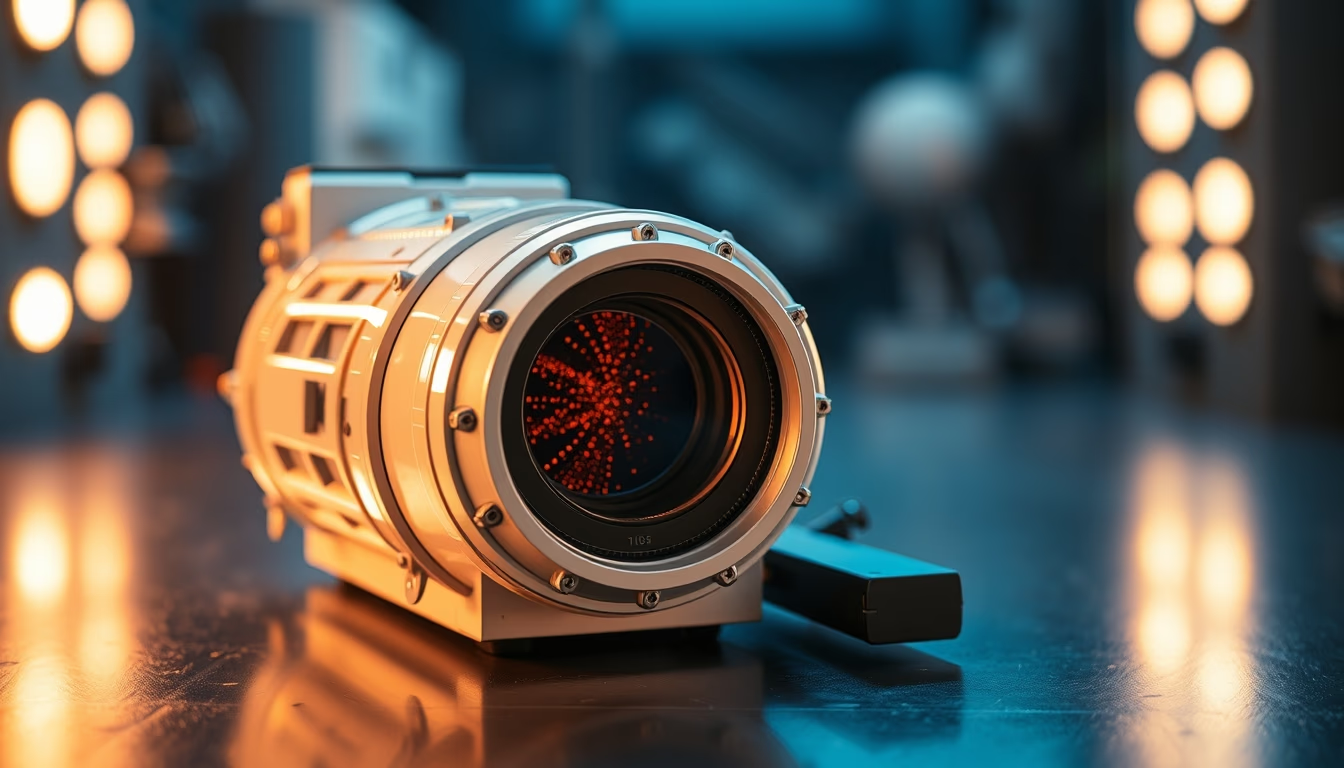
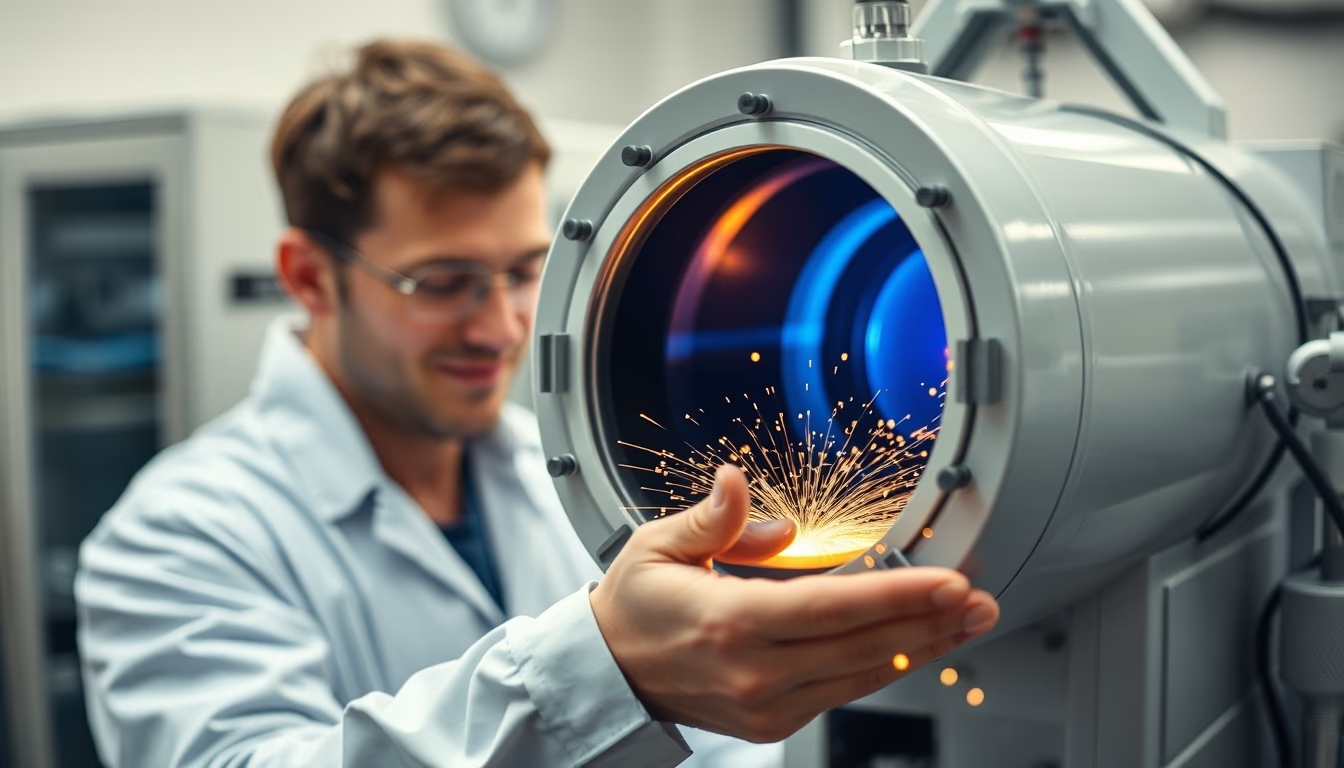
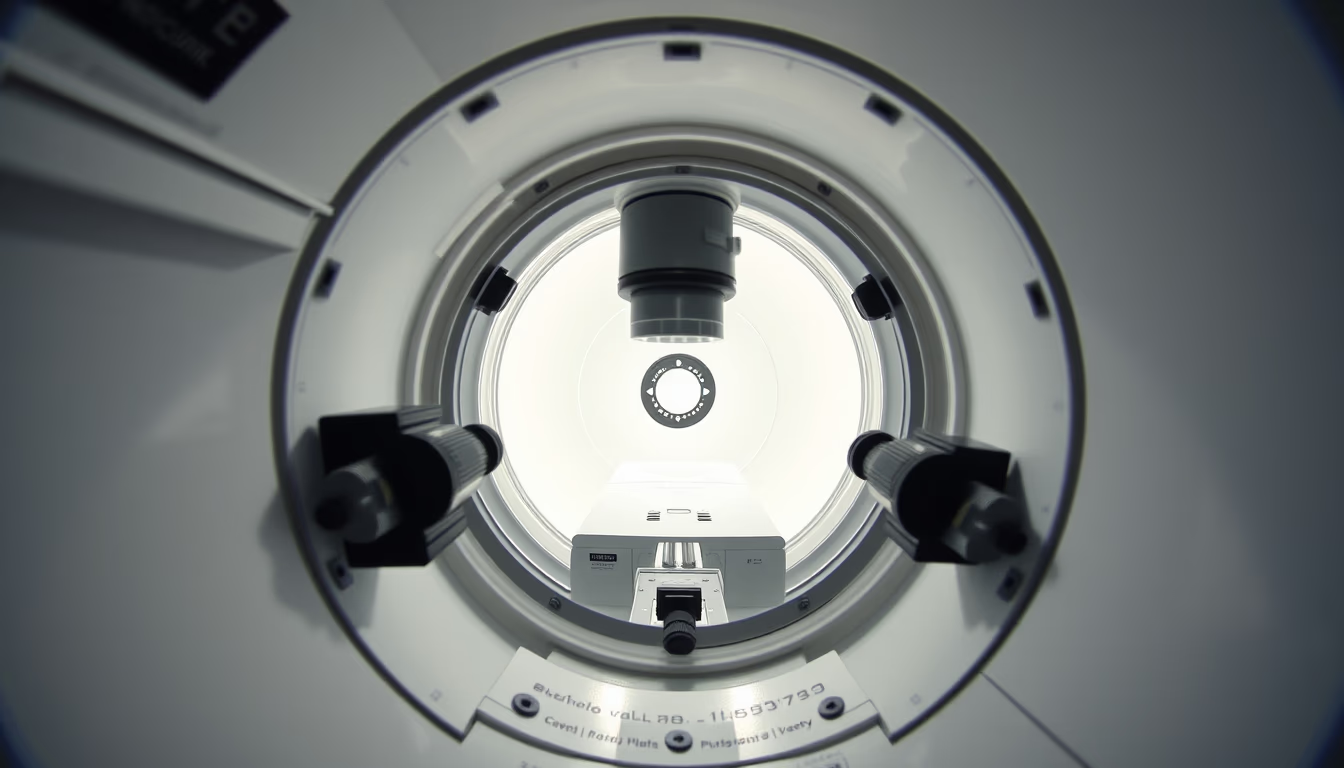
Particle detectors are essential instruments in modern physics, recording collisions in accelerators like the LHC at CERN.
About this subject
Particle detectors are sophisticated devices that record and measure subatomic particles resulting from collisions in accelerators or from natural sources. They operate based on principles such as ionization, scintillation, or the Cherenkov effect, converting minimal interactions into electrical signals. Several types exist, including spark chambers, bubble chambers, solid-state detectors, and calorimeters. The most modern ones, like those at the Large Hadron Collider (LHC) at CERN, are colossal structures: the ATLAS detector, for instance, is 46 meters long, 25 meters high, and weighs 7,000 tons. These instruments are crucial for discoveries such as the Higgs boson in 2012, validating the Standard Model of particle physics.
Applications extend beyond fundamental research. Particle detector technology has been adapted for medicine, resulting in equipment like the positron emission tomography (PET) scanner, which uses scintillators to image metabolic processes. In security, airport baggage scanners employ X-ray detectors. In archaeology, particle detectors allow dating of artifacts through mass spectrometry. The versatility of these instruments demonstrates their multidisciplinary impact.
Interestingly, particle detectors can record extremely fast events: collisions at the LHC occur every 25 nanoseconds, generating millions of data per second. Trigger systems and reconstruction algorithms select only the most promising events for analysis. The readout electronics feature millions of channels, requiring complex cooling and synchronization solutions. These technological challenges drive innovations in signal processing, materials, and high-performance computing.
Frequently Asked Questions
How does a particle detector work?
Particle detectors operate by exploiting interactions such as ionization or scintillation. When a particle traverses a sensitive medium, it deposits energy that is converted into an electrical signal. Examples include gas chambers, where ionization generates current, and scintillators, where emitted light is captured by photomultipliers.
What is the largest particle detector currently in operation?
The largest detector is ATLAS at CERN's LHC. Measuring 46 meters in length, 25 meters in height, and weighing 7,000 tons, it completely surrounds the proton collision point, recording trajectories and energies of produced particles.
Are particle detectors used outside physics?
Yes, they are used in medicine (PET scans, MRI), security (baggage scanners), archaeology (dating via mass spectrometry), and environmental radiation monitoring. Scintillator technology, for instance, underpins detectors used in imaging exams.
Direct URL
https://pub-c7d6a6ea828543ac903a74a341ccb2e1.r2.dev/imagens/particle-physics-detector-fine-art-photography-fresh3.avifHow to credit
Include a visible link back to UtilizAí. Copy one of the snippets below:
<a href="https://xn--utiliza-eza.com/en/midia/imagens/particle-physics-detector-fine-art-photography-fresh3">Particle physics detector</a> by <a href="https://xn--utiliza-eza.com">UtilizAí</a>, licensed under <a href="https://creativecommons.org/licenses/by/4.0/">CC BY 4.0</a>.
[Particle physics detector](https://xn--utiliza-eza.com/en/midia/imagens/particle-physics-detector-fine-art-photography-fresh3) by [UtilizAí](https://xn--utiliza-eza.com), CC BY 4.0
License: CC-BY-4.0