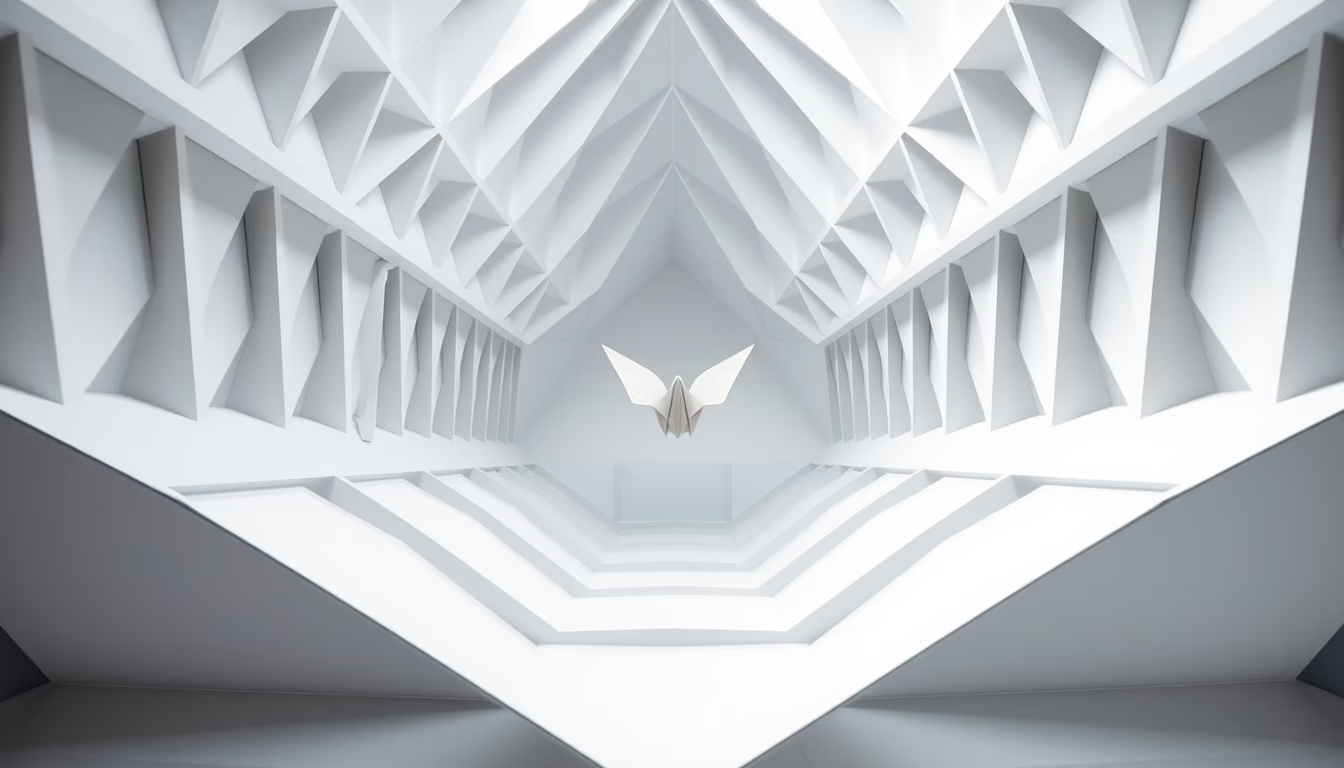
Papercraft architecture
1344×768 · AVIF · CC BY 4.0
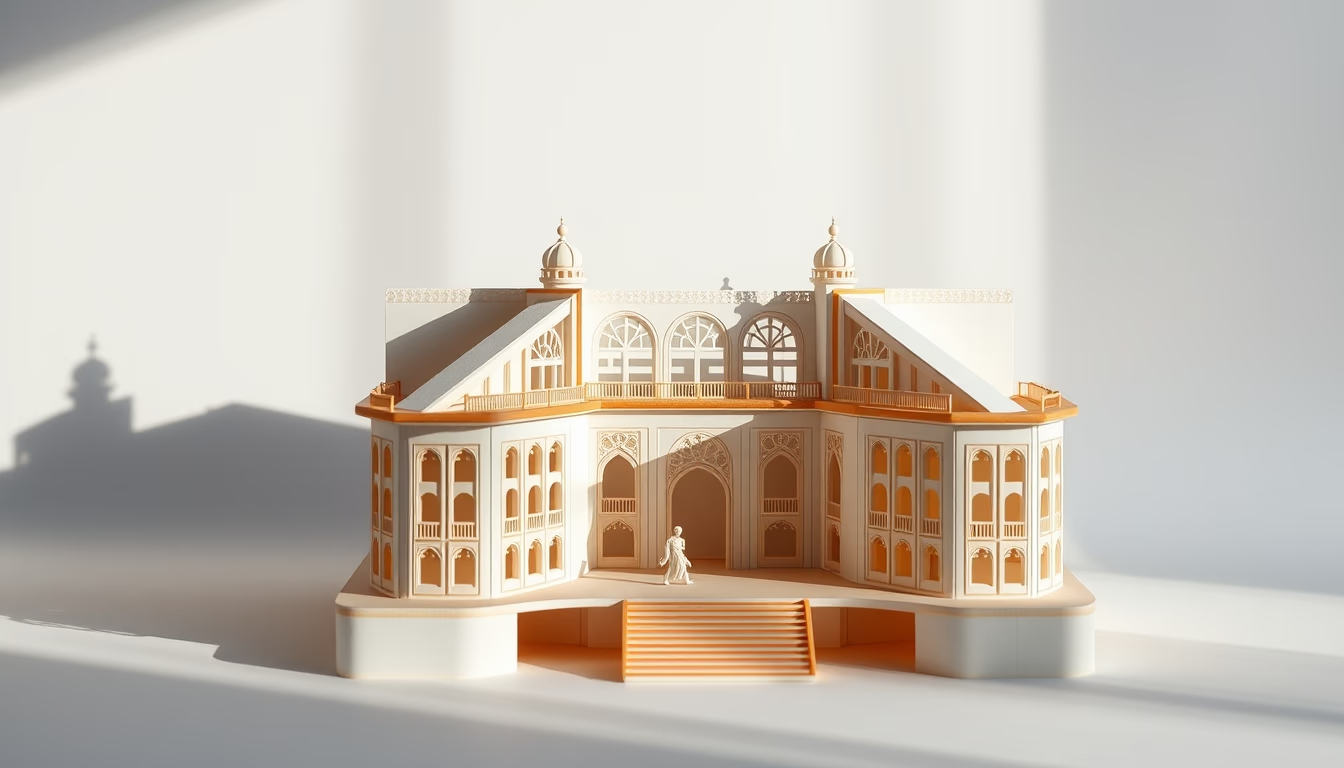
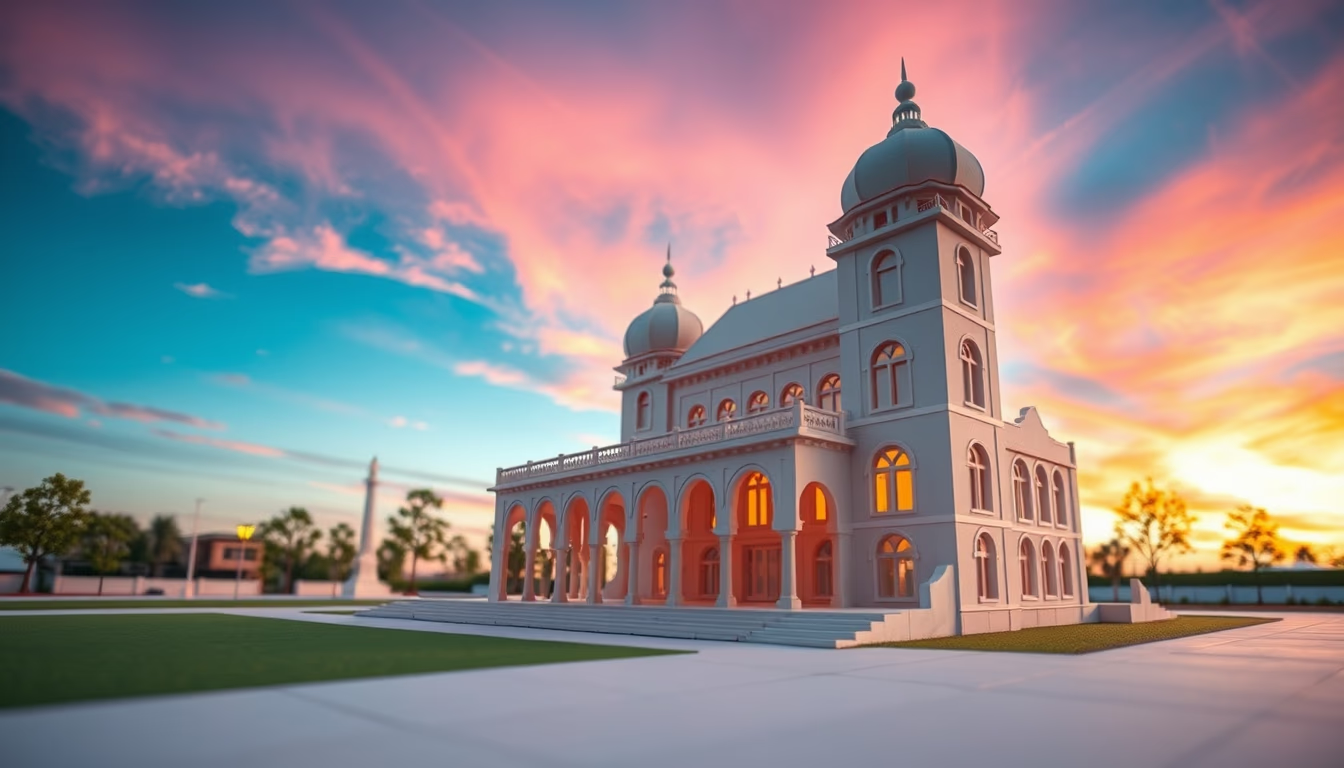
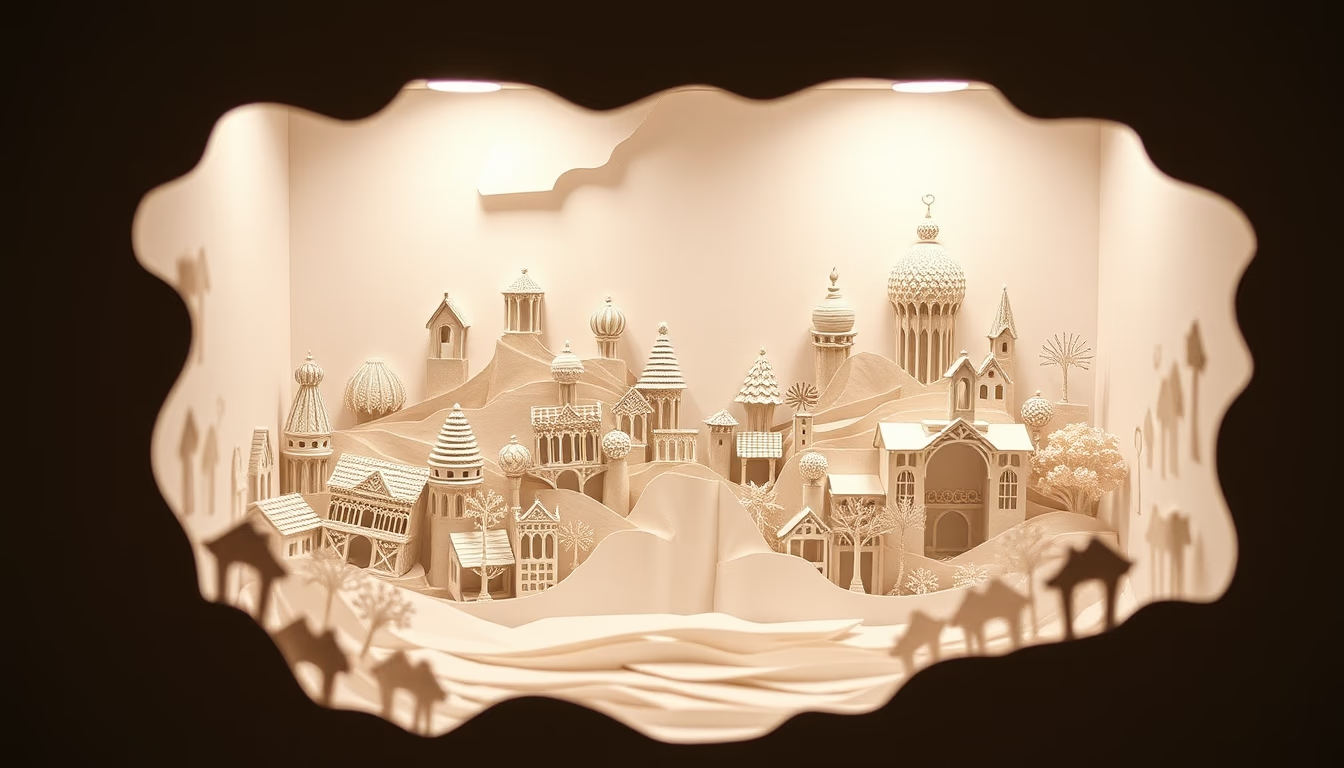
Papercraft architecture combines three-dimensional paper modeling with architectural principles, creating detailed scale models for editorials and exhibitions.
About this subject
Papercraft architecture is an artisanal technique that reproduces buildings and urban structures using high-weight paper, without relying on industrial laser cutting. Unlike origami, which uses folds without cuts, papercraft allows cutting and gluing, enabling complex facades, hollow windows, and sloped roofs. This form gained prominence in design editorials, advertising, and contemporary art exhibitions, such as those by the Paperworks collective, which creates miniatures of historic Brazilian buildings.
The origins of papercraft trace back to architectural presentation models from renowned 20th-century architects like Le Corbusier and Oscar Niemeyer, who used paper to test proportions before building. Today, artists such as British Helen Musselwhite and Brazilian Fábio Lopez elevate the technique to a sculptural level, requiring millimeter precision and structural engineering knowledge. The chosen paper typically has a weight between 180 and 300 gsm, enough to hold shape without tearing.
In architecture and design magazine editorials, papercraft replaces real photographs with playful scenes, as seen in Casa Vogue's "Paper Houses" series, which recreated sustainable homes. The technique is also used in children's museums to explain urban planning and sustainability concepts. Collectors pay up to R$ 5,000 for a paper model of a famous building, such as the Museu do Amanhã or the Sydney Opera House. The process involves prior digital planning, with 3D models unfolded into flat patterns, and hours of manual cutting with a craft knife.
Despite its delicate appearance, well-constructed papercraft architecture can last decades if protected from humidity and direct sunlight. Recent exhibitions, such as "Papel e Cidade" at MIS São Paulo, have shown that the material transcends hobby status and solidifies as an artistic language. With the rise of the maker movement and DIY, online courses teach advanced techniques like internal LED lighting and embossed textures.
Frequently Asked Questions
What is the difference between papercraft and origami?
Origami uses only paper folds without cuts or glue, while papercraft allows cutting, gluing, and multiple pieces to create complex three-dimensional shapes.
What type of paper is most commonly used in papercraft architecture?
Papers with a weight between 180 and 300 gsm, such as coated paper, 180g bond, or cardstock, provide enough stiffness to maintain shape without tearing during cutting and assembly.
Can papercraft architecture be used professionally?
Yes, it is common in architecture magazine editorials, store window displays, stop-motion animation sets, and conceptual models for architecture firms.
Direct URL
https://pub-c7d6a6ea828543ac903a74a341ccb2e1.r2.dev/imagens/papercraft-architecture-magazine-editorial-fresh10.avifHow to credit
Include a visible link back to UtilizAí. Copy one of the snippets below:
<a href="https://xn--utiliza-eza.com/en/midia/imagens/papercraft-architecture-magazine-editorial-fresh10">Papercraft architecture</a> by <a href="https://xn--utiliza-eza.com">UtilizAí</a>, licensed under <a href="https://creativecommons.org/licenses/by/4.0/">CC BY 4.0</a>.
[Papercraft architecture](https://xn--utiliza-eza.com/en/midia/imagens/papercraft-architecture-magazine-editorial-fresh10) by [UtilizAí](https://xn--utiliza-eza.com), CC BY 4.0
License: CC-BY-4.0