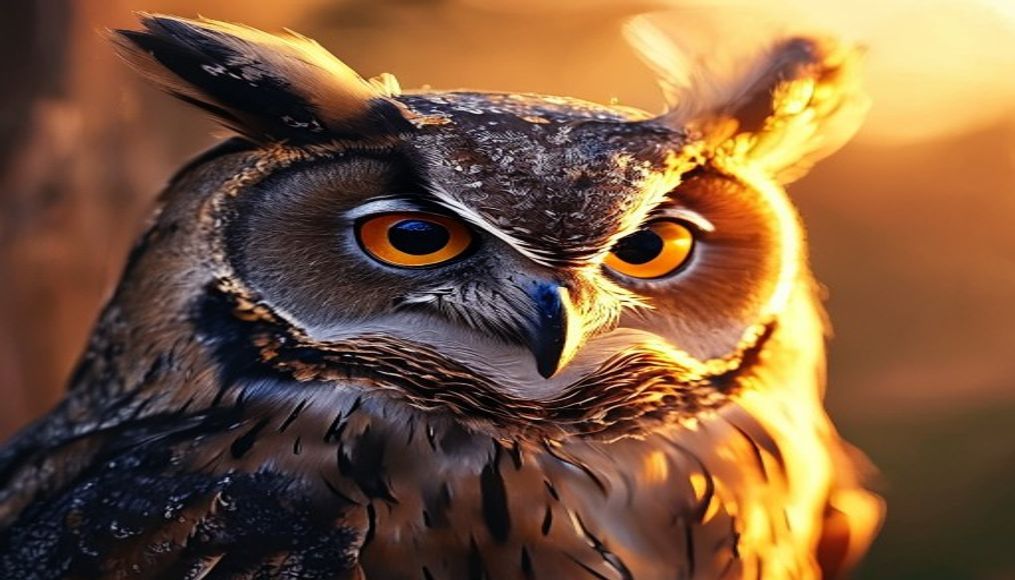
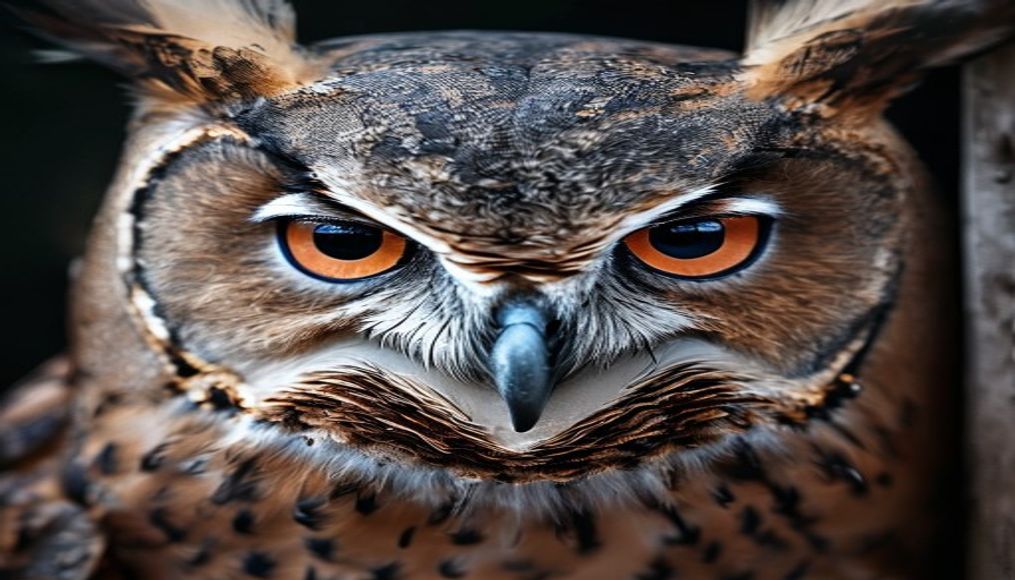
Owl barn macro face
1344×768 · AVIF · CC BY 4.0
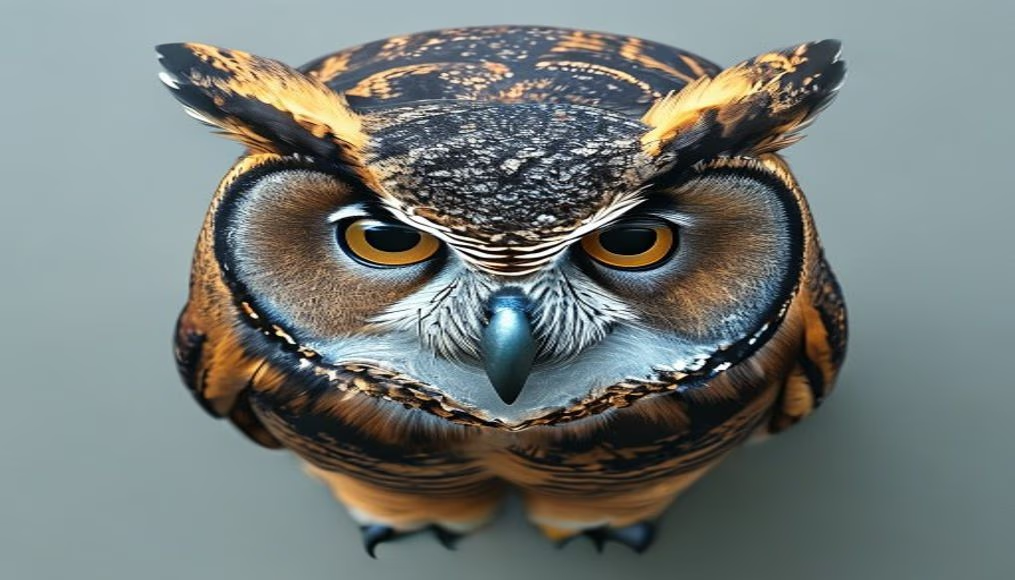
The barn owl (Tyto alba) is a nocturnal bird of prey with an iconic heart-shaped facial disc. A macro view of its face reveals specialized feathers for silent flight and acute hearing.
About this subject
The barn owl (Tyto alba) is one of the most widely distributed birds of prey in the world, occurring on every continent except Antarctica and extreme deserts. It is instantly recognizable by its heart-shaped facial disc, which functions as a directional sound collector, channeling sound waves to its asymmetrical ears hidden behind the feathers. This asymmetry allows the owl to pinpoint prey with remarkable accuracy even in total darkness.
Silent flight is made possible by adaptations in the primary feathers: a serrated leading edge that breaks up air turbulence and a velvety upper surface that absorbs sound. This is crucial for hunting small rodents, its primary prey. A single barn owl consumes approximately 1,000 mice per year, playing a key role in natural pest control in agricultural ecosystems.
In Brazil, the barn owl is found throughout the territory, inhabiting rural areas as well as urban centers, where it may nest in attics, church towers, and barns. The species holds cultural significance: in Greek mythology, the owl was associated with Athena and wisdom, while in many folk traditions it is surrounded by superstition. Despite its wide range, light pollution and pesticide use are significant threats, causing population declines in some regions.
Frequently Asked Questions
Why does the barn owl have a heart-shaped facial disc?
The heart-shaped facial disc acts as a parabolic reflector, funneling sounds to the owl's asymmetrical ears, enabling precise prey localization even in total darkness.
How many mice does a barn owl eat per year?
A single barn owl consumes an estimated 1,000 rodents annually, making it a valuable ally in natural pest control.
Is the barn owl endangered in Brazil?
The species is not globally threatened, but faces threats from habitat loss, light pollution, and pesticide poisoning, which can reduce local populations.
Direct URL
https://pub-c7d6a6ea828543ac903a74a341ccb2e1.r2.dev/imagens/owl-barn-macro-face-isometric-flat-lay-p0.avifHow to credit
Include a visible link back to UtilizAí. Copy one of the snippets below:
<a href="https://xn--utiliza-eza.com/en/midia/imagens/owl-barn-macro-face-isometric-flat-lay-p0">Owl barn macro face</a> by <a href="https://xn--utiliza-eza.com">UtilizAí</a>, licensed under <a href="https://creativecommons.org/licenses/by/4.0/">CC BY 4.0</a>.
[Owl barn macro face](https://xn--utiliza-eza.com/en/midia/imagens/owl-barn-macro-face-isometric-flat-lay-p0) by [UtilizAí](https://xn--utiliza-eza.com), CC BY 4.0
License: CC-BY-4.0