Osmosis membrane diagram
1344×768 · AVIF · CC BY 4.0
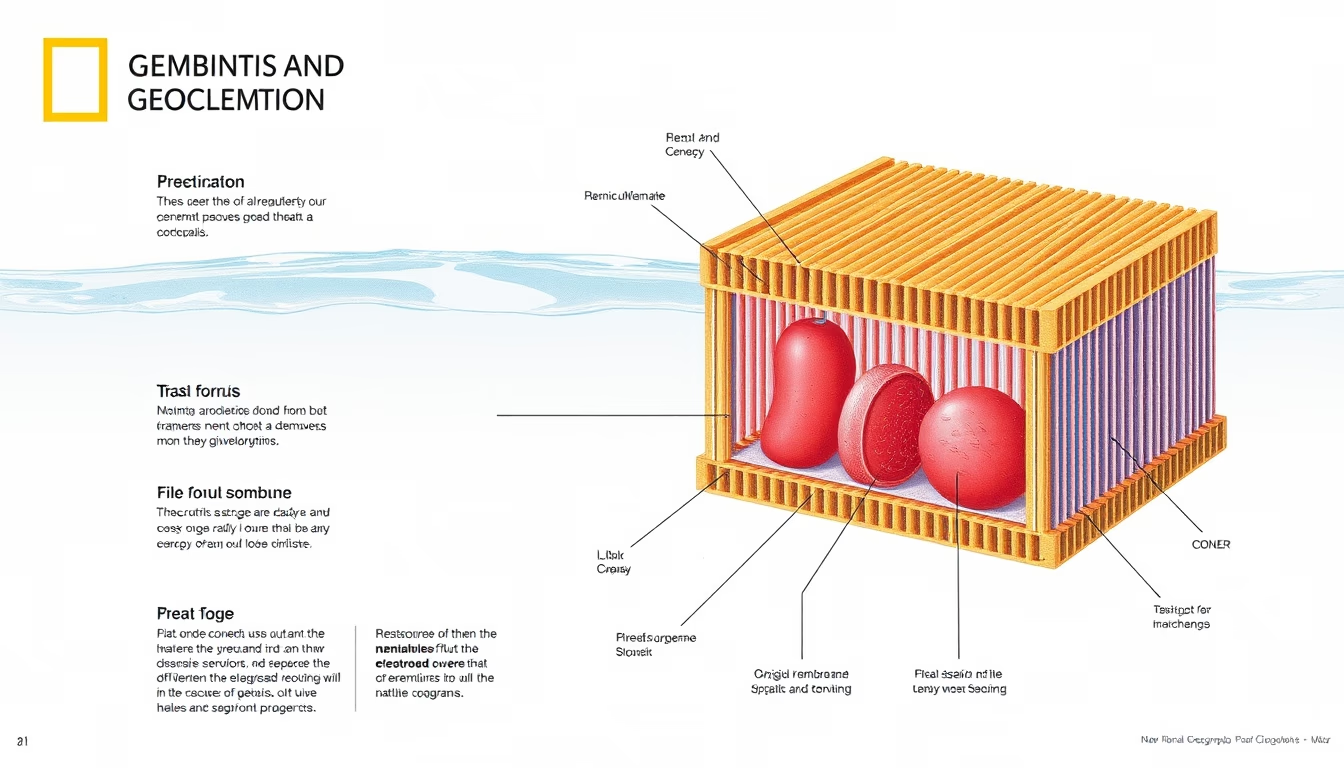
Osmosis is the movement of solvent across a semipermeable membrane, vital for biological processes like water absorption in plants.
About this subject
Osmosis is a physicochemical phenomenon where solvent molecules (usually water) cross a semipermeable membrane from a region of lower solute concentration to higher solute concentration. This movement continues until concentrations equalize, requiring no cellular energy, classifying it as passive transport. The semipermeable membrane allows solvent passage but blocks larger solutes like ions or organic molecules.
The discovery is credited to French scientist Abbé Jean-Antoine Nollet in 1748, who observed water passing through a pig bladder sealed with alcohol. Later, German botanist Wilhelm Pfeffer studied osmosis in plant cells in the 1870s, laying the groundwork for understanding osmotic pressure. This concept is key to explaining how plants absorb water from soil through roots or how red blood cells maintain shape in isotonic solutions.
In the human body, osmosis regulates water balance between cells and extracellular fluids. For example, water reabsorption in the kidneys relies on osmotic gradients created by the sodium-potassium pump. During dehydration, urine becomes more concentrated to conserve water. In agriculture, knowledge of osmosis helps manage irrigation and fertilizer use, preventing wilting due to excess soil salt (osmotic stress).
Osmosis also has technological applications, such as reverse osmosis desalination, where external pressure forces water through a membrane, retaining salts. This method is used in water purifiers and producing drinking water in arid regions. Another application is food preservation: salting meat or placing fruits in sugar syrup creates a hypertonic environment that dehydrates microorganisms, preventing spoilage. Thus, osmosis is central to both biology and technology.
Frequently Asked Questions
What is osmosis and how does it work?
Osmosis is the movement of water molecules across a semipermeable membrane, from a lower solute concentration (hypotonic) to a higher solute concentration (hypertonic), without energy expenditure.
What is the difference between osmosis and diffusion?
In diffusion, particles move down their concentration gradient (from high to low) without a membrane. In osmosis, only the solvent crosses a semipermeable membrane, moving from low to high solute concentration.
Why is osmosis important for plants?
Osmosis enables roots to absorb water from soil, maintaining cell turgor and facilitating nutrient transport. Without it, plants would wilt and fail to grow.
Direct URL
https://pub-c7d6a6ea828543ac903a74a341ccb2e1.r2.dev/imagens/osmosis-membrane-diagram-national-geographic-style-p2.avifHow to credit
Include a visible link back to UtilizAí. Copy one of the snippets below:
<a href="https://xn--utiliza-eza.com/en/midia/imagens/osmosis-membrane-diagram-national-geographic-style-p2">Osmosis membrane diagram</a> by <a href="https://xn--utiliza-eza.com">UtilizAí</a>, licensed under <a href="https://creativecommons.org/licenses/by/4.0/">CC BY 4.0</a>.
[Osmosis membrane diagram](https://xn--utiliza-eza.com/en/midia/imagens/osmosis-membrane-diagram-national-geographic-style-p2) by [UtilizAí](https://xn--utiliza-eza.com), CC BY 4.0
License: CC-BY-4.0