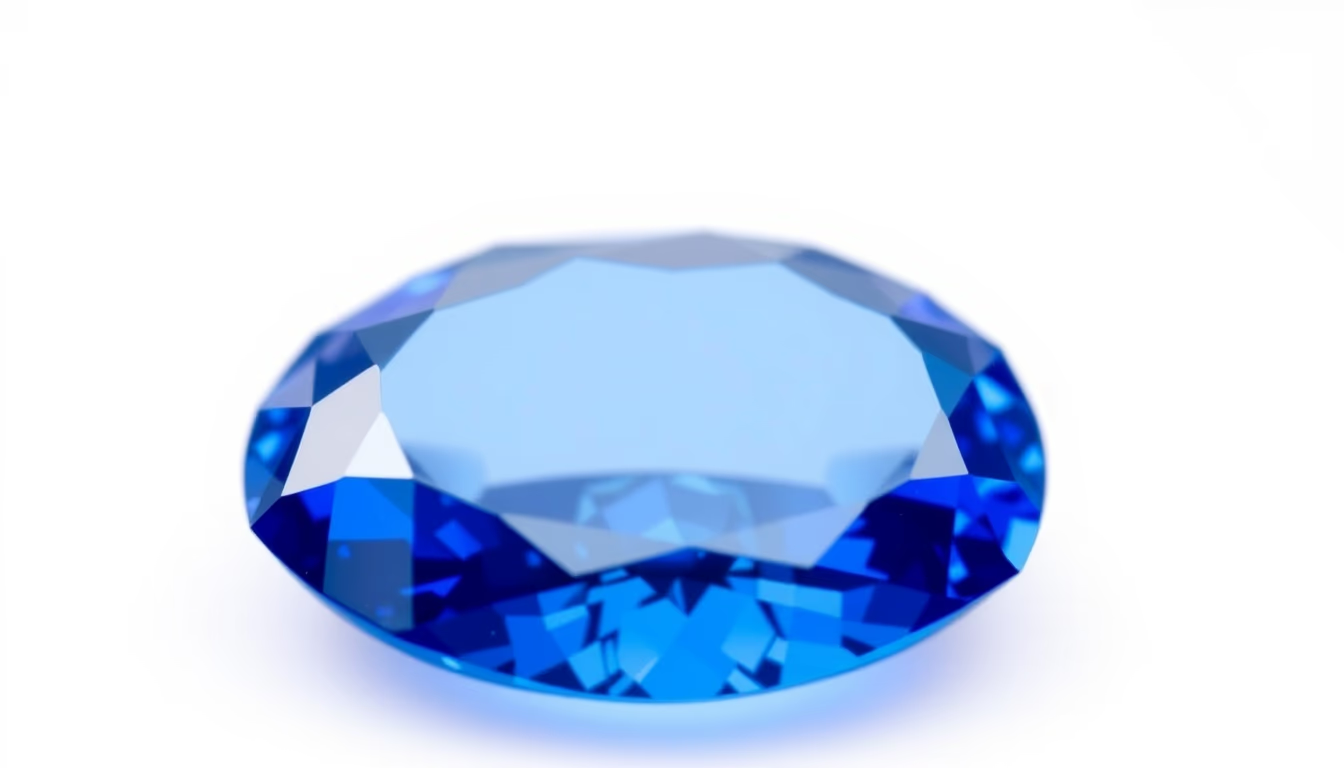
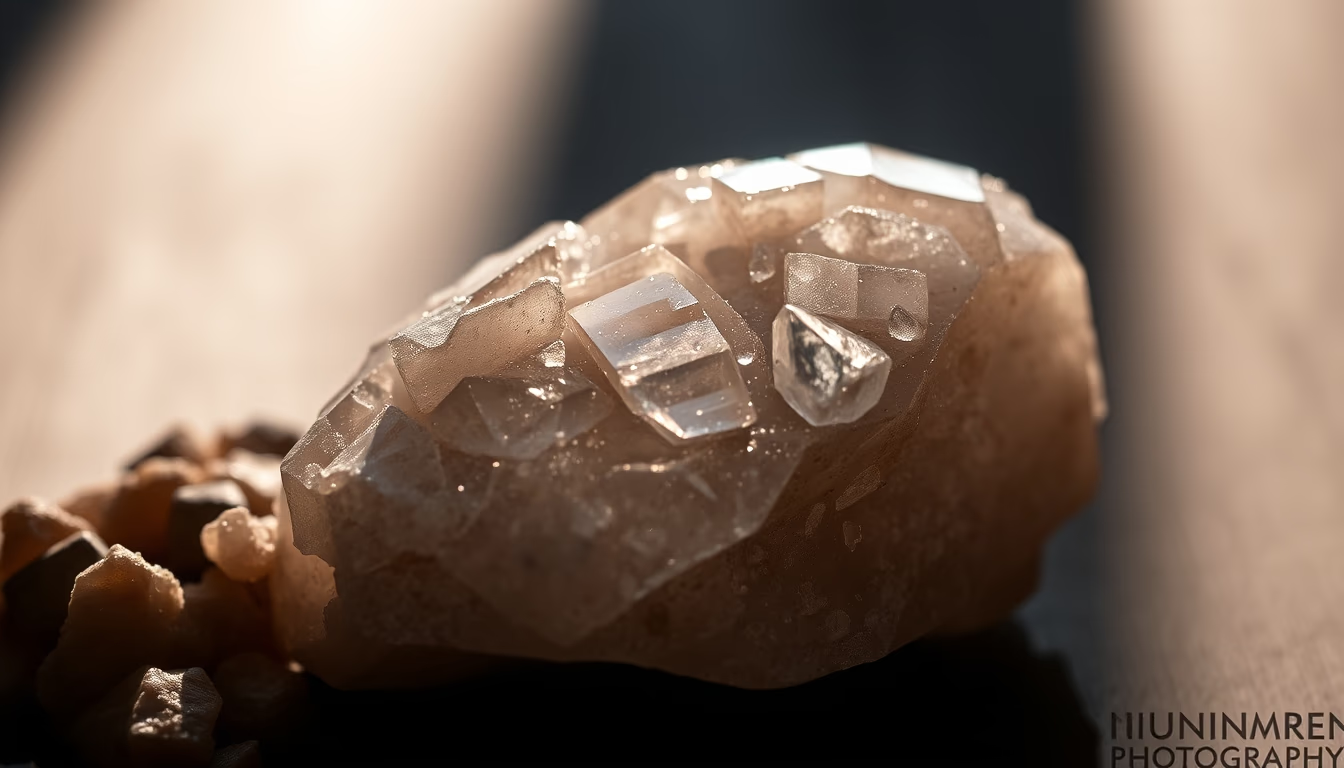
Opal play of color
1344×768 · AVIF · CC BY 4.0

Opal is renowned for its play of color, an optical phenomenon displaying a rainbow of hues when exposed to light.
About this subject
Opals are unique gems formed from hydrated silica deposited in rock fissures and cavities. The famous 'play of color' occurs due to light diffraction by microscopic silica spheres arranged in a regular three-dimensional structure. This phenomenon, known as opalescence, produces flashes of green, blue, red, and yellow that shift with the viewing angle.
Major sources of precious opal are in Australia, especially Coober Pedy and Lightning Ridge, which account for over 90% of world production. Opal is also found in Mexico (fire opal), Brazil (mainly in Piauí), and Ethiopia. Australian opal includes varieties like black opal, white opal, and boulder opal, each with distinct body color and pattern.
Historically, opal was prized by Romans and considered a symbol of purity. In the Middle Ages, it was believed to bring good luck. However, in the 19th century, superstitions linked the gem to bad luck, a myth dispelled over time. Today, opal is the birthstone for October and a gift for 14th wedding anniversaries.
Interestingly, opal is an amorphous, non-crystalline gem with water content between 5% and 10%. If dried out or exposed to extreme temperatures, it may crack. Therefore, special care is needed. Opal jewelry should be stored in a humid environment away from direct sunlight to preserve its luster and stability.
Frequently Asked Questions
What causes the play of color in opal?
The play of color is caused by light diffraction through microscopic silica spheres arranged in a three-dimensional grid. Different sphere sizes diffract different colors.
Where are the best opals found?
Australia is the main source, especially Coober Pedy (white opal) and Lightning Ridge (black opal). Other countries include Mexico, Brazil, and Ethiopia.
Does opal require special care?
Yes, because it contains water, opal can dry out and crack. It should be stored in a humid environment, away from heat and direct sunlight.
Direct URL
https://pub-c7d6a6ea828543ac903a74a341ccb2e1.r2.dev/imagens/opal-play-of-color-minimalist-composition-p5.avifHow to credit
Include a visible link back to UtilizAí. Copy one of the snippets below:
<a href="https://xn--utiliza-eza.com/en/midia/imagens/opal-play-of-color-minimalist-composition-p5">Opal play of color</a> by <a href="https://xn--utiliza-eza.com">UtilizAí</a>, licensed under <a href="https://creativecommons.org/licenses/by/4.0/">CC BY 4.0</a>.
[Opal play of color](https://xn--utiliza-eza.com/en/midia/imagens/opal-play-of-color-minimalist-composition-p5) by [UtilizAí](https://xn--utiliza-eza.com), CC BY 4.0
License: CC-BY-4.0