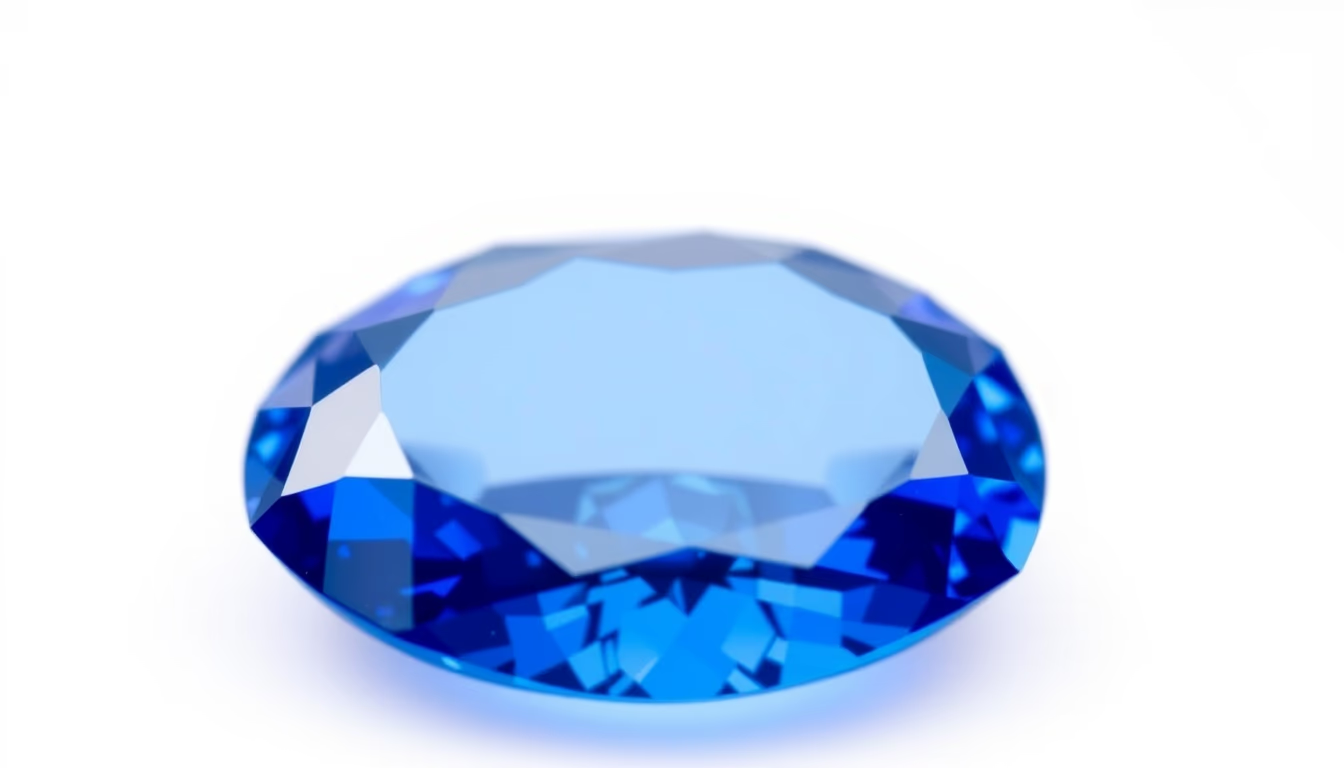
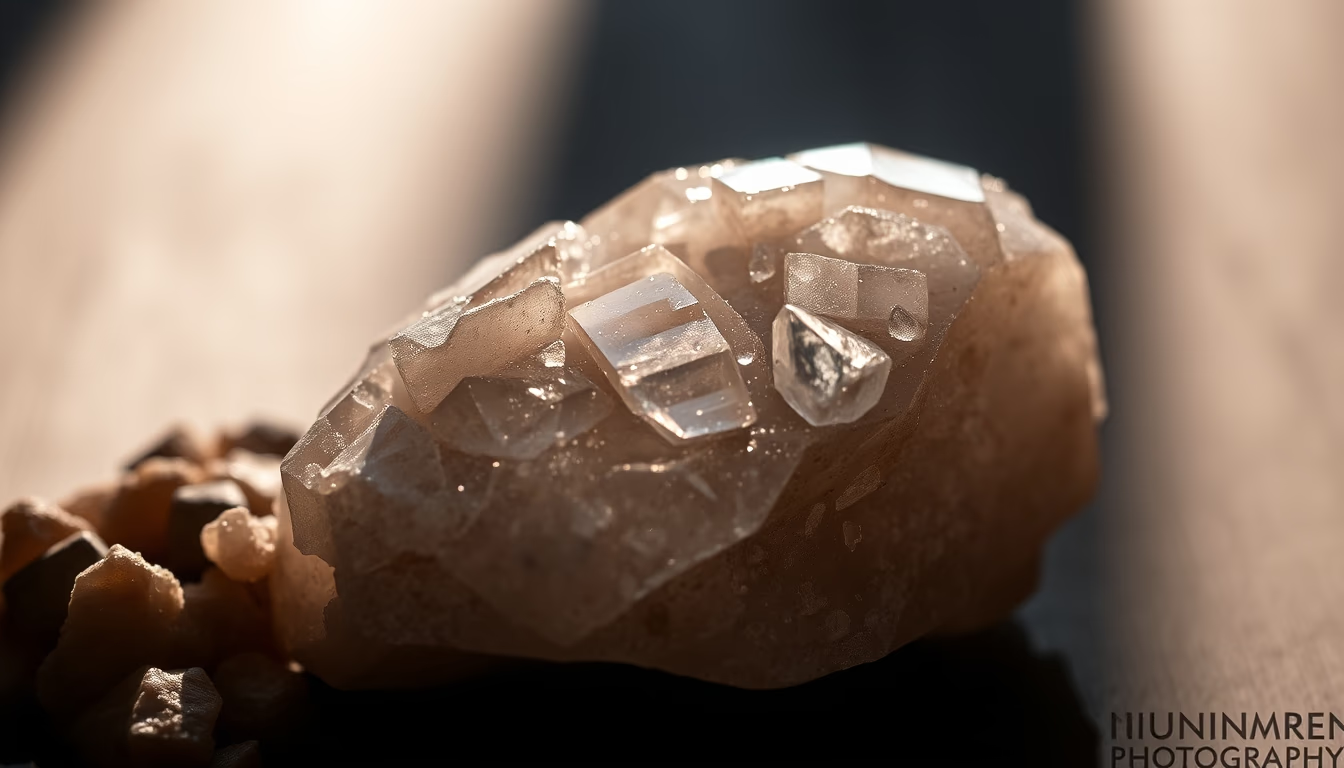
Opal play of color
1344×768 · AVIF · CC BY 4.0

The play of color in opal is a unique optical phenomenon caused by light diffraction within its microcrystalline structure.
About this subject
Opal is a gemstone composed of hydrated silica, with water content ranging from 3% to 21%. Its structure consists of microscopic silica spheres arranged in a regular pattern. The play of color, known as opalescence, occurs when white light passes through these spheres and undergoes diffraction, splitting into the visible spectrum colors. The spacing between the spheres determines which wavelengths are diffracted, creating flashes of blue, green, red, orange, and other colors depending on the viewing angle and lighting.
Opals are classified into two main types: precious opal, which exhibits play of color, and common opal, which does not. Famous varieties include black opal from Lightning Ridge (Australia), milky white opal, and Mexican fire opal, which has orange to red hues and may or may not show opalescence. Australia accounts for about 95% of global precious opal production, with notable mines in Coober Pedy and Andamooka.
In Brazil, opal occurrences exist in Piauí (blue opal from Pedro II) and Rio Grande do Sul. Brazilian opal is less known internationally but can display beautiful color patterns. Due to its fragility and sensitivity to sudden temperature changes, opal requires special care in jewelry, such as avoiding chemicals and prolonged sun exposure.
Interestingly, opal is also known as the 'stone of hope' in some cultures, and in ancient Rome it symbolized purity and good luck. However, a myth persists that it brings bad luck to those not born in October (its birth month), but this has no gemological basis.
Frequently Asked Questions
What causes the play of color in opal?
The play of color is caused by the diffraction of white light as it passes through microscopic silica spheres arranged in a regular pattern within the opal. The colors vary depending on the spacing between spheres and the viewing angle.
What are the main types of opal?
The main types are precious opal (with play of color) and common opal (without). Notable varieties include black opal, white opal, fire opal, and crystal opal.
Is Brazilian opal valuable?
Brazilian opal, such as the blue opal from Pedro II, can be valuable, but it is generally less known than Australian opal. Its beauty and rarity determine the price, as with other gemstones.
Direct URL
https://pub-c7d6a6ea828543ac903a74a341ccb2e1.r2.dev/imagens/opal-play-of-color-documentary-photography-p0.avifHow to credit
Include a visible link back to UtilizAí. Copy one of the snippets below:
<a href="https://xn--utiliza-eza.com/en/midia/imagens/opal-play-of-color-documentary-photography-p0">Opal play of color</a> by <a href="https://xn--utiliza-eza.com">UtilizAí</a>, licensed under <a href="https://creativecommons.org/licenses/by/4.0/">CC BY 4.0</a>.
[Opal play of color](https://xn--utiliza-eza.com/en/midia/imagens/opal-play-of-color-documentary-photography-p0) by [UtilizAí](https://xn--utiliza-eza.com), CC BY 4.0
License: CC-BY-4.0