Olives in clay jar
1344×768 · AVIF · CC BY 4.0
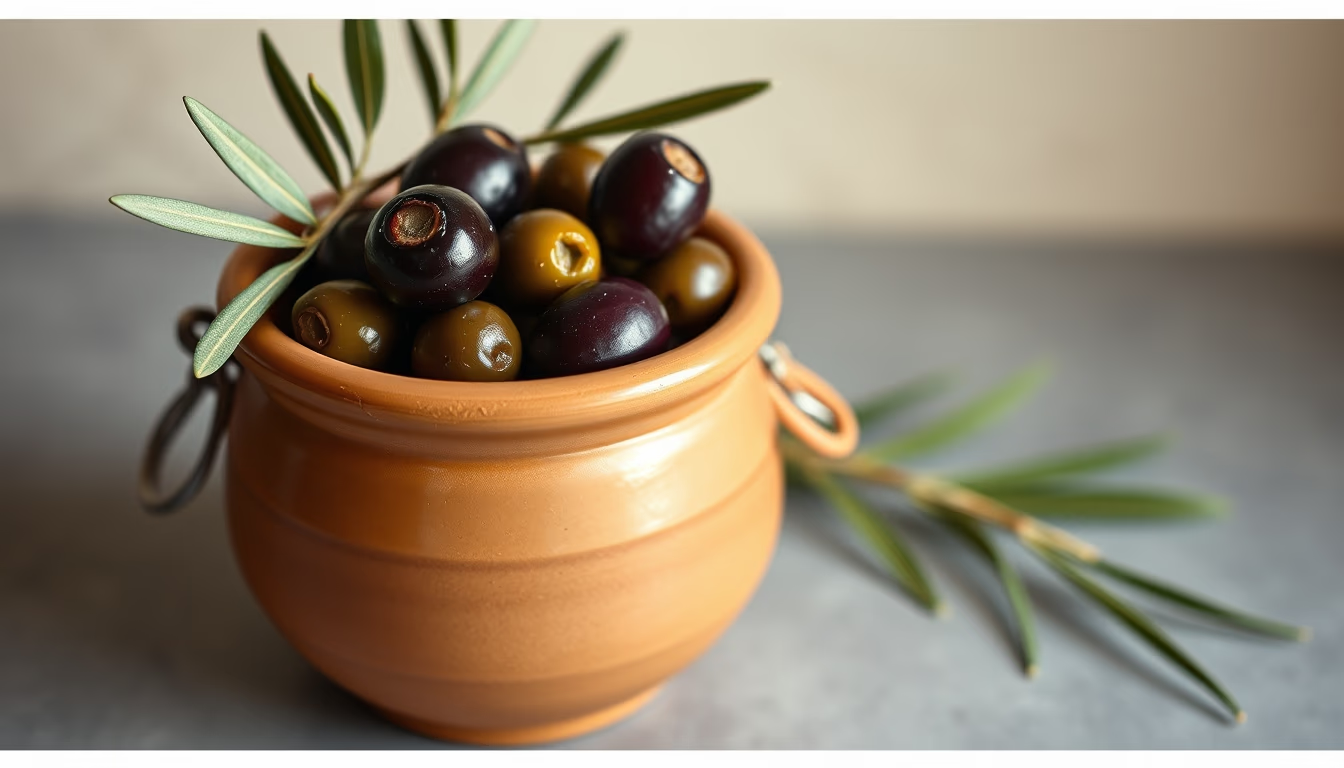
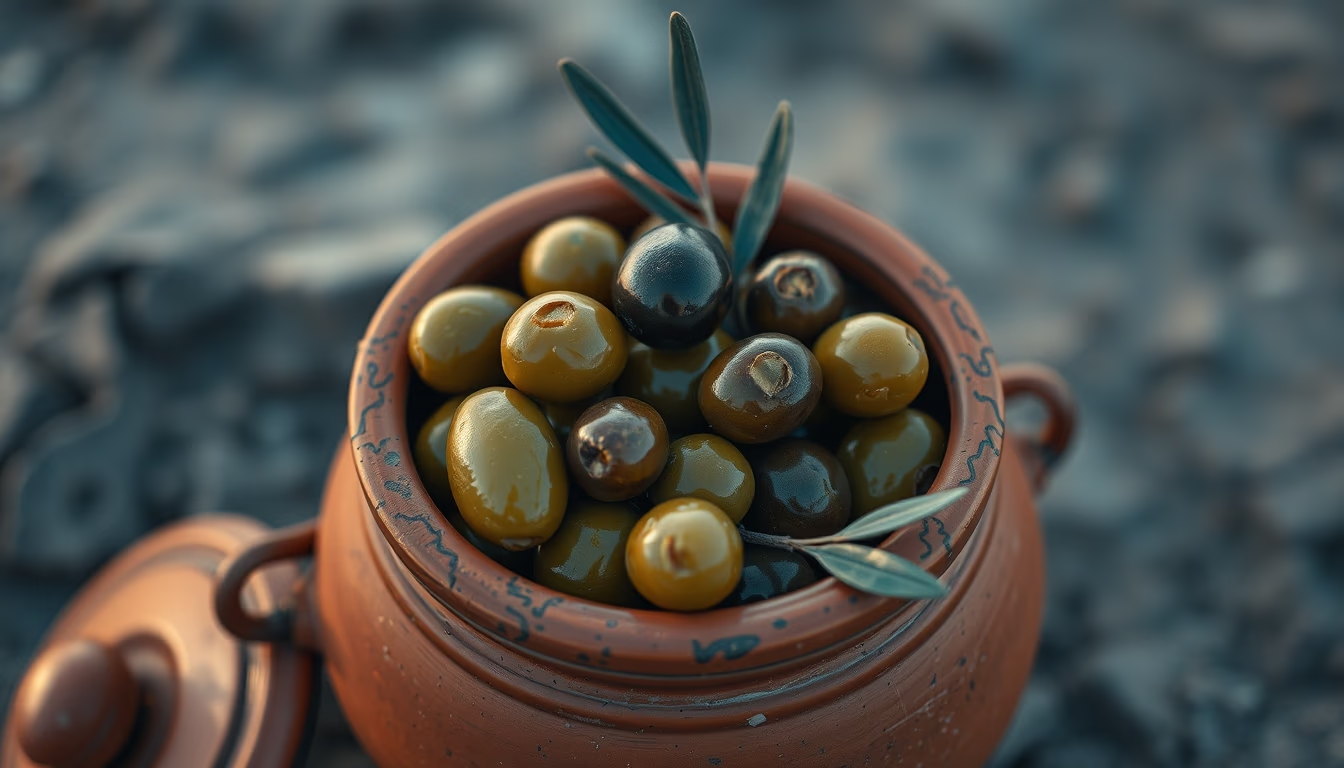
Olives stored in clay jars are an ancient tradition that preserves flavor and texture, common in the Mediterranean.
About this subject
Storing olives in clay jars is a practice dating back to ancient Greek and Roman civilizations. Clay, being a porous material, allows controlled gas exchange, maintaining ideal humidity and preventing fungal growth. Additionally, clay imparts a subtle earthy flavor to the olives, prized by chefs and connoisseurs.
Olives are harvested green or ripe and undergo a curing process to remove natural bitterness. In traditional curing, they are immersed in brine or water with salt and herbs, then transferred to clay jars with olive oil or vinegar. This technique is particularly common in countries like Greece, Italy, Spain, and Portugal, where each region has its characteristic recipe.
Nutritionally, olives are rich in monounsaturated fats, vitamin E, and antioxidants. When stored in clay, they avoid the chemical additives found in industrial preserves. However, it is important to ensure that the jars are sterilized and that the brine is at the correct concentration to avoid contamination.
Interestingly, the use of clay jars is not limited to olives. In the Mediterranean, cheeses, fish, and vegetables are also preserved in clay, taking advantage of the natural thermal regulation of the material. Today, this tradition resurfaces as a sustainable alternative to plastic and glass, valuing artisanal methods.
Frequently Asked Questions
Why store olives in clay jars?
Clay maintains stable temperature and humidity, enhances flavor, and allows natural fermentation without chemical additives.
How to preserve olives at home using clay jars?
Sterilize the jar, place cured olives, cover with brine (water with 10% salt) or olive oil, and seal. Store in a cool, dark place for up to 6 months.
What is the difference between olives preserved in clay and glass?
Glass is inert and does not alter flavor, but does not regulate humidity. Clay promotes gas exchange, resulting in firmer texture and more complex flavor.
Direct URL
https://pub-c7d6a6ea828543ac903a74a341ccb2e1.r2.dev/imagens/olives-in-clay-jar-lo-fi-disposable-camera-p3.avifHow to credit
Include a visible link back to UtilizAí. Copy one of the snippets below:
<a href="https://xn--utiliza-eza.com/en/midia/imagens/olives-in-clay-jar-lo-fi-disposable-camera-p3">Olives in clay jar</a> by <a href="https://xn--utiliza-eza.com">UtilizAí</a>, licensed under <a href="https://creativecommons.org/licenses/by/4.0/">CC BY 4.0</a>.
[Olives in clay jar](https://xn--utiliza-eza.com/en/midia/imagens/olives-in-clay-jar-lo-fi-disposable-camera-p3) by [UtilizAí](https://xn--utiliza-eza.com), CC BY 4.0
License: CC-BY-4.0