Oil paint palette artist
1344×768 · AVIF · CC BY 4.0
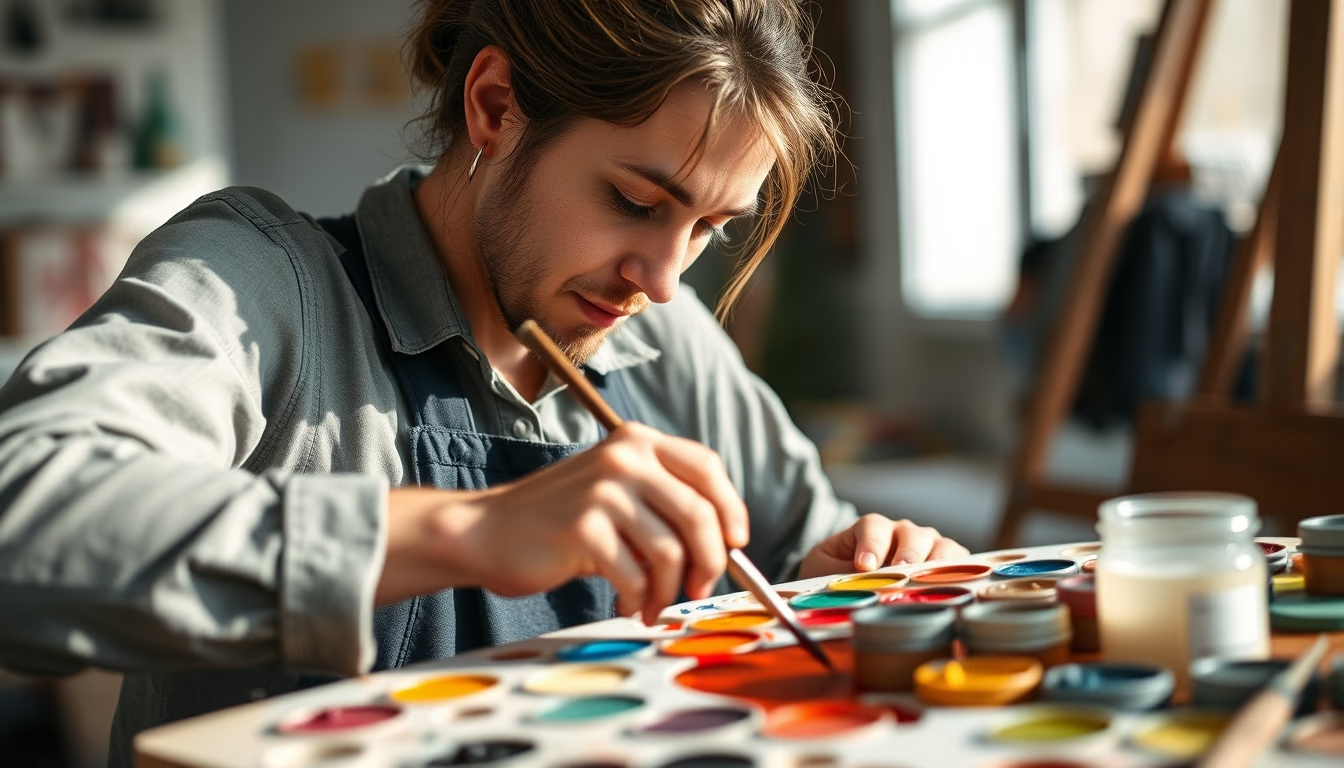
Artist handles an oil paint palette, an essential tool for mixing colors and creating classic works.
About this subject
The oil paint palette is one of the most emblematic tools in classical painting. Traditionally made of hardwood such as walnut or mahogany, its smooth surface allows the artist to organize and blend colors intuitively. Since the Renaissance, masters like Leonardo da Vinci and Rembrandt used palettes with thumb holes for stability during long hours of work. The choice of material directly influences practice: glass or acrylic palettes are easy to clean with solvents, while wooden ones require special care to avoid absorbing oil. Contemporary artists also adopt disposable paper palettes, ideal for plein air painting.
Color arrangement on the palette follows chromatic principles. Usually, colors are organized from lightest to darkest or in spectral order, with white and skin tones kept separate to prevent contamination. Mixing oil paints requires patience: each pigment has a different drying time, and the use of mediums (linseed oil, turpentine) alters viscosity and gloss. Famous palettes, such as Vincent van Gogh's, reveal his vibrant color choices and expressive brushwork. In contrast, Johannes Vermeer's palette, with more subdued colors, reflects his technique of light and shadow.
Interestingly, the term 'palette' also refers to an artist's preferred color set, their 'chromatic vocabulary.' In the 20th century, the palette became a study object in fine arts schools, where students learn to break primary colors to obtain secondary hues. Documentary photography capturing an artist with a paint-stained palette not only records the creative process but also the tactile, almost ritualistic relationship between the painter and their working tool.
Frequently Asked Questions
What is the best material for an oil paint palette?
It depends on the artist's preference. Wooden palettes are traditional and durable but require sealing with linseed oil to prevent absorption. Glass or acrylic palettes are easy to clean and do not react chemically with pigments.
How to clean an oil paint palette?
For glass or acrylic palettes, use solvent like mineral spirits or turpentine and a cloth. Wooden palettes should be cleaned with linseed oil and a soft cloth, avoiding harsh solvents that damage the surface.
Why do some palettes have a thumb hole?
The thumb hole allows the artist to hold the palette firmly while painting, freeing the fingers to handle brushes. This design is common in traditional easel palettes.
Direct URL
https://pub-c7d6a6ea828543ac903a74a341ccb2e1.r2.dev/imagens/oil-paint-palette-artist-documentary-photography-p5.avifHow to credit
Include a visible link back to UtilizAí. Copy one of the snippets below:
<a href="https://xn--utiliza-eza.com/en/midia/imagens/oil-paint-palette-artist-documentary-photography-p5">Oil paint palette artist</a> by <a href="https://xn--utiliza-eza.com">UtilizAí</a>, licensed under <a href="https://creativecommons.org/licenses/by/4.0/">CC BY 4.0</a>.
[Oil paint palette artist](https://xn--utiliza-eza.com/en/midia/imagens/oil-paint-palette-artist-documentary-photography-p5) by [UtilizAí](https://xn--utiliza-eza.com), CC BY 4.0
License: CC-BY-4.0