Octopus coral reef
1344×768 · AVIF · CC BY 4.0
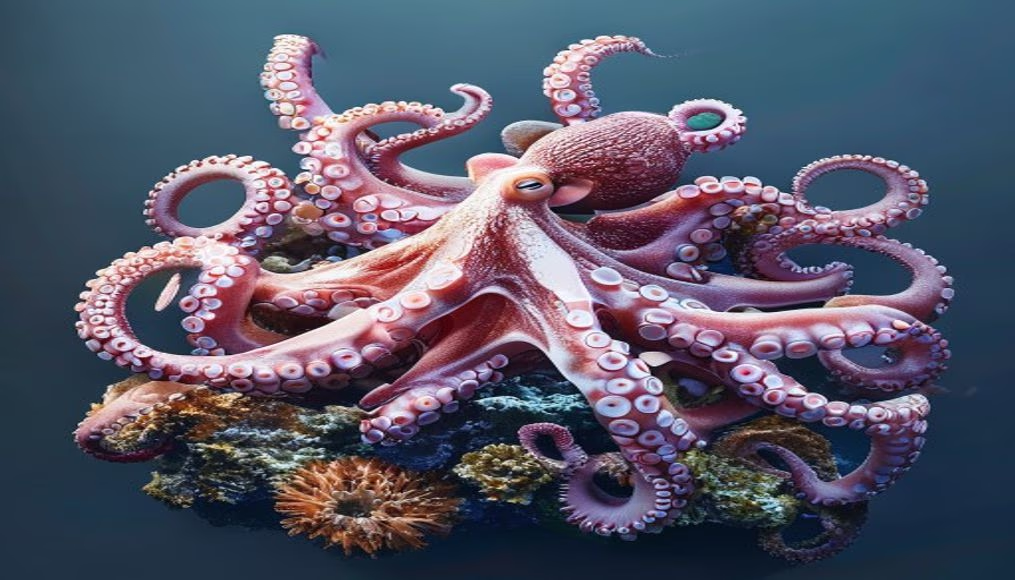
Polvos em recifes de coral exibem notável capacidade de camuflagem e inteligência, sendo predadores cruciais no ecossistema marinho.
Sobre o tema
Os polvos são moluscos cefalópodes altamente inteligentes, conhecidos por sua capacidade de mudar de cor, textura e forma para se camuflar no ambiente. Nos recifes de coral, habitats ricos em biodiversidade, essas criaturas encontram abrigo e alimentação abundante. O polvo-dos-recifes-comum (Octopus cyanea) é uma espécie típica do Indo-Pacífico, onde caça crustáceos, peixes e moluscos durante a noite. Sua habilidade de resolver problemas, como abrir tampas de frascos ou escapar de labirintos, é comparável à de alguns primatas. Além disso, os polvos possuem três corações, sangue azul e uma complexa rede de neurônios distribuída tanto no cérebro quanto nos tentáculos, o que lhes confere controle motor refinado.
Os recifes de coral, por sua vez, são ecossistemas subaquáticos formados por colônias de pólipos de coral e algas simbióticas. Eles abrigam cerca de 25% da vida marinha mundial, apesar de cobrirem menos de 1% do fundo do oceano. Nessas estruturas calcárias, os polvos encontram fendas e tocas para se proteger de predadores como tubarões, moreias e grandes peixes. A interação entre polvos e recifes é dinâmica: eles ajudam a controlar populações de presas e, ao se moverem, podem modificar pequenas estruturas do recife. No entanto, a saúde dos recifes está ameaçada pelo aquecimento global, acidificação oceânica e poluição, impactando também as populações de polvos.
Curiosamente, as fêmeas de polvo têm comportamento maternal singular: após colocar os ovos, deixam de se alimentar e os protegem constantemente, arejando-os e limpa-os até a eclosão, quando então morrem. Esse ciclo de vida curto, geralmente de um a dois anos, torna os polvos especialmente vulneráveis a mudanças ambientais. Estudos mostram que polvos em recifes degradados apresentam menor sucesso reprodutivo. Portanto, a conservação dos recifes de coral é essencial não apenas para a biodiversidade marinha, mas também para a sobrevivência desses fascinantes cefalópodes.
Perguntas frequentes
Quantos corações tem um polvo?
Um polvo possui três corações: dois bombeiam sangue para as brânquias e um bombeia para o resto do corpo. O coração principal para de bater quando o animal nada.
Por que os polvos mudam de cor?
Os polvos mudam de cor através de células especiais na pele chamadas cromatóforos, que contêm pigmentos. Eles fazem isso para se camuflar, comunicar ou expressar emoções.
Qual é a importância dos recifes de coral para os polvos?
Os recifes de coral oferecem abrigo em fendas e tocas, proteção contra predadores e abundância de presas como crustáceos e peixes, sendo habitats essenciais para muitas espécies de polvo.
URL direta
https://pub-c7d6a6ea828543ac903a74a341ccb2e1.r2.dev/imagens/octopus-coral-reef-commercial-product-photography-v9.avifComo creditar
Inclua um link visível de volta pro UtilizAí. Copie um dos snippets abaixo:
<a href="https://xn--utiliza-eza.com/midia/imagens/octopus-coral-reef-commercial-product-photography-v9">Octopus coral reef</a> by <a href="https://xn--utiliza-eza.com">UtilizAí</a>, licensed under <a href="https://creativecommons.org/licenses/by/4.0/">CC BY 4.0</a>.
[Octopus coral reef](https://xn--utiliza-eza.com/midia/imagens/octopus-coral-reef-commercial-product-photography-v9) by [UtilizAí](https://xn--utiliza-eza.com), CC BY 4.0
Licença: CC-BY-4.0