Obsidian black volcanic
1344×768 · AVIF · CC BY 4.0
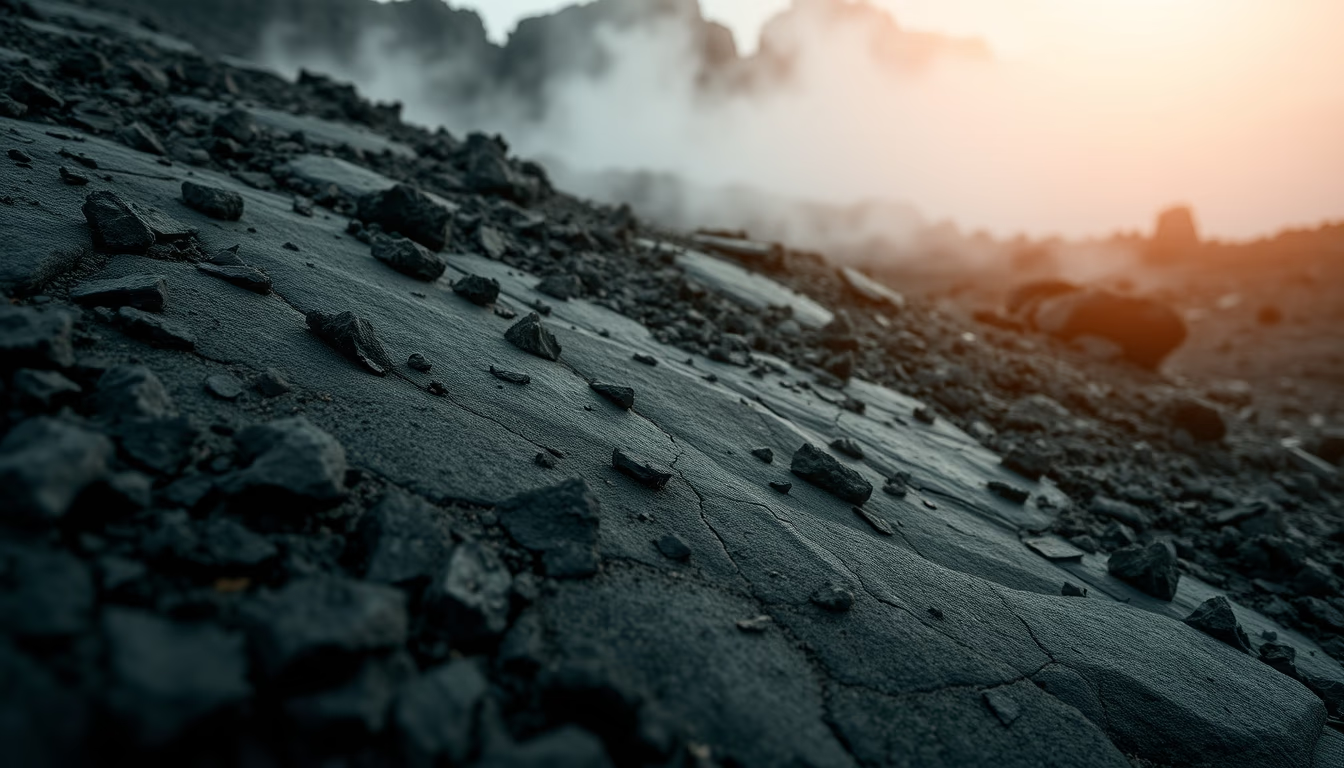
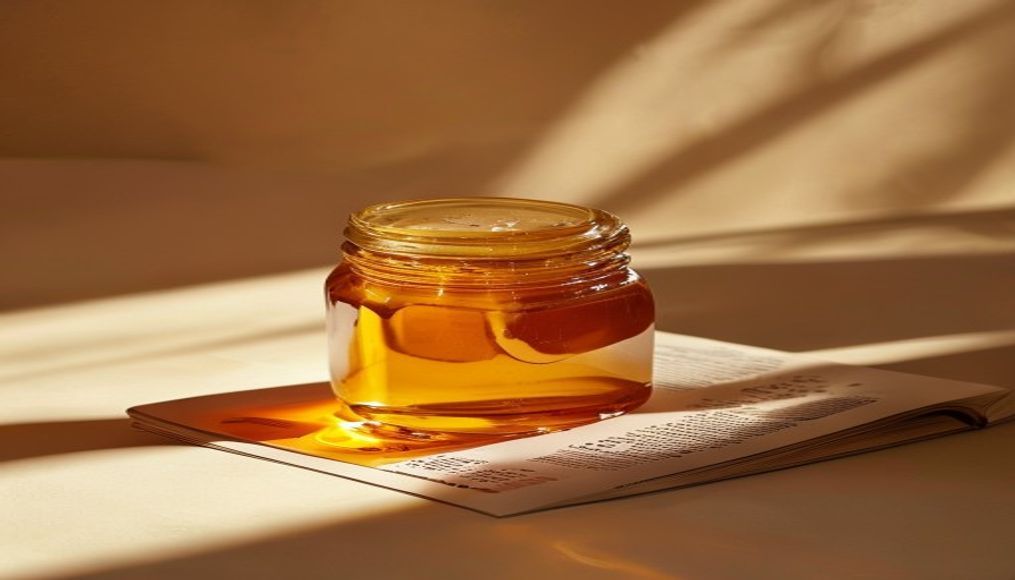
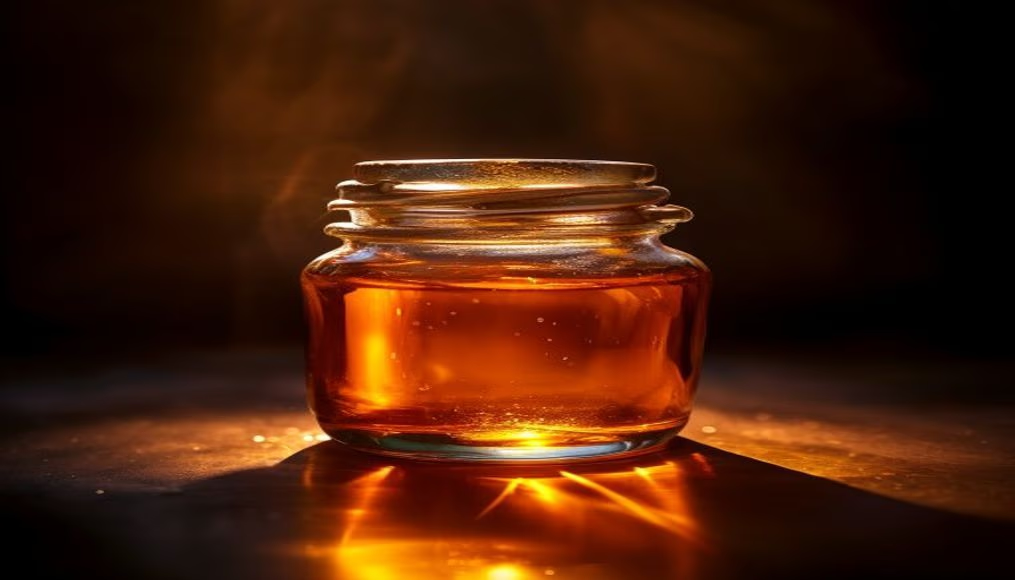
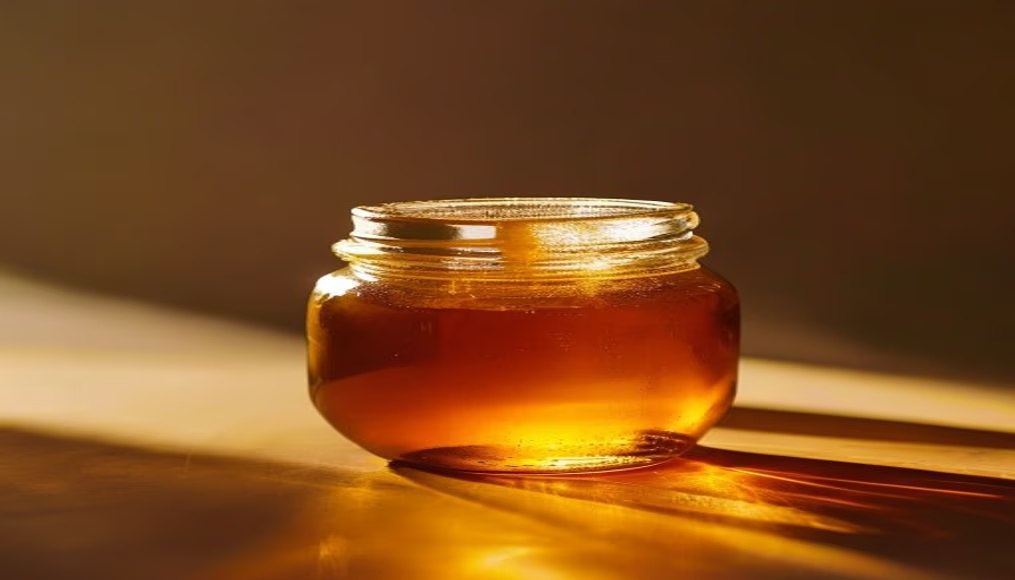
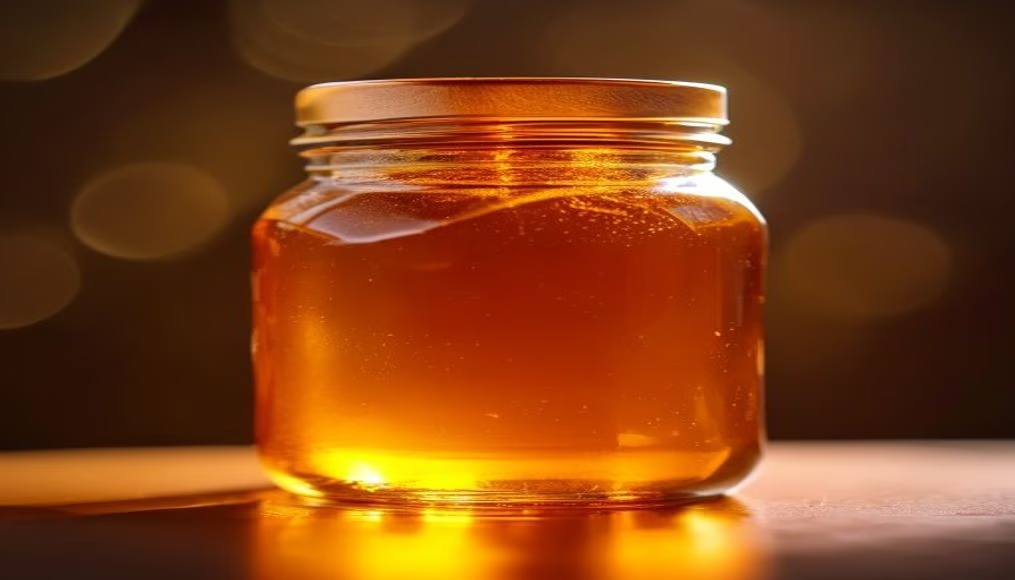
Obsidian is a black volcanic glass formed by the rapid cooling of lava, lacking a crystalline structure, and widely used by ancient civilizations.
About this subject
Obsidian is a natural volcanic glass, predominantly black but also occurring in greenish, brownish, or banded hues. It forms when silica-rich lava cools rapidly, inhibiting crystal growth. This process typically takes place at the edges of lava flows, volcanic domes, or where lava contacts water or cold air. Chemically similar to granite and rhyolite, obsidian's glassy texture sets it apart.
In prehistory, obsidian was invaluable for crafting sharp tools such as knife blades and arrowheads, thanks to its conchoidal fracture yielding extremely sharp edges. Mesoamerican civilizations like the Aztecs and Maya also used it for mirrors and ritual objects. In Ancient Egypt, obsidian knives were employed in mummification practices. Today, obsidian has surgical applications: obsidian scalpels are used for their precision and reduced tissue damage, although they are more brittle than metal ones.
Geographically, obsidian is found in active or extinct volcanic regions worldwide, with notable deposits in Mexico, Peru, Iceland, Italy (Aeolian Islands), Russia (Kamchatka), and the United States (Yellowstone National Park). Each deposit has unique characteristics, such as crystal or gas bubble inclusions, yielding varieties like silver, rainbow, and 'Apache tear' obsidian (with inclusion spots).
Interestingly, despite being a glass, obsidian can be altered over geological time by hydration, forming perlite, a volcanic rock with high water content. For its beauty and properties, obsidian is also appreciated in jewelry and lapidary, polished as a gem or carved into decorative objects.
Frequently Asked Questions
How is obsidian formed?
Obsidian forms when silica-rich lava cools rapidly, preventing mineral crystallization. This occurs at lava flow edges or contact with cold water/air.
Where is obsidian found?
It is found in active or extinct volcanic regions worldwide, such as Mexico, Peru, Iceland, Italy (Aeolian Islands), Russia (Kamchatka), and the United States (Yellowstone National Park).
What are the uses of obsidian?
Historically used for cutting tools and ritual objects. Currently, employed in surgical scalpels, jewelry, and crafts.
Direct URL
https://pub-c7d6a6ea828543ac903a74a341ccb2e1.r2.dev/imagens/obsidian-black-volcanic-national-geographic-style-p0.avifHow to credit
Include a visible link back to UtilizAí. Copy one of the snippets below:
<a href="https://xn--utiliza-eza.com/en/midia/imagens/obsidian-black-volcanic-national-geographic-style-p0">Obsidian black volcanic</a> by <a href="https://xn--utiliza-eza.com">UtilizAí</a>, licensed under <a href="https://creativecommons.org/licenses/by/4.0/">CC BY 4.0</a>.
[Obsidian black volcanic](https://xn--utiliza-eza.com/en/midia/imagens/obsidian-black-volcanic-national-geographic-style-p0) by [UtilizAí](https://xn--utiliza-eza.com), CC BY 4.0
License: CC-BY-4.0