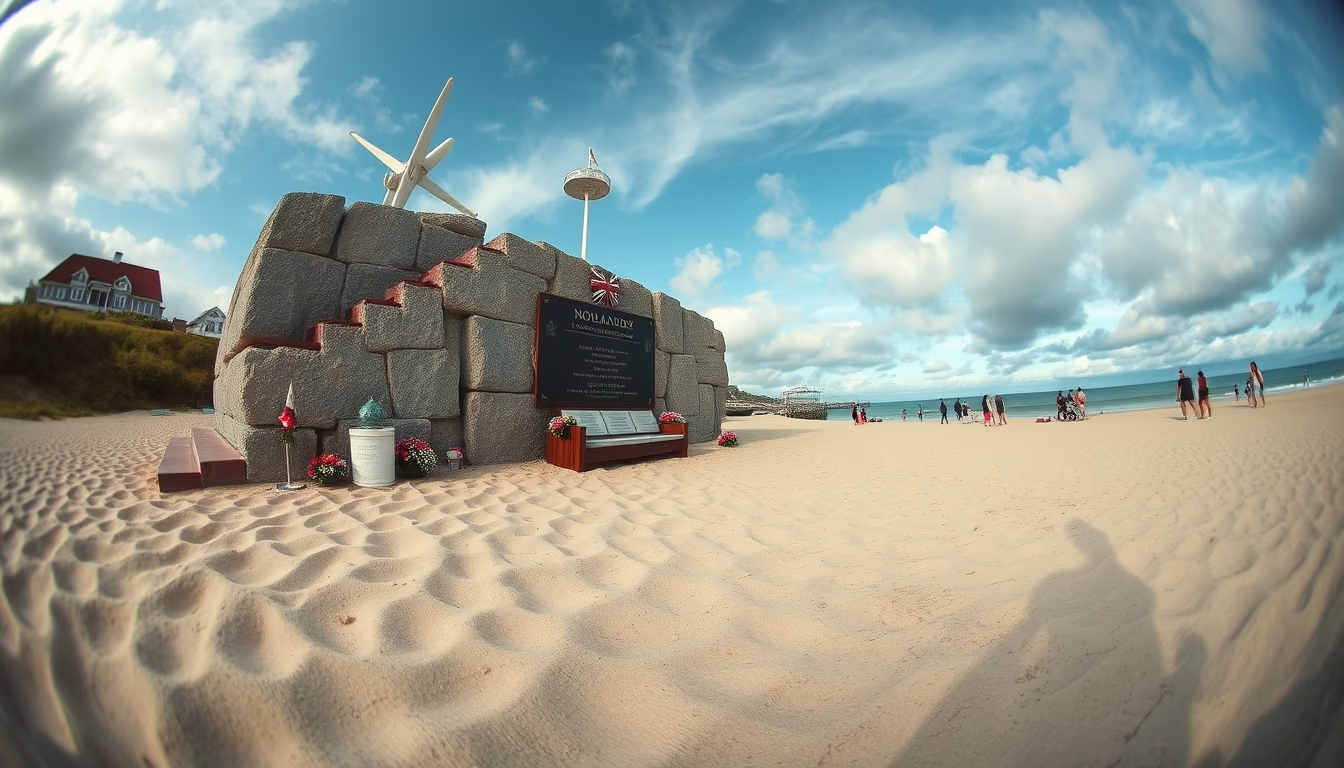
Normandy beach memorial
1344×768 · AVIF · CC BY 4.0
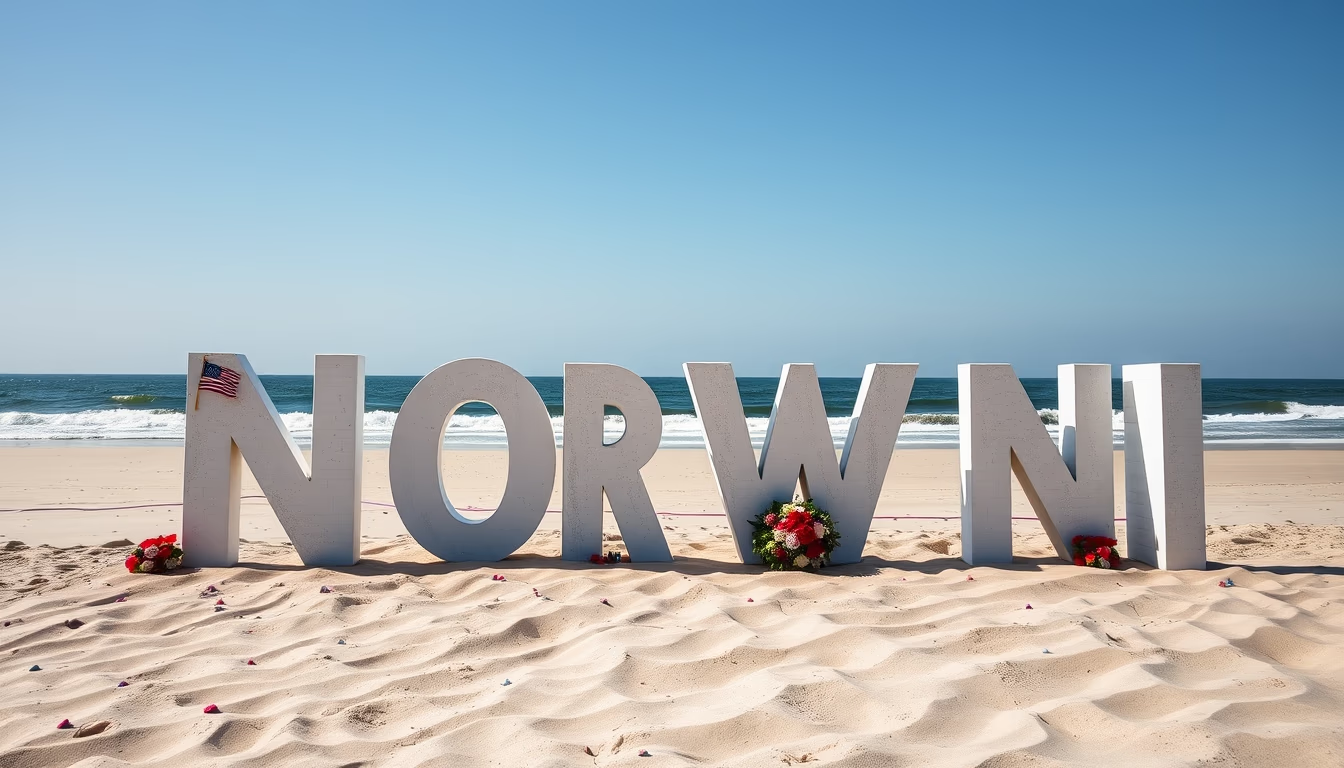
Normandy beach memorials honor the Allied soldiers who landed on D-Day, June 6, 1944, during World War II.
About this subject
The memorials along the beaches of Normandy, France, pay tribute to D-Day, the largest amphibious invasion in history. On June 6, 1944, approximately 156,000 American, British, Canadian, and other Allied soldiers landed on five beach sectors: Utah, Omaha, Gold, Juno, and Sword. The human cost was immense: over 4,400 Allied deaths on that single day.
Among the key memorials is the Normandy American Cemetery in Colleville-sur-Mer, with 9,387 graves of US soldiers. The Caen Memorial Museum focuses on peace, and the Pointe du Hoc Monument honors US Rangers who scaled cliffs under enemy fire. The British Normandy Memorial in Ver-sur-Mer, inaugurated in 2021, lists 22,442 names of British soldiers killed under British command.
Each memorial provides a space for reflection and education. They preserve the memory of sacrifices and remind visitors of the value of freedom. Tourists can walk along the beach sectors, which still retain remnants of German fortifications and landing ramps. Historical tourism in the region is intense, with annual ceremonies on D-Day anniversaries.
Curiously, the beaches today are peaceful, a stark contrast to the violence of 1944. The fine sand and dunes hide a deep history. Local residents and tour guides share accounts from eyewitnesses and veterans. Memorial preservation is funded by governments and donations, ensuring that future generations never forget the cost of peace.
Frequently Asked Questions
What are the main memorials on Normandy beaches?
Key memorials include the Normandy American Cemetery in Colleville-sur-Mer, the Pointe du Hoc Monument, the British Normandy Memorial in Ver-sur-Mer, and the Caen Memorial Museum, which focuses on World War II and peace.
What happened on D-Day in Normandy?
On D-Day, June 6, 1944, Allied forces landed on Normandy beaches to liberate Nazi-occupied Europe. It was the largest seaborne invasion in history, with over 150,000 troops across five beaches.
Can I visit the Normandy memorials?
Yes, the memorials and beaches are open to the public. Many offer guided tours, museums, and visitor centers. It is advisable to plan ahead, especially during commemorative events like the D-Day anniversary.
Direct URL
https://pub-c7d6a6ea828543ac903a74a341ccb2e1.r2.dev/imagens/normandy-beach-memorial-magazine-editorial-fresh7.avifHow to credit
Include a visible link back to UtilizAí. Copy one of the snippets below:
<a href="https://xn--utiliza-eza.com/en/midia/imagens/normandy-beach-memorial-magazine-editorial-fresh7">Normandy beach memorial</a> by <a href="https://xn--utiliza-eza.com">UtilizAí</a>, licensed under <a href="https://creativecommons.org/licenses/by/4.0/">CC BY 4.0</a>.
[Normandy beach memorial](https://xn--utiliza-eza.com/en/midia/imagens/normandy-beach-memorial-magazine-editorial-fresh7) by [UtilizAí](https://xn--utiliza-eza.com), CC BY 4.0
License: CC-BY-4.0