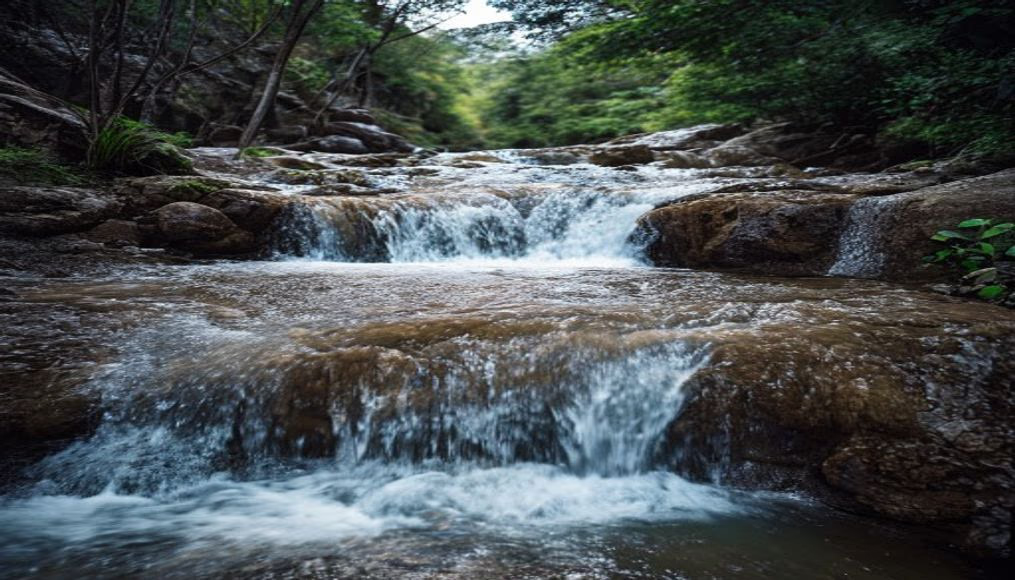
Niagara falls long exposure
1344×768 · AVIF · CC BY 4.0
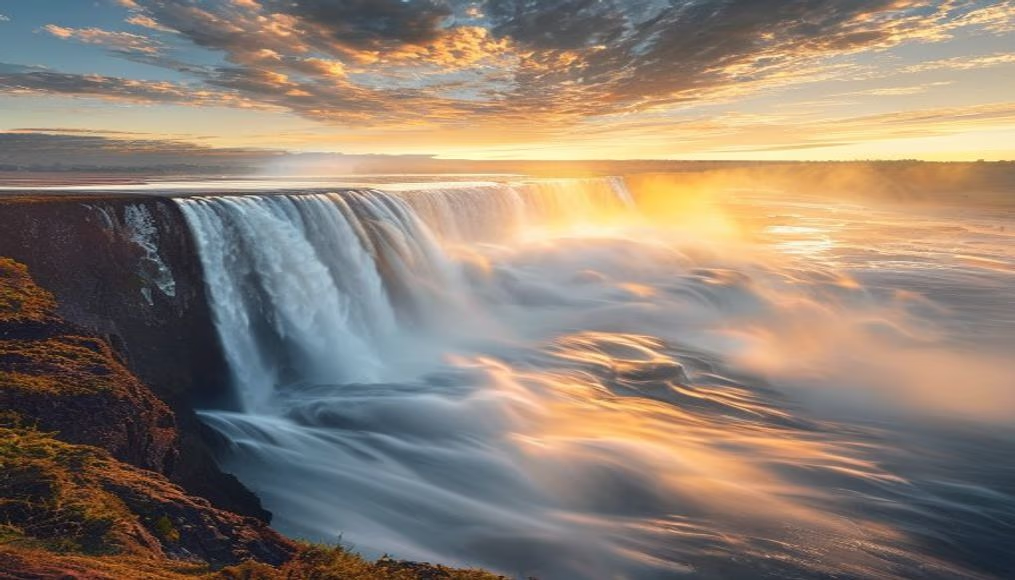
Niagara Falls, captured with long exposure, reveals the smooth flow of water and the nighttime illumination that enhances its grandeur.
About this subject
Niagara Falls is located on the border between New York State (United States) and Ontario (Canada). It consists of three waterfalls: the American Falls, Bridal Veil Falls, and the Canadian Falls (also known as Horseshoe Falls). Horseshoe Falls is the most impressive, with a height of about 53 meters and a width of 790 meters, accounting for approximately 90% of the total water flow through the system.
The geological formation of the falls dates back to the end of the last Ice Age, about 12,000 years ago, when glacial retreat exposed the bedrock. The constant erosion caused by moving water has gradually pushed the falls upstream, a process that continues today at a rate of about 30 centimeters per year. This natural phenomenon attracts millions of visitors annually, making the site one of the most popular tourist destinations in North America.
Long exposure photography is often used to capture Niagara Falls, as it gives the moving water a smooth, ethereal appearance. This technique requires neutral density filters and a sturdy tripod, especially at night when colored spotlights illuminate the falls. This nightly light show, started in 1961, transforms the falls into a kaleidoscope of colors.
Beyond tourism, Niagara Falls has historical significance. It has been the site of daring crossing attempts and events such as the first tourist boat ride in 1846, the Maid of the Mist, which still operates today. Hydroelectric power generation is also important: since the late 19th century, power plants have harnessed the flow to produce electricity for both countries.
Frequently Asked Questions
How tall are Niagara Falls?
Niagara Falls is approximately 53 meters high on the Canadian side (Horseshoe Falls). The American Falls are about 21 to 30 meters high, depending on the season and water levels.
Can you visit Niagara Falls from both sides?
Yes, both the Canadian and American sides offer viewpoints and distinct tourist attractions. The Canadian side provides a panoramic view of Horseshoe Falls, while the American side allows a closer view of the falls.
How many liters of water pass over Niagara Falls per second?
On average, about 2.4 million liters of water flow over Niagara Falls per second. This volume can vary depending on the season and weather conditions.
Direct URL
https://pub-c7d6a6ea828543ac903a74a341ccb2e1.r2.dev/imagens/niagara-falls-long-exposure-travel-photography-v10.avifHow to credit
Include a visible link back to UtilizAí. Copy one of the snippets below:
<a href="https://xn--utiliza-eza.com/en/midia/imagens/niagara-falls-long-exposure-travel-photography-v10">Niagara falls long exposure</a> by <a href="https://xn--utiliza-eza.com">UtilizAí</a>, licensed under <a href="https://creativecommons.org/licenses/by/4.0/">CC BY 4.0</a>.
[Niagara falls long exposure](https://xn--utiliza-eza.com/en/midia/imagens/niagara-falls-long-exposure-travel-photography-v10) by [UtilizAí](https://xn--utiliza-eza.com), CC BY 4.0
License: CC-BY-4.0