Mount fuji winter snow
1344×768 · AVIF · CC BY 4.0
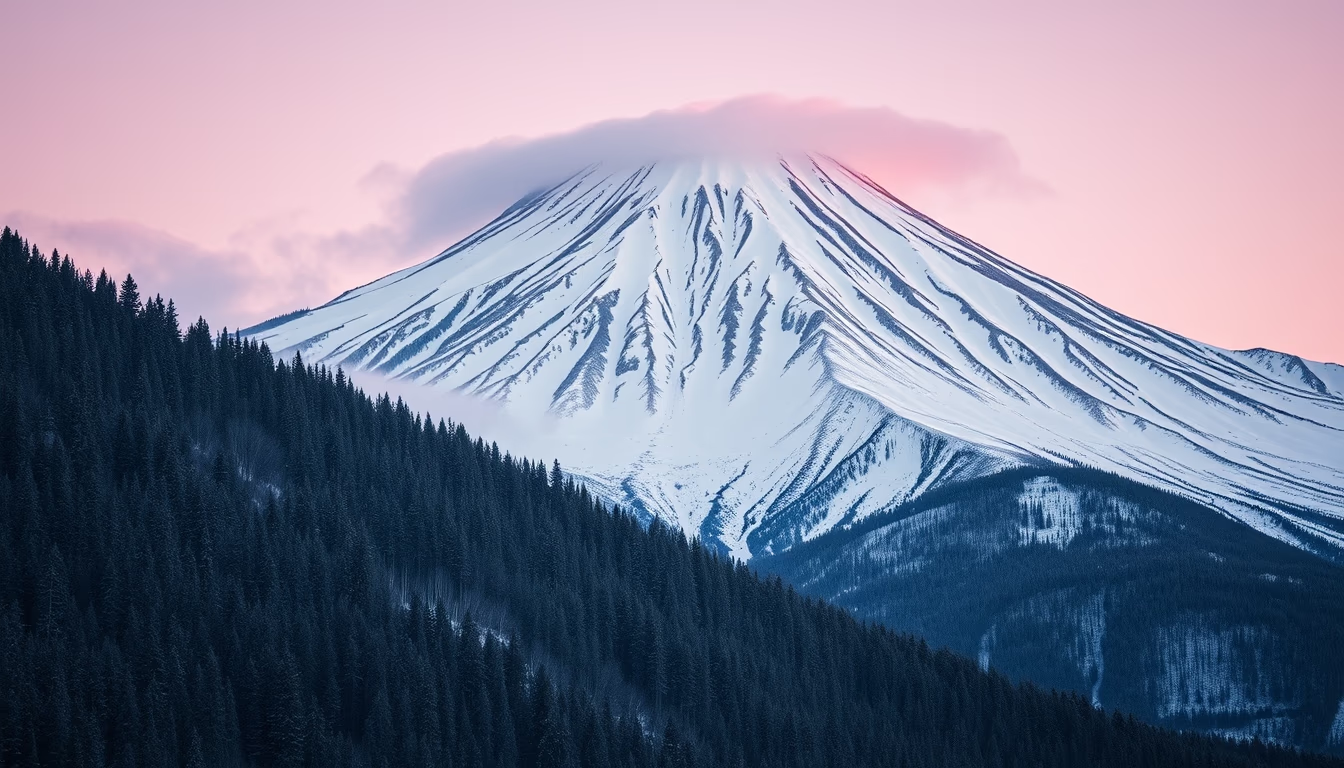
Mount Fuji covered in winter snow, iconic symbol of Japan, with sacred peak and stunning natural beauty.
About this subject
Mount Fuji, standing at 3,776 meters, is Japan's tallest mountain and one of its most iconic symbols. Located on Honshu Island, about 100 km southwest of Tokyo, its near-perfect conical shape results from volcanic activity: Fuji is an active stratovolcano, though its last eruption occurred in 1707 (Hōei era). During winter, the summit is capped with snow for months, typically from October to May, creating a landscape that inspired countless artworks, such as Hokusai's 36 Views of Mount Fuji.
The mountain is considered sacred in Shinto and Buddhism. Pilgrims have climbed its slopes for centuries, the practice of climbing Fuji as devotion is known as Fujikō. In 2013, Mount Fuji was designated a UNESCO World Heritage site, not only for its iconic shape but also for its cultural and religious significance. The official climbing season runs from July to September; in winter, conditions are extreme, with temperatures dropping to -20°C at the summit, recommended only for experienced mountaineers.
Snow on Fuji plays a crucial role in the region's water supply. Meltwater feeds rivers and lakes around, such as Lake Kawaguchi, one of the Fuji Five Lakes, offering spectacular views of the mountain. For photographers and tourists, the period from November to February is best to capture Mount Fuji with snow, especially at dawn when golden light illuminates the peak. The phenomenon known as Diamond Fuji, where the rising sun aligns perfectly with the summit, is a rare and sought-after spectacle.
Frequently Asked Questions
How tall is Mount Fuji?
Mount Fuji is 3,776 meters (12,389 feet) tall, making it the highest peak in Japan.
Can you climb Mount Fuji in winter?
Yes, but it is extremely dangerous and recommended only for experienced climbers with proper gear. The official climbing season is July to September.
What is the best time to see Mount Fuji with snow?
The period from November to February offers the best views of snow-capped Fuji, especially at sunrise.
Direct URL
https://pub-c7d6a6ea828543ac903a74a341ccb2e1.r2.dev/imagens/mount-fuji-winter-snow-fine-art-photography-p0.avifHow to credit
Include a visible link back to UtilizAí. Copy one of the snippets below:
<a href="https://xn--utiliza-eza.com/en/midia/imagens/mount-fuji-winter-snow-fine-art-photography-p0">Mount fuji winter snow</a> by <a href="https://xn--utiliza-eza.com">UtilizAí</a>, licensed under <a href="https://creativecommons.org/licenses/by/4.0/">CC BY 4.0</a>.
[Mount fuji winter snow](https://xn--utiliza-eza.com/en/midia/imagens/mount-fuji-winter-snow-fine-art-photography-p0) by [UtilizAí](https://xn--utiliza-eza.com), CC BY 4.0
License: CC-BY-4.0