Mount fuji winter snow
1344×768 · AVIF · CC BY 4.0
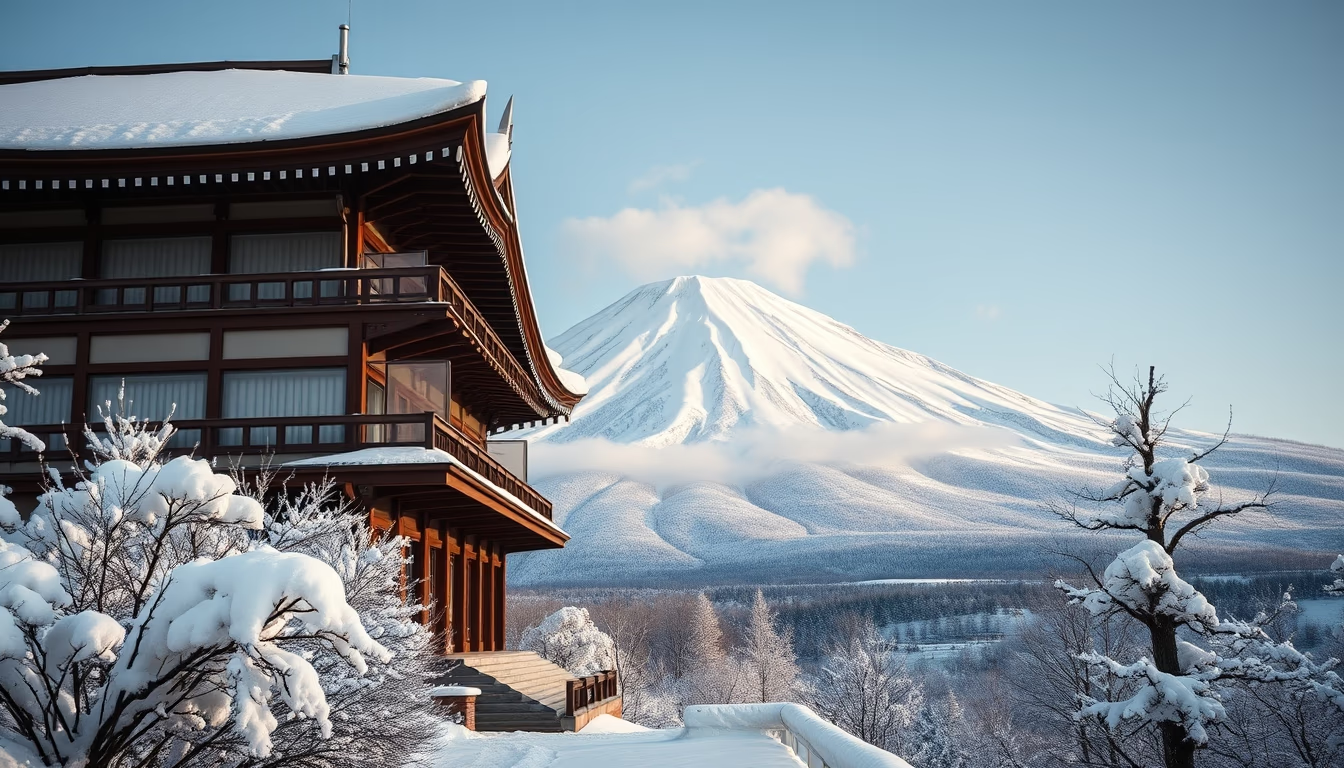
Monte Fuji coberto de neve no inverno é um símbolo icônico do Japão, com pico nevado visível de Tóquio em dias claros.
Sobre o tema
O Monte Fuji, com 3.776 metros de altitude, é a montanha mais alta do Japão e um dos símbolos mais reconhecidos do país. Localizado na ilha de Honshu, entre as províncias de Shizuoka e Yamanashi, o vulcão adormecido é Patrimônio Mundial da UNESCO desde 2013. Sua forma cônica quase perfeita é resultado de erupções vulcânicas que ocorreram há mais de 10.000 anos. No inverno, o Monte Fuji fica coberto de neve do topo até cerca de 2.500 metros, criando uma paisagem impressionante que atrai fotógrafos e turistas.
A neve no Monte Fuji geralmente começa a aparecer em outubro e permanece até maio ou junho, com pico de cobertura nos meses de janeiro e fevereiro. Durante esse período, as temperaturas no topo podem cair para -20°C, e os ventos fortes tornam a escalada perigosa. A temporada oficial de escalada vai de julho a setembro, quando a neve derrete e as condições são mais seguras. A vista do Monte Fuji com neve é mais apreciada de longe, especialmente do Lago Kawaguchi ou das estações de trem da região.
Culturalmente, o Monte Fuji é considerado uma montanha sagrada no xintoísmo e no budismo japonês. Peregrinos escalavam a montanha como forma de purificação espiritual. A imagem do Fuji com neve aparece em inúmeras obras de arte, como as famosas xilogravuras de Hokusai e Hiroshige. Atualmente, o Monte Fuji recebe mais de 300.000 escaladores por ano, mas a maioria evita o inverno. A neve não apenas embeleza a montanha, mas também alimenta os aquíferos da região, fornecendo água potável para milhões de pessoas.
Perguntas frequentes
Qual é a melhor época para ver o Monte Fuji com neve?
A neve no Monte Fuji é mais visível entre novembro e maio, com pico em janeiro e fevereiro. Climas claros de inverno oferecem as melhores vistas.
É possível escalar o Monte Fuji no inverno?
Escalar no inverno é extremamente perigoso devido ao gelo, ventos fortes e baixas temperaturas. A temporada oficial de escalada é de julho a setembro.
Por que o Monte Fuji é considerado sagrado?
No xintoísmo e budismo, o Monte Fuji é visto como a morada de divindades e um local de peregrinação para purificação espiritual.
URL direta
https://pub-c7d6a6ea828543ac903a74a341ccb2e1.r2.dev/imagens/mount-fuji-winter-snow-architectural-photography-p6.avifComo creditar
Inclua um link visível de volta pro UtilizAí. Copie um dos snippets abaixo:
<a href="https://xn--utiliza-eza.com/midia/imagens/mount-fuji-winter-snow-architectural-photography-p6">Mount fuji winter snow</a> by <a href="https://xn--utiliza-eza.com">UtilizAí</a>, licensed under <a href="https://creativecommons.org/licenses/by/4.0/">CC BY 4.0</a>.
[Mount fuji winter snow](https://xn--utiliza-eza.com/midia/imagens/mount-fuji-winter-snow-architectural-photography-p6) by [UtilizAí](https://xn--utiliza-eza.com), CC BY 4.0
Licença: CC-BY-4.0