Morse code key brass
1344×768 · AVIF · CC BY 4.0
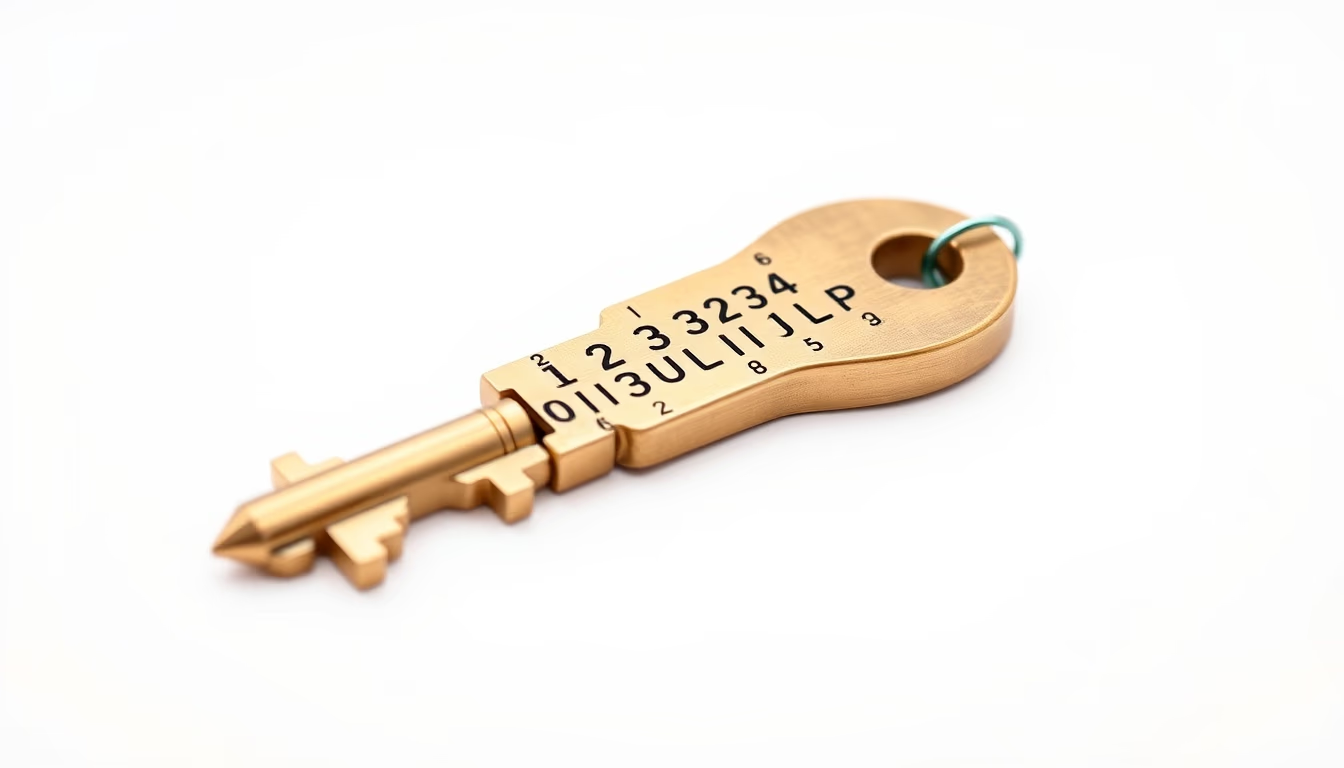
Brass telegraph key, iconic instrument of 19th century communications that encodes messages into electrical impulses.
About this subject
The brass telegraph key is the central device of the electric telegraph system, invented by Samuel Morse and Alfred Vail in the 1830s. It allows an operator to send messages in Morse code by closing and opening an electrical circuit, generating pulses that travel along wires to a distant receiver. Morse code represents letters and numbers as combinations of short signals (dots) and long signals (dashes), creating a universal language for text transmission.
Operation is simple: pressing the metal lever establishes electrical contact, sending current through the line. The duration of contact determines whether the signal is a dot (quick tap) or a dash (longer press). Skilled operators could transmit 20 to 40 words per minute, a pace essential for commercial and government communications. The brass key was valued for its conductivity and corrosion resistance, ensuring reliable electrical contact even in humid environments.
Historically, telegraph keys revolutionized 19th-century communications. The first commercial line connected Washington D.C. to Baltimore in 1844, with the famous message "What hath God wrought." The telegraph was crucial for railroads, newspapers, and financial transactions, enabling real-time coordination. Transatlantic submarine cables, such as the 1866 one, connected continents using these same keys. Operators became respected figures, their skill widely recognized.
Today, the brass telegraph key is a collector's item and still used by amateur radio operators in CW (continuous wave) mode. Vintage models can fetch hundreds of dollars, especially those from manufacturers like J.H. Bunnell & Co. or Lionel. Brass, a noble material, provides weight, durability, and a characteristic sound when contacting. Even with digital technologies, Morse code remains an emergency communication method and a hobby, keeping the telegraph legacy alive.
Frequently Asked Questions
How does a brass telegraph key work?
Pressing the lever closes an electrical circuit, sending current through a wire. The duration of contact creates dots (short tap) or dashes (long press), which form Morse code.
What is the difference between dot and dash in Morse code?
A dot is a short electrical signal (about 1/10 second). A dash lasts three times longer. The pause between dots and dashes within a letter is one dot; between letters, three dots; and between words, seven dots.
Where were these telegraph keys used?
They were installed in telegraph stations, railroads, ships, newspaper offices, and financial centers. They were also essential for submarine cables and military communications until the mid-20th century.
Direct URL
https://pub-c7d6a6ea828543ac903a74a341ccb2e1.r2.dev/imagens/morse-code-key-brass-commercial-product-photography-fresh17.avifHow to credit
Include a visible link back to UtilizAí. Copy one of the snippets below:
<a href="https://xn--utiliza-eza.com/en/midia/imagens/morse-code-key-brass-commercial-product-photography-fresh17">Morse code key brass</a> by <a href="https://xn--utiliza-eza.com">UtilizAí</a>, licensed under <a href="https://creativecommons.org/licenses/by/4.0/">CC BY 4.0</a>.
[Morse code key brass](https://xn--utiliza-eza.com/en/midia/imagens/morse-code-key-brass-commercial-product-photography-fresh17) by [UtilizAí](https://xn--utiliza-eza.com), CC BY 4.0
License: CC-BY-4.0