Mercury surface craters
1344×768 · AVIF · CC BY 4.0
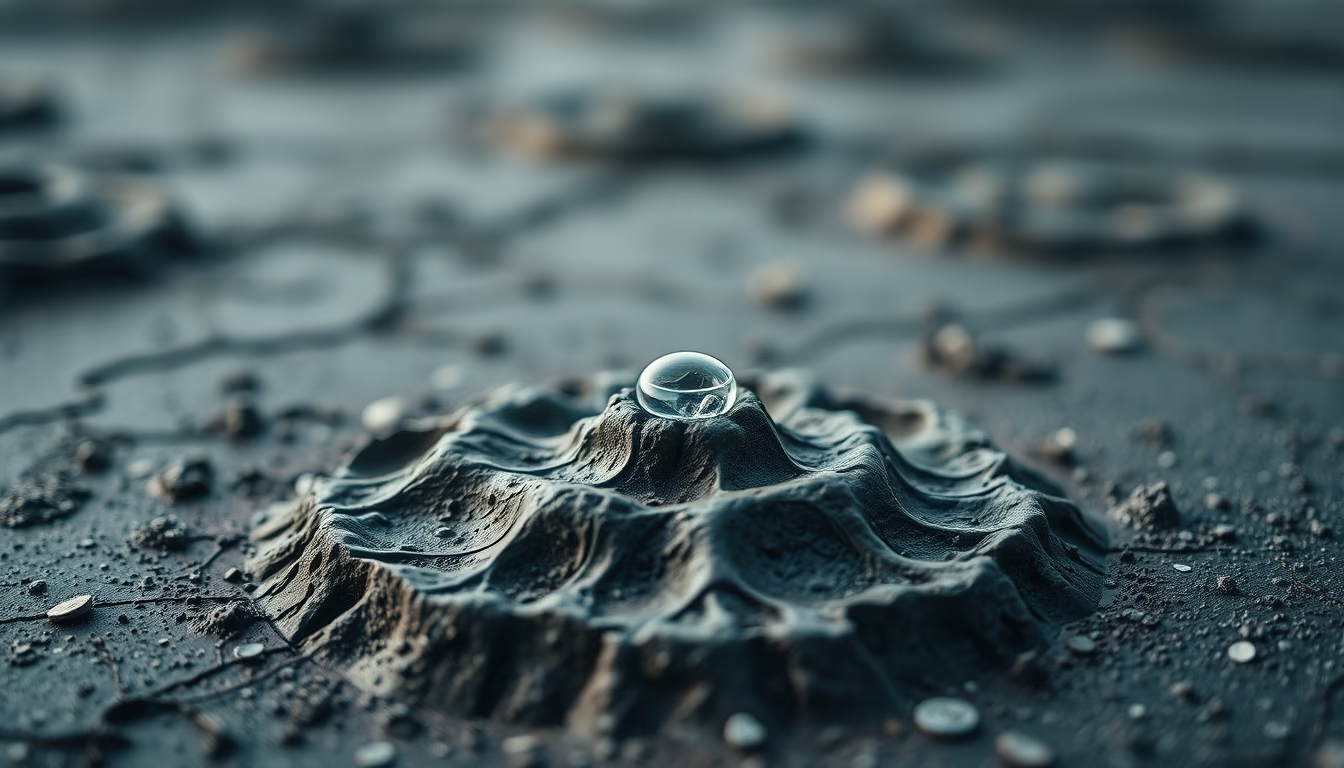
Crateras da superfície de Mercúrio revelam bilhões de anos de impactos, incluindo a gigantesca Bacia Caloris.
Sobre o tema
Mercúrio, o planeta mais próximo do Sol, possui uma superfície repleta de crateras de impacto, resultado de bilhões de anos de colisões com asteroides e cometas. Diferente da Terra, Mercúrio não tem uma atmosfera significativa para queimar ou desviar objetos, e sua crosta antiga preserva um registro quase intacto desses eventos. A superfície lembra a da Lua, mas com algumas diferenças importantes: as crateras mercurianas tendem a ser mais rasas devido à maior gravidade superficial, e os ejecta se espalham por áreas menores.
A maior e mais impressionante estrutura de impacto em Mercúrio é a Bacia Caloris, com aproximadamente 1550 km de diâmetro. Formada há cerca de 3,9 bilhões de anos, essa bacia é cercada por anéis concêntricos e apresenta um interior relativamente plano, preenchido por lava vulcânica. Curiosamente, no ponto antípoda da bacia, existe uma região chamada de "Terreno Estranho" (Weird Terrain), formada pela convergência das ondas sísmicas do impacto.
Outras crateras notáveis incluem a Rachmaninoff, com 290 km de diâmetro e um pico central complexo, e a Debussy, que exibe um sistema de raios brilhantes estendendo-se por centenas de quilômetros. A superfície também mostra áreas mais suaves entre as crateras, as planícies intercrateras, que são provavelmente depósitos vulcânicos antigos. Diferente da Lua, Mercúrio tem um campo magnético global, mas é fraco e não protege totalmente o planeta contra o vento solar.
O estudo das crateras de Mercúrio ajuda os cientistas a entender a história do Sistema Solar interior e a frequência de impactos ao longo do tempo. Missões como a MESSENGER (2004-2015) e a BepiColombo (em andamento) mapearam detalhadamente essas feições, revelando uma geologia complexa e uma evolução marcada por intenso bombardeio e vulcanismo.
Perguntas frequentes
Qual é a maior cratera de Mercúrio?
A maior cratera de Mercúrio é a Bacia Caloris, com cerca de 1550 km de diâmetro. Trata-se de uma bacia de impacto formada por um asteroide há aproximadamente 3,9 bilhões de anos.
Por que Mercúrio tem tantas crateras?
Mercúrio possui muitas crateras porque sua atmosfera é extremamente fina (quase inexistente), incapaz de desacelerar ou queimar objetos que colidem com o planeta. Além disso, sua superfície é antiga e geologicamente inativa, preservando as marcas dos impactos.
Como a Bacia Caloris influenciou o resto do planeta?
O impacto que formou a Bacia Caloris foi tão violento que gerou ondas sísmicas que se concentraram no lado oposto de Mercúrio, criando uma região conhecida como 'Terreno Estranho' (Weird Terrain), com colinas e fraturas caóticas.
URL direta
https://pub-c7d6a6ea828543ac903a74a341ccb2e1.r2.dev/imagens/mercury-surface-craters-tilt-shift-miniature-p4.avifComo creditar
Inclua um link visível de volta pro UtilizAí. Copie um dos snippets abaixo:
<a href="https://xn--utiliza-eza.com/midia/imagens/mercury-surface-craters-tilt-shift-miniature-p4">Mercury surface craters</a> by <a href="https://xn--utiliza-eza.com">UtilizAí</a>, licensed under <a href="https://creativecommons.org/licenses/by/4.0/">CC BY 4.0</a>.
[Mercury surface craters](https://xn--utiliza-eza.com/midia/imagens/mercury-surface-craters-tilt-shift-miniature-p4) by [UtilizAí](https://xn--utiliza-eza.com), CC BY 4.0
Licença: CC-BY-4.0





