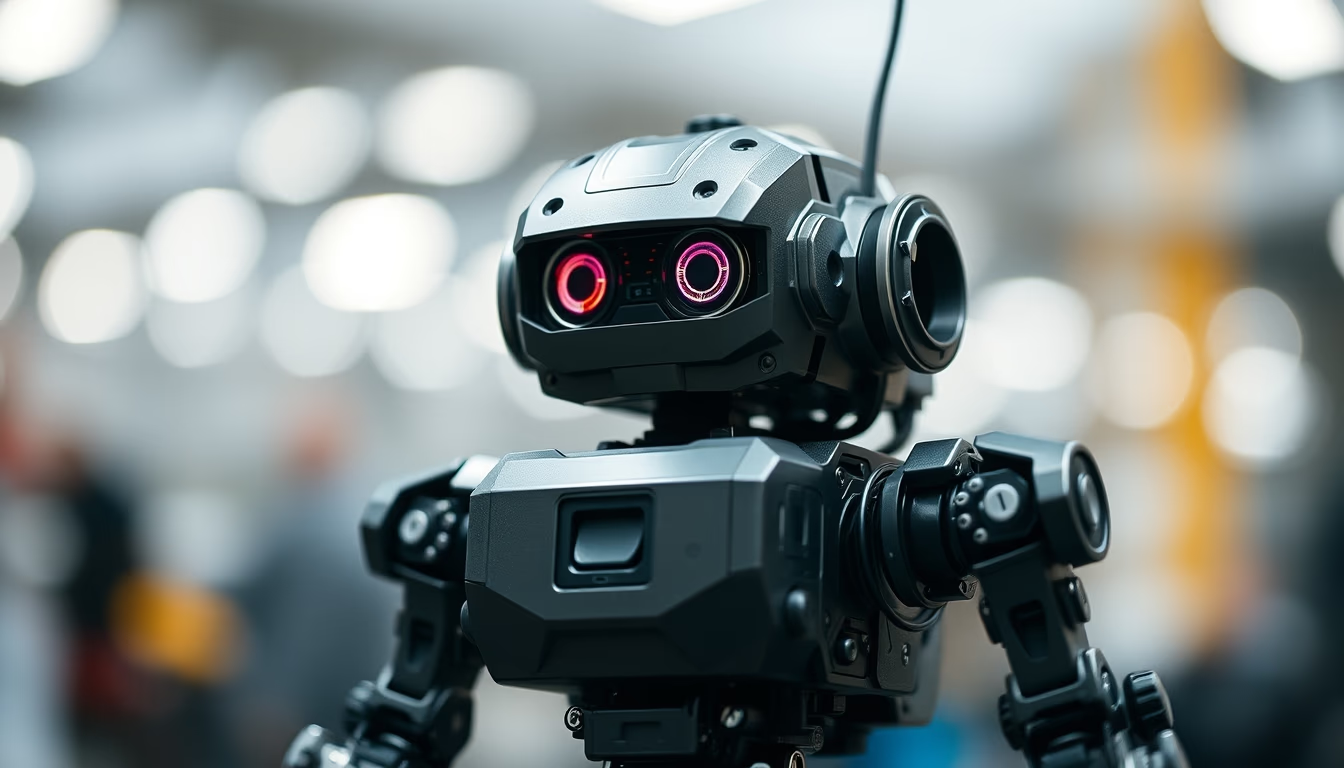
Mech robot industrial
1344×768 · AVIF · CC BY 4.0
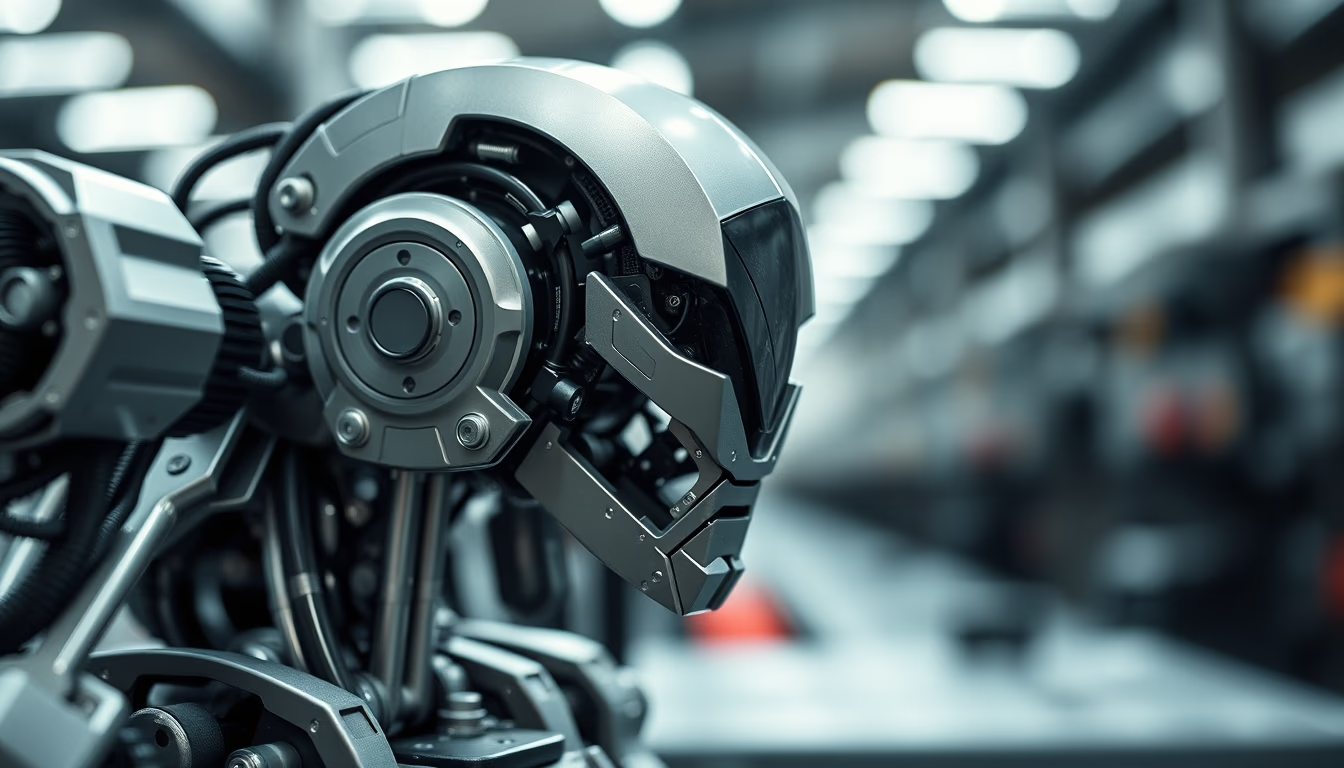
Industrial mech robots are automated machines used in production lines for repetitive tasks requiring high precision, such as welding, assembly and painting.
About this subject
Industrial mech robots, also known as industrial manipulators, are programmable equipment that perform automated movements in factories. They have been widely used since the 1960s, when the Unimate, the first industrial robot, was installed at General Motors to handle hot die-cast parts. Today, companies like Fanuc, KUKA and ABB dominate the market, offering models with payload capacities from a few kilograms to over a ton.
These robots can be classified by architecture: articulated (with arms mimicking human movement), cartesian (linear movement along X, Y, Z axes), SCARA (used for precision assembly) and parallel (fast for pick and place tasks). Each type is designed for specific applications, such as arc welding, automotive painting or hazardous material handling. Internal components include servomotors, gear reducers, position sensors and programmable logic controllers (PLCs), ensuring repeatability within micrometers.
In the Brazilian context, industrial robot automation has grown in sectors such as automotive (vehicle assembly in São Bernardo do Campo and Betim) and food processing (grain packaging). Brazil is estimated to have the largest robot fleet in Latin America, mainly in car factories. Pop culture, especially the sci-fi genre, often depicts mech robots as giant piloted machines (mechas), but the industrial reality is more pragmatic: collaborative robots (cobots) work side by side with humans, equipped with safety sensors.
Interestingly, preventive maintenance of these robots involves periodic lubrication, joint replacement and axis calibration. Failures can cause production stoppages, estimated at up to US$50,000 per hour in automotive lines. Thus, real-time monitoring systems and artificial intelligence are being integrated to predict wear and tear.
Frequently Asked Questions
What is the difference between an industrial robot and a humanoid robot?
Industrial robots are designed for specific manufacturing tasks, focusing on precision and repeatability, while humanoid robots mimic human form and movements, often for social interaction or exploration. Industrial robots lack legs and are fixed or mounted on rails.
What materials are used in manufacturing industrial mech robots?
Main materials include aluminum and steel for structure, lightweight alloys for arms, polymers for protective coatings, and electronic components like sensors and wiring. Joints use steel bearings and rubber seals.
Do industrial robots completely replace human workers?
No. While they automate repetitive tasks, they require human supervision, programming and maintenance. Additionally, collaborative robots (cobots) are designed to work alongside operators, boosting productivity without eliminating jobs.
Direct URL
https://pub-c7d6a6ea828543ac903a74a341ccb2e1.r2.dev/imagens/mech-robot-industrial-macro-closeup-fresh4.avifHow to credit
Include a visible link back to UtilizAí. Copy one of the snippets below:
<a href="https://xn--utiliza-eza.com/en/midia/imagens/mech-robot-industrial-macro-closeup-fresh4">Mech robot industrial</a> by <a href="https://xn--utiliza-eza.com">UtilizAí</a>, licensed under <a href="https://creativecommons.org/licenses/by/4.0/">CC BY 4.0</a>.
[Mech robot industrial](https://xn--utiliza-eza.com/en/midia/imagens/mech-robot-industrial-macro-closeup-fresh4) by [UtilizAí](https://xn--utiliza-eza.com), CC BY 4.0
License: CC-BY-4.0