Martian colony dome
1344×768 · AVIF · CC BY 4.0
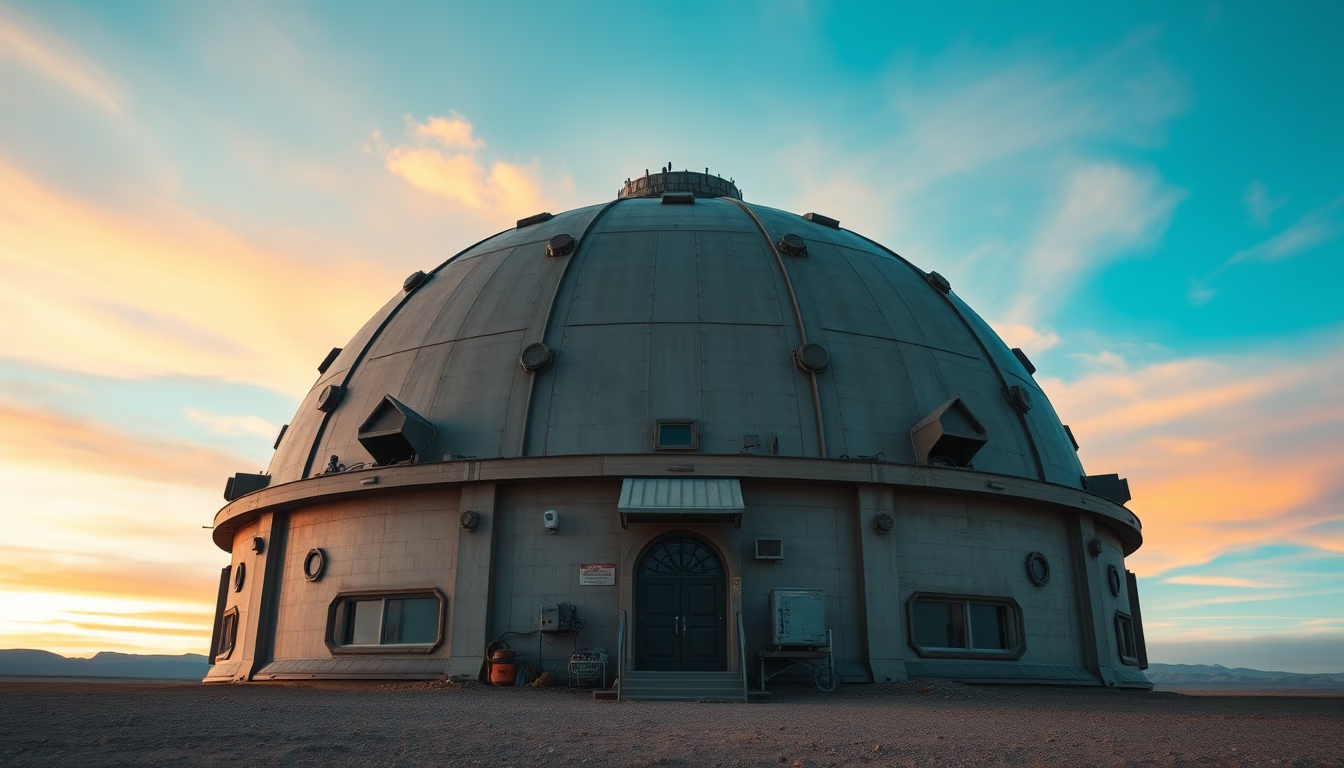
The Martian colony dome is a key concept for human habitation on Mars, blending engineering and science fiction.
About this subject
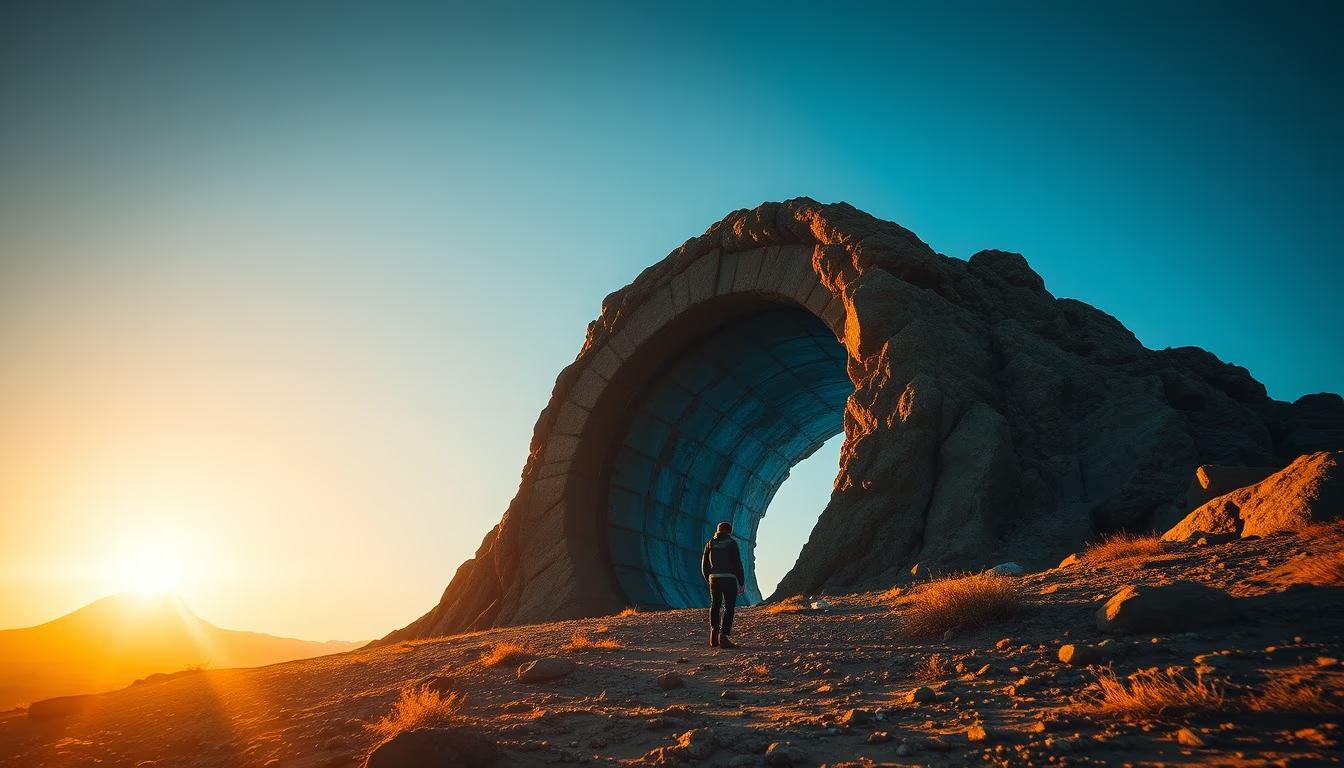
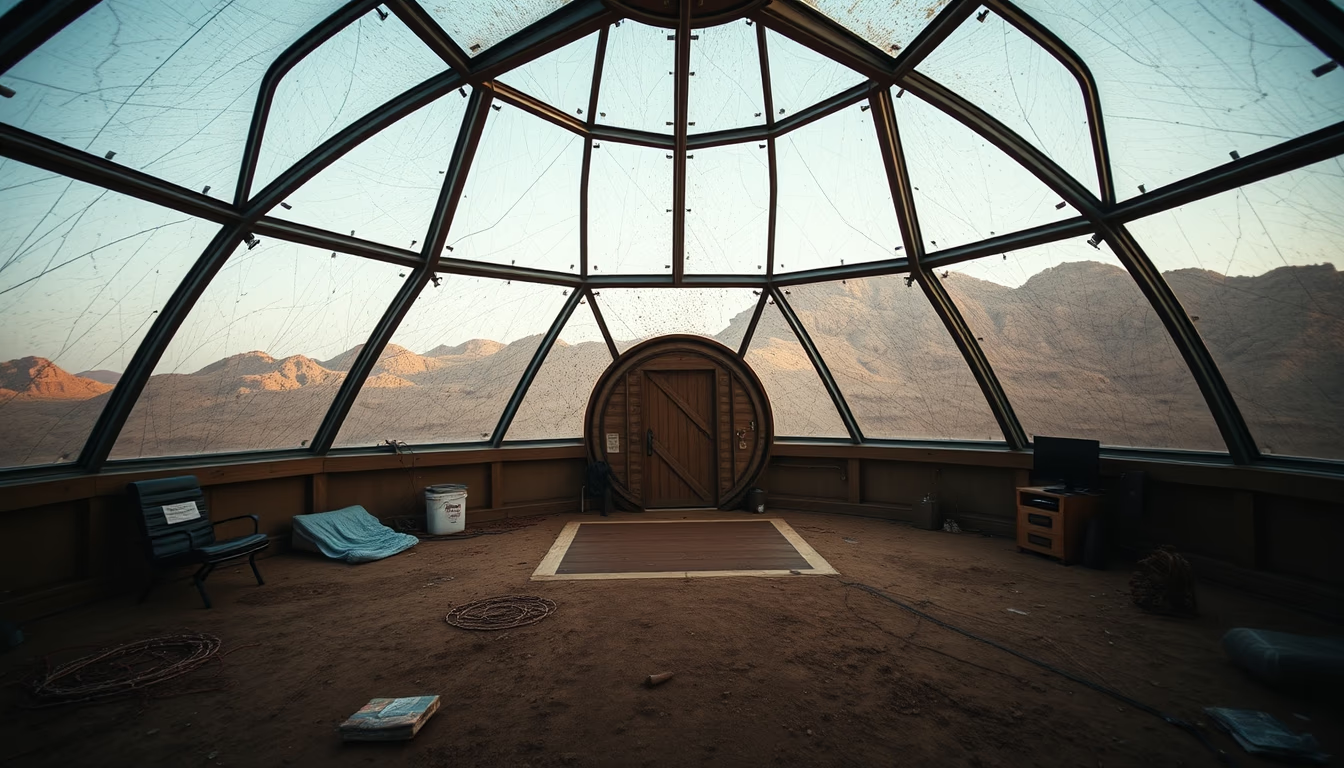
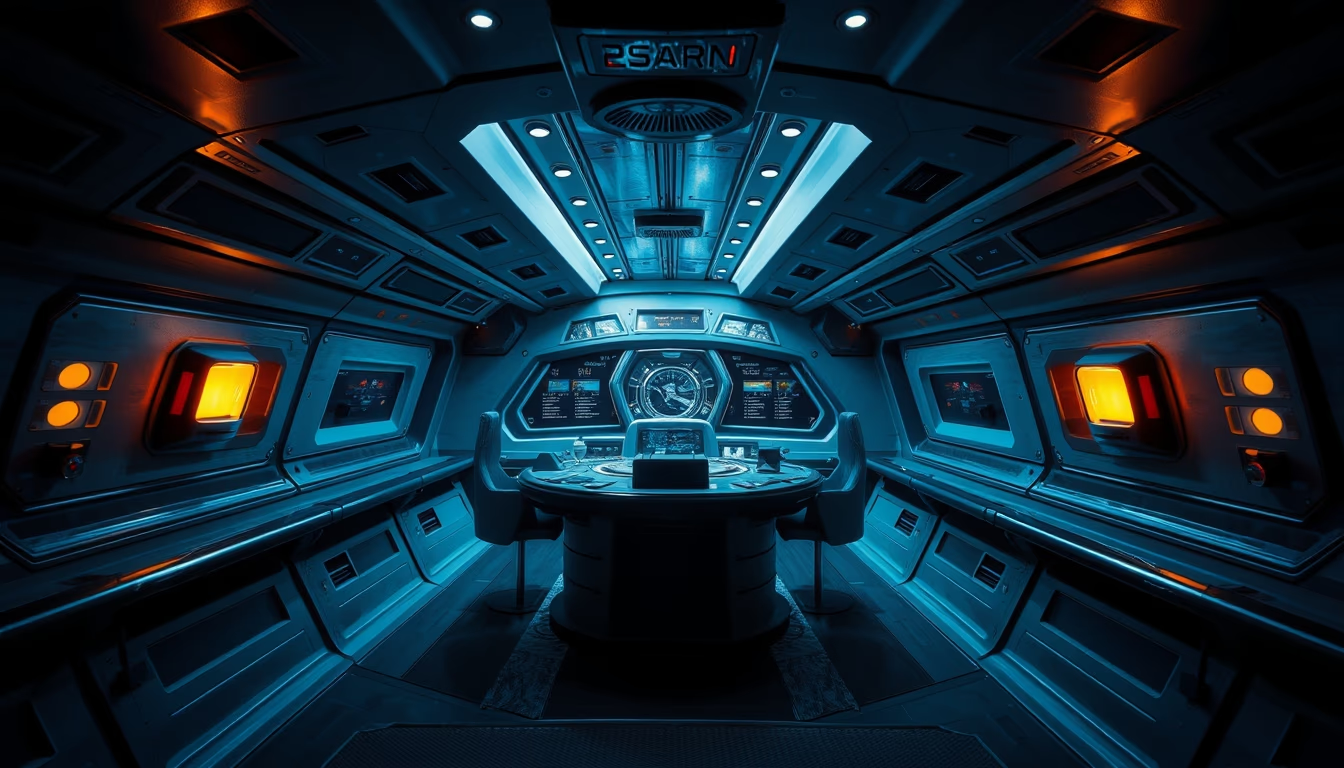
Martian colony domes are structures designed to enable human survival on the surface of Mars, protecting colonists from the thin atmosphere, cosmic radiation, and extreme temperatures. These pressurized habitats must maintain an Earth-like internal environment, using life support systems to provide oxygen, water, and thermal regulation. The most common design, popularized by science fiction, is a transparent geodesic dome that allows sunlight to enter for agriculture and psychological well-being.
In practice, space agencies like NASA and SpaceX study various concepts, from inflatable structures to habitats excavated into Martian rock. The Mars Society's Mars Colony project proposes modular domes built with local materials such as sintered regolith to reduce dependence on Earth supplies. Elon Musk's vision for a city on Mars includes temporary domes while underground tunnels are excavated for radiation protection.
Key challenges include manufacturing materials resistant to radiation and vacuum, the cost of transporting components, and maintaining internal pressure. Radiation is a critical obstacle: without a protective magnetic field, Mars receives 50 times more radiation than Earth, requiring thick layers or water and plastic shielding. Additionally, global dust storms can block sunlight for months, affecting solar-based systems.
Culturally, Martian domes symbolize human ingenuity and interplanetary exploration. They appear in works like "The Martian" (film), "Mars" (NatGeo series), and Kim Stanley Robinson's novels. The image of a dome against the red landscape has become an icon of space colonization, representing both hope and the risks of living on another world.
Frequently Asked Questions
How do Martian colony domes work?
They maintain internal pressure with a breathable atmosphere, filter radiation, and regulate temperature. Life support systems recycle air and water, while solar panels or nuclear reactors provide energy.
What materials would be used to build a Martian dome?
Lightweight materials like reinforced polymers and metal alloys for Earth-shipped components. On-site, Martian regolith can be sintered into bricks or used for 3D-printed structures.
What are the biggest challenges for living in Martian domes?
Cosmic radiation, dust storms, pressure maintenance, food production, and psychological isolation are key obstacles. Solutions include water/plastic shielding and underground habitats.
Direct URL
https://pub-c7d6a6ea828543ac903a74a341ccb2e1.r2.dev/imagens/martian-colony-dome-long-exposure-fresh13.avifHow to credit
Include a visible link back to UtilizAí. Copy one of the snippets below:
<a href="https://xn--utiliza-eza.com/en/midia/imagens/martian-colony-dome-long-exposure-fresh13">Martian colony dome</a> by <a href="https://xn--utiliza-eza.com">UtilizAí</a>, licensed under <a href="https://creativecommons.org/licenses/by/4.0/">CC BY 4.0</a>.
[Martian colony dome](https://xn--utiliza-eza.com/en/midia/imagens/martian-colony-dome-long-exposure-fresh13) by [UtilizAí](https://xn--utiliza-eza.com), CC BY 4.0
License: CC-BY-4.0