Mars surface red dust
1344×768 · AVIF · CC BY 4.0
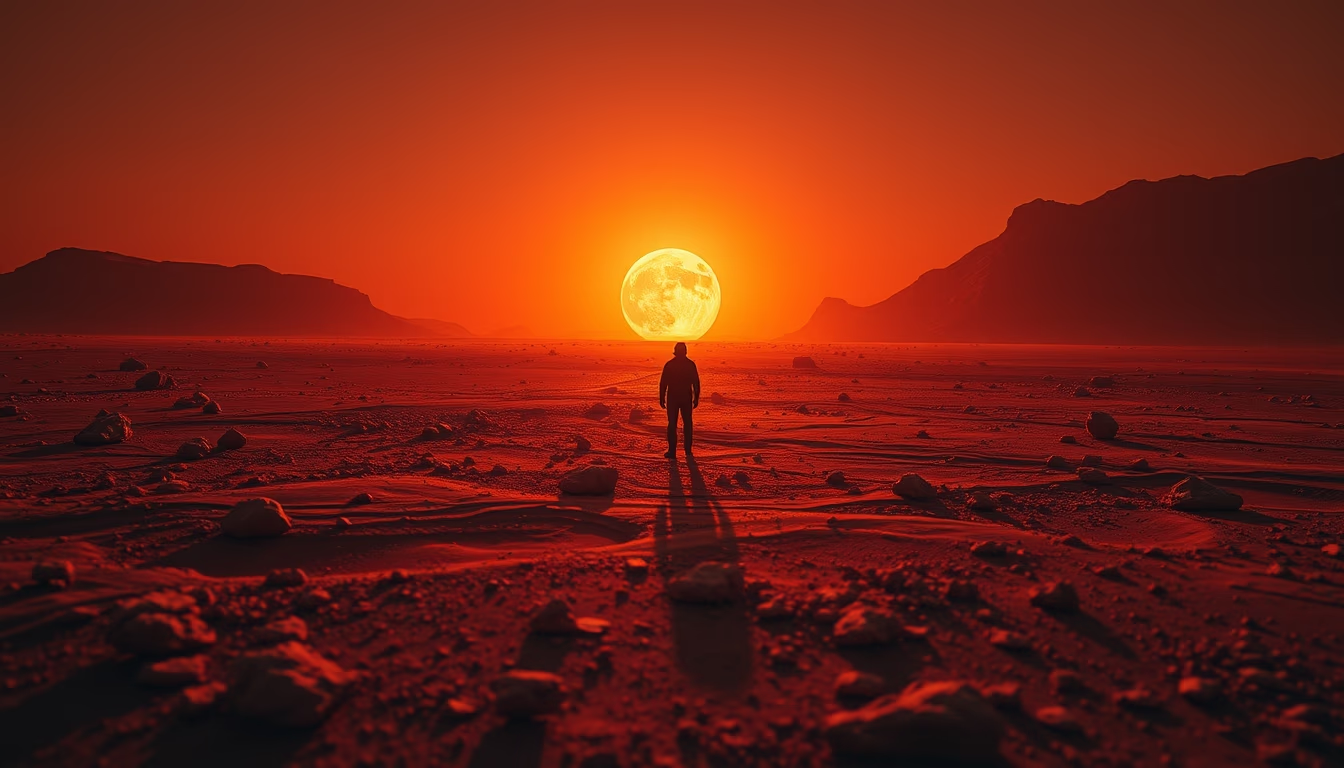
The surface of Mars is covered by a regolith rich in iron oxide, giving it the characteristic reddish hue.
About this subject
The red dust covering Mars is primarily composed of iron(III) oxide, the same compound that creates rust on Earth. This material, known as hematite or magnetite, blankets vast plains and plateaus such as Acidalia Planitia and Syrtis Major. The color ranges from light orange to reddish-brown, depending on grain size and local mineral composition.
Martian dust is extremely fine, with particles just a few micrometers across, and also contains perchlorates, highly reactive salts that pose challenges for human exploration. Global dust storms can engulf the entire planet, dramatically reducing sunlight and coating equipment like rover solar panels. The InSight lander, for example, had its mission cut short due to dust accumulation.
The origin of the iron oxide dates back billions of years, when Mars had abundant liquid water. Oxidation of ferrous minerals by water and the thin atmosphere created the rusty hue. Spectroscopic analyses show that the dust also carries traces of clays and sulfates, evidence of past water interaction.
Mars' red dust is not just visually striking: it influences the climate, geology, and space missions. NASA studies suggest the dust may contain simple organic compounds, but no confirmation of life exists yet. Future explorers will have to contend with the toxicity of perchlorates and the abrasive nature of the dust grains.
Frequently Asked Questions
Why is Mars red?
Mars appears red due to the abundance of iron oxide (rust) on its surface. This mineral covers much of the planet, reflecting sunlight in a way that gives it the characteristic reddish hue.
What is Martian dust made of?
Martian dust is primarily composed of iron oxides like hematite and magnetite, along with perchlorates, silica, and traces of clays and sulfates. The particles are very fine and can be lifted by weak winds.
How do dust storms affect Mars missions?
Dust storms can coat solar panels, reducing power generation for rovers and landers. They also block sunlight, lowering temperatures and interfering with scientific observations. Abrasive dust can damage mechanical and optical components.
Direct URL
https://pub-c7d6a6ea828543ac903a74a341ccb2e1.r2.dev/imagens/mars-surface-red-dust-cinematic-wide-shot-p4.avifHow to credit
Include a visible link back to UtilizAí. Copy one of the snippets below:
<a href="https://xn--utiliza-eza.com/en/midia/imagens/mars-surface-red-dust-cinematic-wide-shot-p4">Mars surface red dust</a> by <a href="https://xn--utiliza-eza.com">UtilizAí</a>, licensed under <a href="https://creativecommons.org/licenses/by/4.0/">CC BY 4.0</a>.
[Mars surface red dust](https://xn--utiliza-eza.com/en/midia/imagens/mars-surface-red-dust-cinematic-wide-shot-p4) by [UtilizAí](https://xn--utiliza-eza.com), CC BY 4.0
License: CC-BY-4.0